Lessons

LESSON

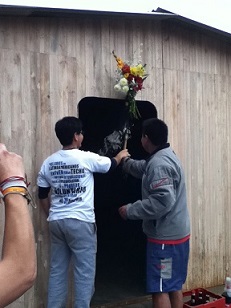
Lesson Learned: Empowerment of Shanty Towns’ Settlers through Democratic Spaces

At the end of the project, the beneficiaries from the four participating countries shared information about their practices and experiences with their counterparts from other countries and draw lessons for the future. This encouraged networking and inspired continued engagement and problem solving.
Project Partner
Un Techo Para mi País
Project Description
Aiming to improve the living conditions of vulnerable populations in marginalized areas and to put self-promotion processes in motion, the project’s goal was to enable these beneficiaries to take charge of their own affairs and to know and demand their rights. The grantee created permanent community centres and promoted community development through specific micro projects to mobilize and train teams of volunteers, and to strengthen the community centres’ capacity to organize and dialogue with local decision-making bodies. The beneficiaries greatly appreciated the project’s assistance on the ground. The volunteers’ continuous presence heightened the populations’ motivation and engagement. Several factors contributed to the project’s effectiveness: country action plans suited to local realities; the formation of well-trained teams of volunteers; the strong mobilization and participation of settlers in the activities; the financing of projects proposed by the target populations to improve their living conditions; and the quality of the local support provided by the teams of volunteers.
Evaluation Date
September 2011
Country
LESSON

Lesson Learned: Assessing Democracy Assistance

The project highlights the benefit to UNDEF from working with first-class partners who can produce first-class outputs on
schedule. There is a role for field-based, local NGO implemented projects, often in very challenging circumstances, but there is a role, as well, for global projects implemented in partnership with known global players.
Project Partner
Fundación para las Relaciones Internacionales y el Diálogo Exterior
Project Description
The project “Assessing Democracy Assistance” was implemented by Fundación para las relaciones internacionales y el Diálogo Exterior (FRIDE) from 1 October 2009 to 30 September 2011. The project’s goals were to provide the first comprehensive assessment of global democracy assistance efforts based on the views and perceptions of local stakeholders and to ensure, through systematic dissemination and consultation among policy makers, opinion leaders, media and local stakeholders, the findings’ impact on future policy design. Whether the project succeeded in strengthening international commitment to democracy assistance and strengthening the quality of development assistance by improving the alignment between the supply and demand sides is difficult to judge, especially for a small, short-term intervention. However, evidence has been found that project results were broadly disseminated and cited among academics and practitioners worldwide. While the project did not provide capacity building and institution strengthening in the traditional sense, it did promote activities of a number of relatively young researchers, contributing to rejuvenating and strengthening the democracy community.
Evaluation Date
September 2011
LESSON

Lesson Learned: Strengthening Civil Society Across Borders to Develop Democracy

The sustainability of the local NGOs was not assured. It is recommended that the local NGOs which participated in the project develop long-term relationships with local authorities; for example, permanent consultative status in an issue area or a multi-year arrangement to provide services. This will enhance financial sustainability in the most convincing way and help to avoid the trap of being dependent on recurrent one-time projects.
Project Partner
Euclid Network
Project Description
The project’s goal was to increase the capacity of NGOs in Moldova and Ukraine to network among themselves to enhance their advocacy skills and to improve the functioning of existing mechanisms for engagement between civil society and governments. The project resulted in a range of concrete initiatives, both at the local level and at the level of improved NGO representation in national policy making. Concrete impacts ranged from promoting the participation of blind voters to making amendments to the new law on associations in Ukraine and the human rights action plan in Moldova.
Evaluation Date
August 2011
Country
LESSON

Lesson Learned: Empowering Civil Society and Women to Engage in Policy Processes

The grantee was a large international NGO. Its decision to implement this project with local partners reflected a collective strategic approach, centred on inter-institutional alliances and synergies. The local implementing partners involved succeeded in harmonising their strategic criteria and complementarity in the thematic and geographic areas of intervention.
Project Partner
Oxfam Great Britain
Project Description
The project’s objective was to promote a new socio-political culture in Honduras that recognizes equal participation of women in democratic governance at the local, regional and national levels. The project prioritized women in rural living in extreme poverty. The target women had very few educational opportunities and had rarely participated in politics and in decision-making. The goal of the project was: to raise awareness among citizens on the importance of full and equal women's participation in decision-making processes and equal access to justice; to strengthen the capacity of Civil Society Organisations to influence policy processes; and to institutionalize a Women’s Network at the local level. The project explicitly aimed to integrate the gender approach across all three outcomes.
Evaluation Date
August 2011
Country
LESSON

Lesson Learned: Strengthening Civil Society Across Borders to Develop Democracy

The project was built on the premise that when civil society and government engage constructively and pro-actively, common ground will be found and better approaches and solutions developed. Results of the project confirmed that approach.
The watchdog role of NGOs is important and should complement rather than contradict an approach based on constructive engagement. The enhanced involvement of civil society in national policymaking in both Ukraine and Moldova was in part a result of the contribution of this project.
Project Partner
Euclid Network
Project Description
The project’s goal was to increase the capacity of NGOs in Moldova and Ukraine to network among themselves to enhance their advocacy skills and to improve the functioning of existing mechanisms for engagement between civil society and governments. The project resulted in a range of concrete initiatives, both at the local level and at the level of improved NGO representation in national policy making. Concrete impacts ranged from promoting the participation of blind voters to making amendments to the new law on associations in Ukraine and the human rights action plan in Moldova.
Evaluation Date
August 2011
Country
LESSON

Lesson Learned: Empowering Civil Society and Women to Engage in Policy Processes

Project follow-up should have included applied research. The goal of such research would be to analyse critically and comparatively the various experiences and advances encountered by the project. This exercise should identify, in the context of a fragile democracy, the modalities and the possible alternatives for optimising women’s empowerment and guaranteeing as much as possible the application of the legal framework, as well as following up and carrying out the recommended support or judicial measures.
Project Partner
Oxfam Great Britain
Project Description
The project’s objective was to promote a new socio-political culture in Honduras that recognizes equal participation of women in democratic governance at the local, regional and national levels. The project prioritized women in rural living in extreme poverty. The target women had very few educational opportunities and had rarely participated in politics and in decision-making. The goal of the project was: to raise awareness among citizens on the importance of full and equal women's participation in decision-making processes and equal access to justice; to strengthen the capacity of Civil Society Organisations to influence policy processes; and to institutionalize a Women’s Network at the local level. The project explicitly aimed to integrate the gender approach across all three outcomes.
Evaluation Date
August 2011
Country
LESSON

Lesson Learned: Strengthening Civil Society Across Borders to Develop Democracy

The extent to which cross-border ties between Ukraine and Moldova were maintained could have been enhanced by a better sustainability strategy to build the knowledge and experience sharing that took place as part of the project. The sustainability relies on the website. However the website of the project could have been better designed to become a forum for keeping in touch and fostering twinning arrangements.
Project Partner
Euclid Network
Project Description
The project’s goal was to increase the capacity of NGOs in Moldova and Ukraine to network among themselves to enhance their advocacy skills and to improve the functioning of existing mechanisms for engagement between civil society and governments. The project resulted in a range of concrete initiatives, both at the local level and at the level of improved NGO representation in national policy making. Concrete impacts ranged from promoting the participation of blind voters to making amendments to the new law on associations in Ukraine and the human rights action plan in Moldova.
Evaluation Date
August 2011
Country
LESSON

Lesson Learned: Empowering Civil Society and Women to Engage in Policy Processes

The project led to greater representation of women in decision making processes in the geographic areas covered by the project. The Women's Network in the municipalities contributed to enhancing participation and also played a role in setting a municipal policy agenda and carrying out social audits. The project also succeeded in mobilizing community based organizations and women's networks in extremely challenging socio-economic conditions of exclusion and extreme.
Project Partner
Oxfam Great Britain
Project Description
The project’s objective was to promote a new socio-political culture in Honduras that recognizes equal participation of women in democratic governance at the local, regional and national levels. The project prioritized women in rural living in extreme poverty. The target women had very few educational opportunities and had rarely participated in politics and in decision-making. The goal of the project was: to raise awareness among citizens on the importance of full and equal women's participation in decision-making processes and equal access to justice; to strengthen the capacity of Civil Society Organisations to influence policy processes; and to institutionalize a Women’s Network at the local level. The project explicitly aimed to integrate the gender approach across all three outcomes.
Evaluation Date
August 2011
Country
LESSON

Lesson Learned: Empowering Civil Society and Women to Engage in Policy Processes

One of the grantee’s implementation partners perpetrated significant fraud and had to be excluded from the project. Thanks to the solvency of the grantee, its organisation was able to find appropriate solutions to respond to these situations: using its own funds, it paid out an amount equivalent to the fraud in order to guarantee the implementation of the activities that had been initially planned. Financial and technical follow-up procedures were developed to ensure transparency in the management and to guarantee a good level of efficiency. Moreover, the grantee provided support and reinforcement of the capabilities of its implementation partners in financial and technical areas as well as in managing human resources.
Project Partner
Oxfam Great Britain
Project Description
The project’s objective was to promote a new socio-political culture in Honduras that recognizes equal participation of women in democratic governance at the local, regional and national levels. The project prioritized women in rural living in extreme poverty. The target women had very few educational opportunities and had rarely participated in politics and in decision-making. The goal of the project was: to raise awareness among citizens on the importance of full and equal women's participation in decision-making processes and equal access to justice; to strengthen the capacity of Civil Society Organisations to influence policy processes; and to institutionalize a Women’s Network at the local level. The project explicitly aimed to integrate the gender approach across all three outcomes.
Evaluation Date
August 2011
Country
LESSON

Lesson Learned: Strengthening Civil Society Across Borders to Develop Democracy

The strong partnership between a reliable, experienced international NGO and national NGOs from Ukraine and Moldova worked well to leverage results and to enhance the impact of activities. The value added of this civil society project was that these collaborations were focused on concrete solutions to jointly identified problems.
Project Partner
Euclid Network
Project Description
The project’s goal was to increase the capacity of NGOs in Moldova and Ukraine to network among themselves to enhance their advocacy skills and to improve the functioning of existing mechanisms for engagement between civil society and governments. The project resulted in a range of concrete initiatives, both at the local level and at the level of improved NGO representation in national policy making. Concrete impacts ranged from promoting the participation of blind voters to making amendments to the new law on associations in Ukraine and the human rights action plan in Moldova.
Evaluation Date
August 2011
Country