Lessons

LESSON

Lesson Learned: Cultivating Democratic Leaders from Marginalized Groups in Thailand

What will be the role and responsibilities of the implementing partners at each stage of the project (and after)? Do they have the capacity to achieve these? If necessary, include capacity building/training of partners into the preliminary stages of project activity. In this case, control remained in the grantee’s office in Bangkok and was not delegated to the regions. As a result, quality control could not be guaranteed without additional personnel being allocated to the project, with resulting additional costs. This structural weakness created a corresponding imbalance between money spent at central level versus the grassroots level.
Project Partner
The Asia Foundation
Project Description
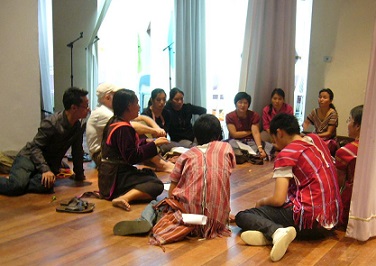
The project was designed to engage young people from marginalized populations in four regions of Thailand, to empower them to voice their needs, access their rights, participate in political processes, and improve their lives and communities. The grantee set out to create new leaders among young people to lead actions in the disenfranchised communities. While the project supported the implementing partners financially and to a lesser extent with expertise, it did not demonstrate significant added-value in the area of democratic development. The trainees were by and large already engaged in development work in their communities and, once the project ended, the partners and the young people continued as before. The project designers would have been more aware of this, and potentially had a chance to rethink the relevance of the design, if they had reviewed existing and earlier practice in this area, and had considered in more depth the way NGOs in the regions work and from where they get their funding. The project fell into the trap of becoming, essentially, a short-term provider of funds.
Evaluation Date
December 2010
Country
LESSON

Lesson Learned: Cultivating Democratic Leaders from Marginalized Groups in Thailand

If local media – for political or other reasons – are reluctant to pick up on issues, consider contacting international correspondents based in the country. To do this effectively, and to ensure that local stakeholders are not put at risk of political or personal reprisals, take on an experience media liaison officer or commission the services of a media agency for advice.
Project Partner
The Asia Foundation
Project Description
The project was designed to engage young people from marginalized populations in four regions of Thailand, to empower them to voice their needs, access their rights, participate in political processes, and improve their lives and communities. The grantee set out to create new leaders among young people to lead actions in the disenfranchised communities. While the project supported the implementing partners financially and to a lesser extent with expertise, it did not demonstrate significant added-value in the area of democratic development. The trainees were by and large already engaged in development work in their communities and, once the project ended, the partners and the young people continued as before. The project designers would have been more aware of this, and potentially had a chance to rethink the relevance of the design, if they had reviewed existing and earlier practice in this area, and had considered in more depth the way NGOs in the regions work and from where they get their funding. The project fell into the trap of becoming, essentially, a short-term provider of funds.
Evaluation Date
December 2010
Country
LESSON

Lesson Learned: Cultivating Democratic Leaders from Marginalized Groups in Thailand

Raising expectations of young people and then leaving them unmet because there is no follow-up is bad practice. Building sustainability into actions that depend on a group that is by nature evolving and likely to move on is also difficult. Consulting young people and involving them in project design, monitoring and evaluation may help. Set up “buddy” systems where more senior/experienced/older youth agreed to mentor younger people not yet of an age to participate in the project formally.

Project Partner
The Asia Foundation
Project Description
The project was designed to engage young people from marginalized populations in four regions of Thailand, to empower them to voice their needs, access their rights, participate in political processes, and improve their lives and communities. The grantee set out to create new leaders among young people to lead actions in the disenfranchised communities. While the project supported the implementing partners financially and to a lesser extent with expertise, it did not demonstrate significant added-value in the area of democratic development. The trainees were by and large already engaged in development work in their communities and, once the project ended, the partners and the young people continued as before. The project designers would have been more aware of this, and potentially had a chance to rethink the relevance of the design, if they had reviewed existing and earlier practice in this area, and had considered in more depth the way NGOs in the regions work and from where they get their funding. The project fell into the trap of becoming, essentially, a short-term provider of funds.
Evaluation Date
December 2010
Country
LESSON

Lesson Learned: Gender Equality and Equity - Follow Up to CEDAW and Romani women

The project built on the strategic plan that grantee had developed for 2008-2010, and its earlier project “Implementation of CEDAW for Romani Women”, as well as follow-up initiatives (2005-2008). All project components were designed to address issues deriving from the research conducted through the previous project.
Project Partner
Roma Center Skopje
Project Description
The project had two primary audiences: Roma women’s NGOs and young Roma women activists. There were three additional audiences: local government officials; young people, Roma and non-Roma; and, officials of Roma political parties. This focus sought to address in a practical way the weakness of Roma civil society organizations, and particularly those led by, and working for, Roma women, in undertaking advocacy on behalf of their own people. The grantee accomplished a great deal with the small amount of funds provided. It built on the strategic plan developed for 2008-2010, and its earlier project “Implementation of CEDAW for Romani Women”, as well as follow-up initiatives (2005-2008). Through an extremely careful allocation of funds to different areas of activity, the organization was able to undertake a long list of activities and, thus, achieve its own objective. Yet, from an external perspective, it is apparent that there were insufficient funds for some activities, where follow-up was badly needed.
Evaluation Date
November 2010
LESSON

Lesson Learned: Gender Equality and Equity - Follow Up to CEDAW and Romani women

By focusing on Roma youth and young activists, particularly, though not exclusively, young women, the project sought to address in a practical way the weakness of Roma civil society organizations, and particularly those led by, and working for, Roma women, in undertaking advocacy on behalf of their own people. There have been few opportunities for Roma NGO representatives to benefit from systematic training on rights issues of urgent concern to their communities or to acquire practical skills to support social change.
Project Partner
Roma Center Skopje
Project Description
The project had two primary audiences: Roma women’s NGOs and young Roma women activists. There were three additional audiences: local government officials; young people, Roma and non-Roma; and, officials of Roma political parties. This focus sought to address in a practical way the weakness of Roma civil society organizations, and particularly those led by, and working for, Roma women, in undertaking advocacy on behalf of their own people. The grantee accomplished a great deal with the small amount of funds provided. It built on the strategic plan developed for 2008-2010, and its earlier project “Implementation of CEDAW for Romani Women”, as well as follow-up initiatives (2005-2008). Through an extremely careful allocation of funds to different areas of activity, the organization was able to undertake a long list of activities and, thus, achieve its own objective. Yet, from an external perspective, it is apparent that there were insufficient funds for some activities, where follow-up was badly needed.
Evaluation Date
November 2010
LESSON

Lesson Learned: Gender Equality and Equity - Follow Up to CEDAW and Romani women

There was a lack of continuity and follow-up in some areas of project work. This suggests that the project tried to include too many elements within a single project with limited resources. In the future, it is recommended that RCS be prepared to make some difficult choices in determining priorities, in order to ensure that adequate resources (including management time) are assigned to all project resources. The grantee would have benefited from advice about the benefits of focusing and concentrating its efforts on a shorter list of components, each pursued further, thus enhancing the prospect for impact.
Project Partner
Roma Center Skopje
Project Description
The project had two primary audiences: Roma women’s NGOs and young Roma women activists. There were three additional audiences: local government officials; young people, Roma and non-Roma; and, officials of Roma political parties. This focus sought to address in a practical way the weakness of Roma civil society organizations, and particularly those led by, and working for, Roma women, in undertaking advocacy on behalf of their own people. The grantee accomplished a great deal with the small amount of funds provided. It built on the strategic plan developed for 2008-2010, and its earlier project “Implementation of CEDAW for Romani Women”, as well as follow-up initiatives (2005-2008). Through an extremely careful allocation of funds to different areas of activity, the organization was able to undertake a long list of activities and, thus, achieve its own objective. Yet, from an external perspective, it is apparent that there were insufficient funds for some activities, where follow-up was badly needed.
Evaluation Date
November 2010
LESSON

Lesson Learned: Enhancing Political Participation of Marginalised Women in Nepal

The project strategy was designed to operate progressively in stages, beginning with a database that tracked progress with measurable indicators. The activities designed and developed by the stakeholders were modified with the findings of rapid assessment reports. All stages were discussed by the target audience. This approach helped identify related grassroots capacity-building needs, develop suitable awareness and training materials, and forge ties between marginalized women and local authorities.
Project Partner
Association of District Development Committees of Nepal
Project Description
The project organized women into informal Women's Democracy Forums to build a culture of collaboration between marginalized women from different social backgrounds in five Nepalese districts. It intended to give women a voice at the district and village level by providing information, education, and communication materials and offering training courses on women's rights. Project activities combined traditional and alternative means of communication, such as street theater. This oral mode of education was adapted to the needs of remote communities. The project's visibility was also enhanced by the production of weekly radio programs; 72 episodes on the political empowerment of women and democratic processes were produced and broadcast over a six–month period. Local authorities and grassroots resource persons increased their commitment to the political inclusion of women. All of these activities were innovative in these Nepalese districts and were skillfully carried out by the implementing team. All activities were successfully concluded and delivered results over and above expectations.
Evaluation Date
September 2010
Country
LESSON

Lesson Learned: Enhancing Political Participation of Marginalised Women in Nepal

The male participants in the project were officials, trainers, and project managers, but not community members from the target groups. Although some women said they passed their newly acquired knowledge to men in their family, the project could have made sure that information reached male community members to avoid any exclusion or loss of impact.
Project Partner
Association of District Development Committees of Nepal
Project Description
The project organized women into informal Women's Democracy Forums to build a culture of collaboration between marginalized women from different social backgrounds in five Nepalese districts. It intended to give women a voice at the district and village level by providing information, education, and communication materials and offering training courses on women's rights. Project activities combined traditional and alternative means of communication, such as street theater. This oral mode of education was adapted to the needs of remote communities. The project's visibility was also enhanced by the production of weekly radio programs; 72 episodes on the political empowerment of women and democratic processes were produced and broadcast over a six–month period. Local authorities and grassroots resource persons increased their commitment to the political inclusion of women. All of these activities were innovative in these Nepalese districts and were skillfully carried out by the implementing team. All activities were successfully concluded and delivered results over and above expectations.
Evaluation Date
September 2010
Country
LESSON

Lesson Learned: Deepening Democratization Processes Through Youth Leadership in Myanmar

The grantee continued to use the fellowship model in other countries, and a global youth forum hub has been relocated from Nepal to Myanmar. Within this project, community groups were also brought together at state level with a view to initiating a state-level process that would endure beyond the end of project activity and involve both local development practitioners and government functionaries.
Project Partner
ActionAid International in Myanmar
Project Description
The project aimed to identify new youth fellows, train them in leadership and concepts of democracy and governance, and prepare them to lead development projects in their communities. The strategy to do this was through "placements" with local grassroots organizations. The 130 trained youth fellows were supported through the fellowship network, including meetings at local and state levels and by identifying 400 youth volunteers through community "reflect circles" that the fellows facilitated. Together, the fellows and volunteers led and established a large number of development projects within the communities, ranging from pig rearing to the building of early education centres. The model is ideally suited to both produce the expected outcomes and also lay the groundwork for potential future representation at national level. The project far exceeded its own expectations, reaching more than 100,000 people through project activities. However, planned training of journalists and the development of a website proved not to be possible in the political climate in Myanmar and were replaced by the production of a series of newsletters for the fellows and for broader dissemination.
Evaluation Date
September 2010
Country
LESSON

Lesson Learned: Enhancing Political Participation of Marginalised Women in Nepal

Dissemination methods, including traditional and alternative means, were used so as to address the lack of literacy among participants. Representatives of marginalized women’s communities, as well as other stakeholders, identified street theater and radio programs as the most relevant media. Five street plays were originally planned, but 16 were produced and seen by some 2,000 people.
Project Partner
Association of District Development Committees of Nepal
Project Description
The project organized women into informal Women's Democracy Forums to build a culture of collaboration between marginalized women from different social backgrounds in five Nepalese districts. It intended to give women a voice at the district and village level by providing information, education, and communication materials and offering training courses on women's rights. Project activities combined traditional and alternative means of communication, such as street theater. This oral mode of education was adapted to the needs of remote communities. The project's visibility was also enhanced by the production of weekly radio programs; 72 episodes on the political empowerment of women and democratic processes were produced and broadcast over a six–month period. Local authorities and grassroots resource persons increased their commitment to the political inclusion of women. All of these activities were innovative in these Nepalese districts and were skillfully carried out by the implementing team. All activities were successfully concluded and delivered results over and above expectations.
Evaluation Date
September 2010
Country