strategy

LESSON

Lesson Learned: Deliberative Democracy and Citizen Assemblies to Fight Inequality and Poverty in Brazil

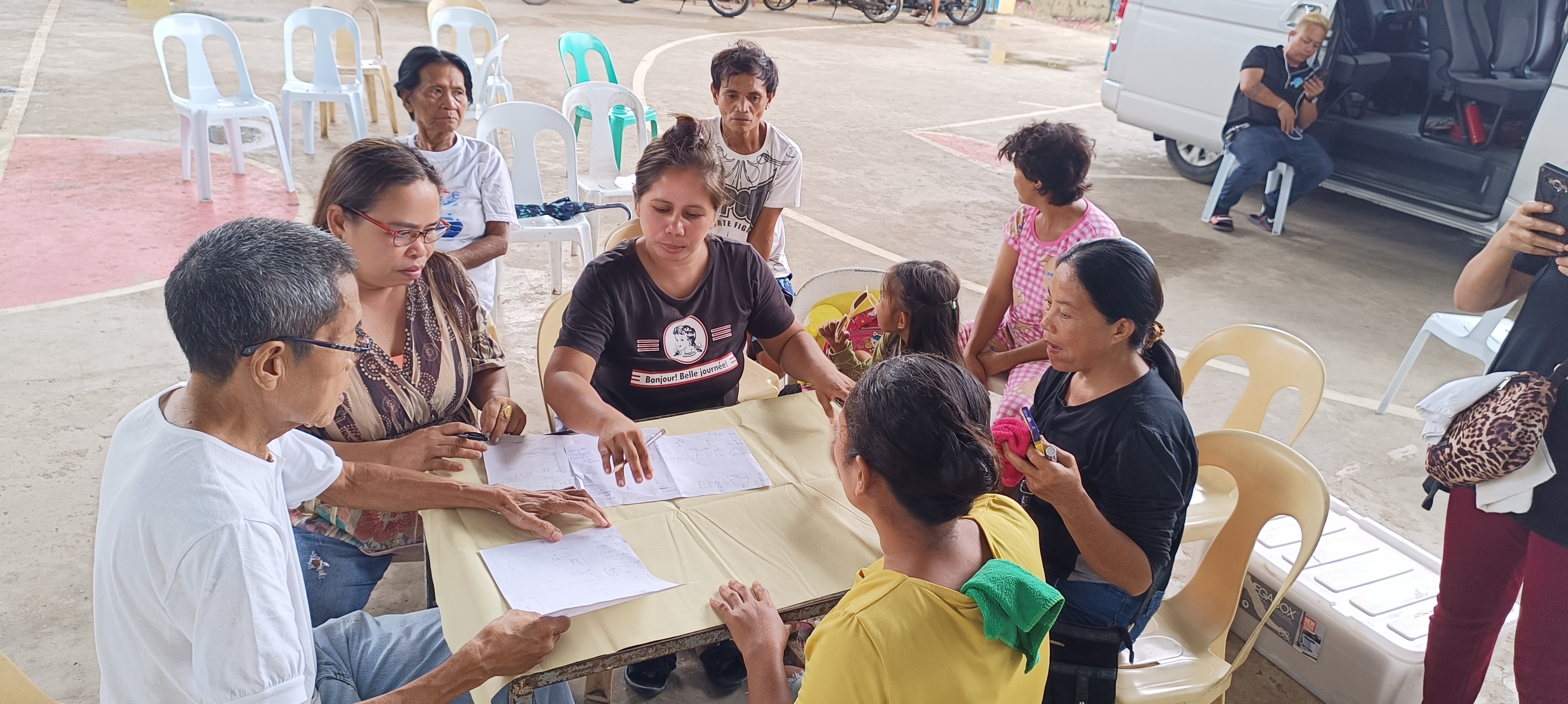
The most successful Citizens’ Assemblies (CAs) take full account of local circumstances and contexts, and adapt accordingly – hence the different lottery selection techniques used by the Grantee in each of the three locations. Respecting key principles is more important than the methods used. The Brazilian experience of social participation in decision-making processes demonstrates the variety of tools and mechanisms available for this. In this project, the methodology used by Delibera/ReCoS is arguably more rigorous and inclusive than most other experiences in Brazil.


Project Partner
Delibera Brasil
Project Description

Working in collaboration with municipal governments and civil society, the project seeks to establish Citizen Assemblies in three cities in Brazil to facilitate public participation in policymaking to address poverty and inequality. Building on experience from Brazil and elsewhere, the aim is to demonstrate to public managers, political leaders and citizens alike the feasibility and value of open, inclusive deliberation to build sustainable and widely supported policy responses to complex issues. Results and lessons from the project’s three pilot efforts will be shared at national level. Increased cooperation among policymakers and civil society will address declining public political participation even as it contributes to more equitable and sustainable urban development. The project includes activities relevant to the Covid-19 crisis as it impacts civil society and ensuring that responses uphold their rights and are inclusive of their needs.

Evaluation Date
September 2025
Country
LESSON

Lesson Learned: Strengthening Gender-Responsive Local Government in Nepal

Strategic engagement with the media can yield good results in amplifying voices of the marginalized, providing them with a platform to address wider audience to promote gender responsive and inclusive local governance and development. In the present case, the project engaged the media successfully to widely disseminate the project initiatives as well as leverage it as an accountability mechanism for following up with government officials on their promised actions in promoting inclusive local governance.

Project Partner
South Asia Partnership Nepal
Project Description

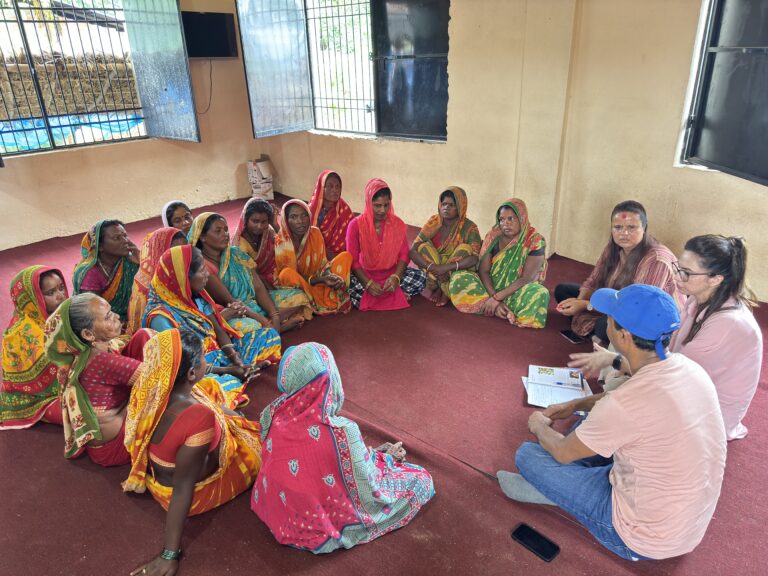
The project aims to empower Musahar women and strengthen their representation in local decision-making procedures for promoting gender-responsive local governance in two rural municipalities and two town municipalities. It will work through three main approaches:empowerment of Musahar women to claim their rights, accountability of local government authorities, and strengthening multi-stakeholder partnerships for gender-responsive local governance.

Evaluation Date
December 2024
Country
LESSON

Lesson Learned: Strengthening Gender-Responsive Local Government in Nepal

Connected support to enhance individual women’s capabilities and empowerment is important for women’s collective action. Support to build individual women’s leadership capacities is particularly important to build leadership skills and political capacities in order for them to work effectively with existing systems and political processes. In this case, while the Implementing Partner was successful in mobilizing and raising awareness for collective action among the Musahar women, focused support to build women’s capacities in communications and leadership would have further enhanced their ability to lead the women forums.

Project Partner
South Asia Partnership Nepal
Project Description

The project aims to empower Musahar women and strengthen their representation in local decision-making procedures for promoting gender-responsive local governance in two rural municipalities and two town municipalities. It will work through three main approaches:empowerment of Musahar women to claim their rights, accountability of local government authorities, and strengthening multi-stakeholder partnerships for gender-responsive local governance.

Evaluation Date
December 2024
Country
LESSON

Lesson Learned: Strengthening Gender-Responsive Local Government in Nepal

Livelihood support interventions can prove to be effective entry points in political empowerment initiatives, especially in the case of extremely marginalized and impoverished communities and should be considered as a strategic approach in project design. The present project experience clearly builds the case for linking economic and livelihood interventions to political empowerment evidenced through the successful establishment and continuation of the Musahar women led Cooperatives.

Project Partner
South Asia Partnership Nepal
Project Description

The project aims to empower Musahar women and strengthen their representation in local decision-making procedures for promoting gender-responsive local governance in two rural municipalities and two town municipalities. It will work through three main approaches:empowerment of Musahar women to claim their rights, accountability of local government authorities, and strengthening multi-stakeholder partnerships for gender-responsive local governance.

Evaluation Date
December 2024
Country
LESSON

Lesson Learned: Strengthening Gender-Responsive Local Government in Nepal

The project experience clearly indicates that in order to be impactful, the project design should involve multidimensional approaches that address both the practical and structural challenges, ranging from individual capacity gaps to overall gender discrimination and institutionalized exclusion, which constrain women’s voice, decision-making and leadership. In the present case, the Implementing Partner was successful in maintaining a dual focus on promoting women’s political participation through building women’s capacity and awareness of their rights and connecting them to key decision-making processes on the one hand and engaging with the Musahar community, particularly men, to address gender discrimination through sensitization sessions.

Project Partner
South Asia Partnership Nepal
Project Description

The project aims to empower Musahar women and strengthen their representation in local decision-making procedures for promoting gender-responsive local governance in two rural municipalities and two town municipalities. It will work through three main approaches:empowerment of Musahar women to claim their rights, accountability of local government authorities, and strengthening multi-stakeholder partnerships for gender-responsive local governance.

Evaluation Date
December 2024
Country
LESSON

Lesson Learned: Strengthening Gender-Responsive Local Government in Nepal

Supporting government institutions in becoming gender responsive and inclusive requires substantial efforts in institutional capacity building through sensitization, training and equipping government officials with tools and skills to carry out gender responsive planning and governance. In the present project, while the project was successful in sensitizing local government officials, focused institutional capacity building could have contributed to a more impactful and sustainable change.

Project Partner
South Asia Partnership Nepal
Project Description

The project aims to empower Musahar women and strengthen their representation in local decision-making procedures for promoting gender-responsive local governance in two rural municipalities and two town municipalities. It will work through three main approaches:empowerment of Musahar women to claim their rights, accountability of local government authorities, and strengthening multi-stakeholder partnerships for gender-responsive local governance.

Evaluation Date
December 2024
Country
LESSON

Lesson Learned: Enhancing Women’s Political Participation in Eswatini

To ensure project sustainability and stakeholder ownership, it is vital to foster a comprehensive understanding of project outcomes among all stakeholders and to align project strategies with their mandates and constraints. In this project, the lack of ownership by the Electoral Boundaries Commission resulted in the Gender Responsive Electoral Guidelines not being adopted.

Project Partner
Women and Law in Southern Africa - Eswatini
Project Description

The project seeks to enhance the gender responsiveness of policies and practices in the electoral process in Eswatini by assisting stakeholders to develop gender responsive guidelines and educating citizens on the importance of women’s political participation, while empowering the female electorate with leadership skills, campaign and mobilization strategies. The project seeks to impart a long-term effect by enabling community-based paralegals to conduct gender equality sensitization talks at community level. Project activities will incorporate actions in response to the Covid-19 crisis, as it impacts women, including gender-based violence as well as social and economic pressures.

Evaluation Date
August 2024
Country
LESSON

Lesson Learned: Raising the Social and Political Profile of Youth in Mozambique

The project experience revealed that regular follow-up with project partners to monitor key activities, such as beneficiary selection, ensures accountability and maintains alignment with project goals and objectives. In this case, the project focal points across the provinces undertook the task of beneficiary selection without the consistent guidance and follow-up from the grantee. This led to the adoption of diverse selection criteria, some of which inadvertently contributed to higher participant turnover rates.

UDF-18-794-MOZ
Project Partner
Associação Gender Links Moçambique
Project Description
The project supports young people's participation in local and national issues by developing youth councils and youth councilor training workshops. Young people will have their voices heard on key social and political platforms, and will be better represented at the center of local and national policies and decision-making, within and outside selected councils. Project activities incorporate actions in response to the Covid-19 crisis as it impacts youth.
Evaluation Date
April 2024
Country
LESSON

Lesson Learned: Safeguarding the Rights of Transgender & Intersex Communities in Pakistan

Effective institutionalization of a technology driven initiative in government departments requires an assessment of their capacity and readiness. Technical and capacity support may be provided to ensure smooth transfer and successful adoption of technology. In the present project, an App developed to report human rights incidents and violations was handed off without prior assessment to a public office unprepared for ensuring its maintenance and use.

Project Partner
Formation Awareness & Community Empowerment Society
Project Description
The project objective is to work for the protection and promotion of human rights and fundamental freedoms of LGBTI persons, particularly transgender and intersex, in Lahore and Faisalabad districts. Expected outcomes include support for 5000 LGTQI/transgender persons; enhanced capacity of 50 civil society and human rights organizations; increased public awareness of LGBTI rights; registration of transgender and intersex persons for computerized national identity cards; improved policy framework and legal provision on the rights of transgender and intersex person.
Evaluation Date
March 2024
Theme
Country
LESSON

Lesson Learned: Safeguarding the Rights of Transgender & Intersex Communities in Pakistan

The project experience clearly indicates that project interventions when anchored in or leveraging existing government initiatives have greater stakeholder endorsement and higher chance to sustain. In this case, the grantee successfully tapped in and leveraged existing government initiatives that support, for example, the issuance of identity documentation as well as literacy and nonformal education.

Project Partner
Formation Awareness & Community Empowerment Society
Project Description
The project objective is to work for the protection and promotion of human rights and fundamental freedoms of LGBTI persons, particularly transgender and intersex, in Lahore and Faisalabad districts. Expected outcomes include support for 5000 LGTQI/transgender persons; enhanced capacity of 50 civil society and human rights organizations; increased public awareness of LGBTI rights; registration of transgender and intersex persons for computerized national identity cards; improved policy framework and legal provision on the rights of transgender and intersex person.
Evaluation Date
March 2024
Theme
Country