
sustainability

LESSON

Lesson Learned: Deepening Democratization Processes Through Youth Leadership in Myanmar

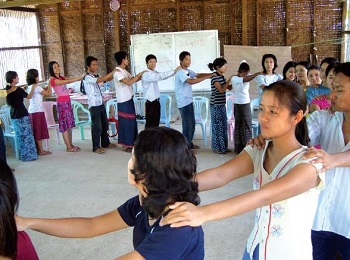
The major impact of the project was the successful "fellowship" established, with more than 100 youth fellows trained to become leaders and agents of change in their communities. The project trained 30 new fellows but also gave further training to some 100 existing fellows, establishing a "phased" introduction of new fellows to eventually replace those who move on.
Project Partner
ActionAid International in Myanmar
Project Description
The project aimed to identify new youth fellows, train them in leadership and concepts of democracy and governance, and prepare them to lead development projects in their communities. The strategy to do this was through "placements" with local grassroots organizations. The 130 trained youth fellows were supported through the fellowship network, including meetings at local and state levels and by identifying 400 youth volunteers through community "reflect circles" that the fellows facilitated. Together, the fellows and volunteers led and established a large number of development projects within the communities, ranging from pig rearing to the building of early education centres. The model is ideally suited to both produce the expected outcomes and also lay the groundwork for potential future representation at national level. The project far exceeded its own expectations, reaching more than 100,000 people through project activities. However, planned training of journalists and the development of a website proved not to be possible in the political climate in Myanmar and were replaced by the production of a series of newsletters for the fellows and for broader dissemination.
Evaluation Date
September 2010
Country
LESSON

Lesson Learned: Strengthening transitional justice processes in Burundi

Many of the professionals trained by the grantee before and during the project period have subsequently taken an active part in transitional justice related work in civil society, international organizations, the media and sometimes in state institutions in Burundi. Many representatives working on transitional justice and met by the evaluators had been trained by the grantee, and had used the skills they acquired to develop projects on behalf of their respective NGOs.
Project Partner
International Centre for Transitional Justice (ICTJ)
Project Description
The project was related to the establishment in Burundi of a National Consultation Steering Committee (NCSC) made up of government, UN and civil society representatives and tasked with addressing issues of national reconciliation and accountability for past large-scale human rights violations. The overall goal of the project was “to help the NCSC to achieve its mandate and promote transitional justice”
Evaluation Date
August 2010
Theme
Country
LESSON

Lesson Learned: Human rights training and capacity-building for indigenous people

A local monitoring system would have helped the beneficiary groups tackle the human rights abuses that affect them by putting in practice the knowledge acquired. Beneficiaries from Guatemala, Mexico, Panama, and Peru expressed also the wish to take part in further training, and to receive updates with the latest news on indigenous peoples’ rights
Project Partner
International Indian Treaty Council
Project Description
The project aimed to expand the awareness of and ability of indigenous groups to use international human rights standards and mechanisms. The project particularly targeted skilled community leaders who could replicate the training courses. Ultimately the grantee sought to build the indigenous peoples’ ability to participate and organize themselves so that they could challenge discrimination and oppression. The training of trainers succeeded in empowering community leaders and increasing their knowledge of international instruments for the defense of their rights, of which they were previously unaware. Methodological and pedagogical support for disseminating human rights knowledge in indigenous communities was, however, not provided and there is no evidence of any analysis being made of the results and lessons learned during the training, which would contributed to the sustainability of the project and the future usefulness of the training documents.
Evaluation Date
August 2010
Theme
Country
LESSON

Lesson Learned: Strengthening transitional justice processes in Burundi

Victims’ groups were established as a direct result of the project – for example groups of women who suffered from politically motivated sexual violence and survivors of the 1972 killings in Burundi.
Project Partner
International Centre for Transitional Justice (ICTJ)
Project Description
The project was related to the establishment in Burundi of a National Consultation Steering Committee (NCSC) made up of government, UN and civil society representatives and tasked with addressing issues of national reconciliation and accountability for past large-scale human rights violations. The overall goal of the project was “to help the NCSC to achieve its mandate and promote transitional justice”
Evaluation Date
August 2010
Theme
Country
LESSON

Lesson Learned: Promoting Citizen’s Participation in the Constitutional Reform Process in Ghana

Only 10 of those MPs who followed the advocacy seminars and expressed their support were recently re-elected into parliament, which gives additional reason for concern.
Project Partner
Institute of Economic Affairs
Project Description
The project facilitated the participation of marginalized and vulnerable groups of citizens in the constitutional reform process in Ghana. This process was initiated by the Ghanaian government when it established a Constitution Review Commission (CRC). The project aimed to consult the country’s marginalized populations on key constitutional issues and considered their recommendations in conjunction with the results of field surveys and thematic research papers. The project organized workshops with participants. On average 21 new relevant recommendations were made by each participant. This improved the quality of submissions - compared to the officially conducted CRC consultations – and prompted various Members of Parliament (MPs) to declare their support. Over 80% of the Constitution Review Commissions’ recommendations were informed by the project’s input, which demonstrates the impact the project had.
Theme
Country