Lessons

LESSON

Lesson Learned: Promoting political participation of marginalized populations in Ecuador

Following the project many young leaders and managers of grassroots organisations who were trained are now participating actively in local and provincial government bodies. These participants have disseminated the training and awareness-raising material to other members of the indigenous and African-descendant movements.
Project Partner
IFES
Project Description
The objective of the project was to reinforce local governance by helping to strengthen democratic practices among the indigenous and Afro-descendant populations of Ecuador. The project’s key components comprised of training for young leaders from the indigenous and Afro-descendant communities in leadership techniques and political influence; activities to raise the awareness and visibility of the target audience; institutional strengthening of the partner organisations and the creation of opportunities for political dialogue. Ecuador introduced a new constitution in 2008, which focused on improving the living conditions of vulnerable and marginalized communities and groups, fighting poverty and the promotion of sustainable human development. The decision to focus the project on young leaders, including a fair representation of young women, who had not previously had the chance to learn about and practice their civic responsibility, also proved to be relevant to the political context of renewal in the country.
Evaluation Date
October 2011
Country
LESSON

Lesson Learned: Democracy for Women’s Rights in Sindh, Pakistan

A positive factor for the sustainability of the project was the established track record of the grantee in the target communities. The grantee’s familiarity with local culture and institutions, its position of trust in communities, and its expertise all contributed to project success. The NGO has also proven its ability to attract funding.
Project Partner
Aasthan Latif Welfare Society
Project Description
The project’s objective was to enhance the quality of rural women’s political participation by raising their awareness of fundamental rights; the advantages of democracy and the importance of participation. The grantee aimed to mobilize and motivate rural women to actively participate in political life, and to organize them to take collective efforts on their own behalf.  Activities were targeted at both women and men in 680 communities in Sindh Province, Pakistan, and included data collection, participatory meetings, extensive media campaigns and social gatherings to stimulate community discussion, and the organization of local groups to promote and protect women’s rights. The project was relevant, given the fact that democratic participation in Pakistan, especially of women, was low. Underlying causes included the male-dominated social system, low awareness of fundamental freedoms and democratic rights, and a general lack of confidence in democratic processes.
Evaluation Date
October 2011
Country
LESSON

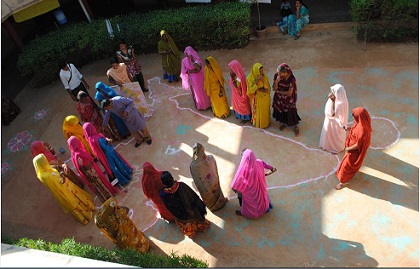
Lesson Learned: Strengthening the Leadership of Women in Local Democracy – Gram Panchayats (Village Councils in India)

In order to assess the progress of the elected women beyond the project the grantee should strengthen its data collection. This will also help maintain their strategic focus. Remaining - and new - needs among the elected women should be assessed before embarking on new training activity supporting the women’s federations.
Project Partner
The Hunger Project - India
Project Description
The project aimed to strengthen the leadership of women elected into Gram Panchayats (Village Councils) in the state of Rajasthan. Project activities were undertaken pre- and post-elections. Pre-election the activities involved championing the women candidates. Post-election the project focused on helping women fulfill their roles and responsibilities as elected women representatives (EWRs). A pre-election campaign focused on the dissemination of simplified, complete and accurate information. The goal of this information was to counter various myths and misunderstandings that were used to discourage prospective women candidates. Campaign materials were well researched and created with great care, taking into account local needs and conditions. Following the elections, residential leadership workshops instilled confidence, self-respect, dignity and solidarity among the women representatives.
Evaluation Date
September 2011
Country
LESSON

Lesson Learned: Strengthening Women’s Leadership in Jamaica

The training included a practical exercise where by the 10 women were given small sums of money to implement a community project in their area of interest. This served to reinforce the learning and provided hands on experience to these women in a mentored environment. This helped ensure the success of most mini-projects which in turn helped increase the trainees’ confidence and self-esteem and contributed to their community’s perception of them as leaders.
Project Partner
Women's Resource and Outreach Centre
Project Description
The project aimed to address the under representation of women in decision making positions in Jamaica, particularly on the boards of private companies and public commissions. The project did this by: increasing the participation of women through training and awareness building and increasing the participation of women in leadership in community based organizations, including school boards, also through training and awareness building. It also sought to create a national conversation on the need to open spaces for women to participate in decision making. There was also a separate women’s leadership research activity undertaken in Trinidad and Tobago. Although women comprise more than 70% of university graduates in Jamaica, only 13% of parliamentarians are women and only 16% of the board positions in the private sector are filled by women. The project believed that by training 100 women it could make a strategic infusion of talented and enthusiastic women into the boardrooms, and transform their gender dynamics. The project met its main objective of increasing the number of qualified women trained and available for service on public commissions and private sector boards. Some of these women were already high profile leaders and board members, but most were entry and mid-professional women with leadership potential that still remained to be tapped.
Evaluation Date
September 2011
Country
LESSON

Lesson Learned: Assessing Democracy Assistance

Weigh the advantages and disadvantages of book or journal special issue publication. Papers can quite quickly become outdated. But publishing through a leading academic press, can add credibility and reach.
Project Partner
Fundación para las Relaciones Internacionales y el Diálogo Exterior
Project Description
The project “Assessing Democracy Assistance” was implemented by Fundación para las relaciones internacionales y el Diálogo Exterior (FRIDE) from 1 October 2009 to 30 September 2011. The project’s goals were to provide the first comprehensive assessment of global democracy assistance efforts based on the views and perceptions of local stakeholders and to ensure, through systematic dissemination and consultation among policy makers, opinion leaders, media and local stakeholders, the findings’ impact on future policy design. Whether the project succeeded in strengthening international commitment to democracy assistance and strengthening the quality of development assistance by improving the alignment between the supply and demand sides is difficult to judge, especially for a small, short-term intervention. However, evidence has been found that project results were broadly disseminated and cited among academics and practitioners worldwide. While the project did not provide capacity building and institution strengthening in the traditional sense, it did promote activities of a number of relatively young researchers, contributing to rejuvenating and strengthening the democracy community.
Evaluation Date
September 2011
LESSON

Lesson Learned: Women Can Do It – Balanced Participation in Decision-Making

The project encouraged many women in Moldova to stand for selection as party candidates at local and district levels, while also enabling them to mount effective campaigns. It established a national cadre of well-qualified and highly committed trainers and women capable of being effective decision-makers. It showed large numbers of women how to network and collaborate with their peers across party lines and demonstrated the benefits of such collaboration.

Project Partner
Political Club of Women 50/50
Project Description
The purpose of the project was to empower women and encourage them to participate as candidates in the local elections in Moldova in 2011. The project’s methodology, as well as the philosophy and psychology of learning guiding it, derived from a training programme begun by the women’s organization of the Norwegian Labour Party developed in the early 1990s. The grantee utilized the core methodology in earlier, smaller-scale projects since 2001-2002. The emphasis throughout the project process was on building self-confidence and providing guidance on how to overcome the barriers to women realizing their potential as actors in the political process. The approach adopted proved highly pertinent to those involved, not only in relation to public life, but also in enabling them to rethink their place in the workplace, in the family, and in everyday life.
Evaluation Date
September 2011
LESSON

Lesson Learned: Strengthening Women’s Leadership in Jamaica

The degree to which the project met its anticipated outcome of increased national awareness and action in support of the participation of women was hard to determine. The project did reach women beyond the project participants but, without baseline or post-project information, the extent of this reach was an unknown. Anecdotal information suggests there was some effect, most notable in the National Educational Council volunteers. But the cultural and social attitudes that prevent gender parity are deeply entrenched and it will take more than time and/or the quotas recommended by the grantee to achieve true gender equity.
Project Partner
Women's Resource and Outreach Centre
Project Description
The project aimed to address the under representation of women in decision making positions in Jamaica, particularly on the boards of private companies and public commissions. The project did this by: increasing the participation of women through training and awareness building and increasing the participation of women in leadership in community based organizations, including school boards, also through training and awareness building. It also sought to create a national conversation on the need to open spaces for women to participate in decision making. There was also a separate women’s leadership research activity undertaken in Trinidad and Tobago. Although women comprise more than 70% of university graduates in Jamaica, only 13% of parliamentarians are women and only 16% of the board positions in the private sector are filled by women. The project believed that by training 100 women it could make a strategic infusion of talented and enthusiastic women into the boardrooms, and transform their gender dynamics. The project met its main objective of increasing the number of qualified women trained and available for service on public commissions and private sector boards. Some of these women were already high profile leaders and board members, but most were entry and mid-professional women with leadership potential that still remained to be tapped.
Evaluation Date
September 2011
Country
LESSON

Lesson Learned: Strengthening the Leadership of Women in Local Democracy – Gram Panchayats (Village Councils in India)

The training methods used by the grantee were appreciated by the participants. Trainees enjoyed gathering for several days in residential workshops, away from their home. They described with enthusiasm how the training generated environments that were free of discriminatory patterns and full of opportunities for learning, sharing and exchange.

UNDEF/ India
Project Partner
The Hunger Project - India
Project Description
The project aimed to strengthen the leadership of women elected into Gram Panchayats (Village Councils) in the state of Rajasthan. Project activities were undertaken pre- and post-elections. Pre-election the activities involved championing the women candidates. Post-election the project focused on helping women fulfill their roles and responsibilities as elected women representatives (EWRs). A pre-election campaign focused on the dissemination of simplified, complete and accurate information. The goal of this information was to counter various myths and misunderstandings that were used to discourage prospective women candidates. Campaign materials were well researched and created with great care, taking into account local needs and conditions. Following the elections, residential leadership workshops instilled confidence, self-respect, dignity and solidarity among the women representatives.
Evaluation Date
September 2011
Country
LESSON

Lesson Learned: Empowerment of Shanty Towns’ Settlers through Democratic Spaces

At the end of the project, the beneficiaries from the four participating countries shared information about their practices and experiences with their counterparts from other countries and draw lessons for the future. This encouraged networking and inspired continued engagement and problem solving.
Project Partner
Un Techo Para mi País
Project Description
Aiming to improve the living conditions of vulnerable populations in marginalized areas and to put self-promotion processes in motion, the project’s goal was to enable these beneficiaries to take charge of their own affairs and to know and demand their rights. The grantee created permanent community centres and promoted community development through specific micro projects to mobilize and train teams of volunteers, and to strengthen the community centres’ capacity to organize and dialogue with local decision-making bodies. The beneficiaries greatly appreciated the project’s assistance on the ground. The volunteers’ continuous presence heightened the populations’ motivation and engagement. Several factors contributed to the project’s effectiveness: country action plans suited to local realities; the formation of well-trained teams of volunteers; the strong mobilization and participation of settlers in the activities; the financing of projects proposed by the target populations to improve their living conditions; and the quality of the local support provided by the teams of volunteers.
Evaluation Date
September 2011
Country
LESSON

Lesson Learned: Assessing Democracy Assistance

The project highlights the benefit to UNDEF from working with first-class partners who can produce first-class outputs on
schedule. There is a role for field-based, local NGO implemented projects, often in very challenging circumstances, but there is a role, as well, for global projects implemented in partnership with known global players.
Project Partner
Fundación para las Relaciones Internacionales y el Diálogo Exterior
Project Description
The project “Assessing Democracy Assistance” was implemented by Fundación para las relaciones internacionales y el Diálogo Exterior (FRIDE) from 1 October 2009 to 30 September 2011. The project’s goals were to provide the first comprehensive assessment of global democracy assistance efforts based on the views and perceptions of local stakeholders and to ensure, through systematic dissemination and consultation among policy makers, opinion leaders, media and local stakeholders, the findings’ impact on future policy design. Whether the project succeeded in strengthening international commitment to democracy assistance and strengthening the quality of development assistance by improving the alignment between the supply and demand sides is difficult to judge, especially for a small, short-term intervention. However, evidence has been found that project results were broadly disseminated and cited among academics and practitioners worldwide. While the project did not provide capacity building and institution strengthening in the traditional sense, it did promote activities of a number of relatively young researchers, contributing to rejuvenating and strengthening the democracy community.
Evaluation Date
September 2011