
risk

LESSON

Lesson Learned: For Participation of Persons with Disabilities in Disaster and Climate Risk Governance in the Philippines

Projects on democratic governance involving Local Government Unit partnerships should fully anticipate the expected effects brought about by major political events, such as national and local elections, as these can disrupt planned project activities. As was the case in some municipalities included in the project, the change of leadership after the elections resulted in the duplication of project activities, for example, the orientation provided to the Local Chief Executive, which negatively affected the project milestones and budget.

Project Partner
A2D Project-Research Group for Alternatives to Development Inc.
Project Description

This project works to empower people with disabilities to participate in disaster risk reduction approaches in 20 local government units in Cebu Province. It will build capacity for 20 organizations of persons with disabilities to have a real voice in formal community planning processes, with the goal of influencing local government to break barriers, open spaces for inclusion, and encourage at-risk populations to take an active role in disaster preparedness, risk reduction and other community development agenda issues.
Evaluation Date
December 2025
Country
LESSON

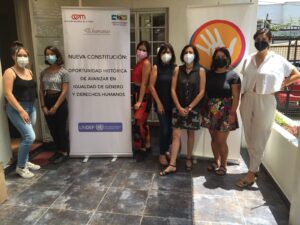
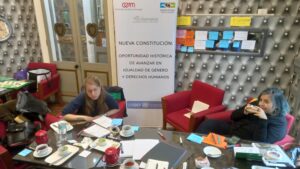
Lesson Learned: A New Constitution: Historical Opportunity to Advance Gender Equality and Women’s Rights in Chile

Project designers and managers should always be alive to what is ultimately achievable – and limit scope and ambition accordingly. The scope of the project was very broad, with many activities and actors to cover, and challenging to manage. The UNDEF partner admits they were “carried away by the enthusiasm” of the first constitutional reform process, following the social protests of 2019. The project did not necessarily suffer as a consequence, but it placed strain on delivery.

UDF-19-869-CHI
Project Partner
Centro Regional de Derechos Humanos y Justicia de Género
Project Description
The project objective is to promote women’s participation and gender content in Chile’s current constitutional process; advance women’s understanding of a new constitution’s importance to them and their rights; generate debates on key gender issues; advocate for the inclusion of gender aspects in the drafting process. The project is highly relevant in the Covid-19 world and its aftermath, where it will be essential to address the massive impact of the crisis on women, ensuring that responses uphold their rights and are inclusive of their needs.
Evaluation Date
May 2024
Country
LESSON

Lesson Learned: A New Constitution: Historical Opportunity to Advance Gender Equality and Women’s Rights in Chile

When operating in a highly charged political context, where significant stakeholders can pro-actively resist change, disinformation campaigns are increasingly a fact of life. To counter this, project managers should be able to rely on a robust media/engagement strategy to counter false messages that undermine the integrity of their project.

UDF-19-869-CHI
Project Partner
Centro Regional de Derechos Humanos y Justicia de Género
Project Description
The project objective is to promote women’s participation and gender content in Chile’s current constitutional process; advance women’s understanding of a new constitution’s importance to them and their rights; generate debates on key gender issues; advocate for the inclusion of gender aspects in the drafting process. The project is highly relevant in the Covid-19 world and its aftermath, where it will be essential to address the massive impact of the crisis on women, ensuring that responses uphold their rights and are inclusive of their needs.
Evaluation Date
May 2024
Country
LESSON

Lesson Learned: Raising the Social and Political Profile of Youth in Mozambique

The challenges posed by an unexpected event, such as the COVID-19 pandemic, underscored the importance of fostering strong connections with project stakeholders, adaptability, and proactive engagement. In this case, faced with a lockdown and the inability to conduct planned activities, the project successfully maintained its course, sustained stakeholder engagement, and capitalized on unforeseen opportunities to achieve enhanced outcomes.
Project Partner
Associação Gender Links Moçambique
Project Description
The project supports young people's participation in local and national issues by developing youth councils and youth councilor training workshops. Young people will have their voices heard on key social and political platforms, and will be better represented at the center of local and national policies and decision-making, within and outside selected councils. Project activities incorporate actions in response to the Covid-19 crisis as it impacts youth.
Evaluation Date
April 2024
Country
LESSON

Lesson Learned: Raising the Social and Political Profile of Youth in Mozambique

Clear communication with project stakeholders is essential to foster effective collaboration and mitigate potential misunderstandings or disputes. This should include a clear description of their roles and responsibilities, benefits, and timelines. In this project, discrepancies in the beneficiary selection and external consultant management would have been improved if all the stakeholders had received and signed specific Terms of Reference (ToR) outlining their duties, responsibilities, compensation, expected deliverables, and timeline.
Project Partner
Associação Gender Links Moçambique
Project Description
The project supports young people's participation in local and national issues by developing youth councils and youth councilor training workshops. Young people will have their voices heard on key social and political platforms, and will be better represented at the center of local and national policies and decision-making, within and outside selected councils. Project activities incorporate actions in response to the Covid-19 crisis as it impacts youth.
Evaluation Date
April 2024
Country
LESSON

Lesson Learned: Monitoring Implementation of UN Treaty Bodies’ Recommendations in Morocco

When projects fall on electoral calendars or are directly linked to elected officials which can shift, clear mitigation strategies must be developed to avoid significant project interruptions. In this case, the Implementing Partner was able to effectively use its advocacy skills to garner the attention of newly elected legislators and legislative staff, ensuring project continuity while shifting a potential barrier to a critical opportunity by working with a different set of decision-makers.

Project Partner
Médiateur pour la Démocratie et les Droits de l’Homme
Project Description

The project’s objective is to support in an inclusive way the monitoring of governmental efforts to implement UN treaty body recommendations, by bringing together civil society organizations and parliamentary actors to develop a monitoring mechanism; conducting a capacity development programme on international human rights law, monitoring, and advocacy in four regions; and mobilizing legislators to effectively exercise their roles and responsibilities in holding the government accountable for its commitments to implement UN treaty body recommendations.

Evaluation Date
February 2024
Country
LESSON

Lesson Learned: Promoting Youth Participation through Development Policy in Burkina Faso

The development of a proactive adaptation strategy to drastic changes in the geopolitical context has proven essential. By anticipating methods of adaptation to changing circumstances, whether natural, pandemic or geopolitical, it proposes actions and measures to be taken in the event of these changes materializing. Systematically integrating this strategy into the planning of projects strengthens the resilience of initiatives to changing conditions and increases their long-term effectiveness.
Project Partner
Balai Citoyen
Project Description
This project aims to both increase citizen participation of young people in the electoral process and implement the formulation and monitoring of public policies in seven municipalities in Burkina Faso. Advocacy and a series of awareness-raising actions will allow the establishment of at least seven local networks dedicated to the promotion of citizen participation of youth at the level of decision-making bodies. These actions will also lead public authorities to take formal measures in response to the demands formulated by young people. Project activities integrate actions in response to the Covid-19 crisis and its various implications for youth.
Evaluation Date
December 2023
Country
LESSON

Lesson Learned: Promoting Gender-Sensitive Personal Status Laws in Lebanon

There are important elements that influence the effectiveness of the implementation of an advocacy project other than the technical and financial capacity of the funded organisation. They include:
- The clarity of the organisation's internal strategy and the consistency of its positioning regarding the project’s objective.
- The credibility of the organisation and its members among CSOs and drivers of change relevant to the intervention.
- The social capital of the organization, which enables it to mobilize key stakeholders and allies in the field.
- The capacity of the organisation to analyse the political context, manage risks, and adapt activities to the situation.
Project Partner
KAFA (Enough) Violence and Exploitation
Project Description
This project aims to strengthen advocacy efforts towards a gender-sensitive civil personal status law in Lebanon. It will build capacity in civil society; create a coalition of a range of actors; engage the media; educate and inform the public; and increase pressure on political parties to take action on the draft law currently being reviewed by a committee in parliament. It will build a strong foundation for a well-informed, consistent national campaign to change the current law, which threatens democracy and human rights, in particular the rights of women, children, and marginalized groups, as well as increasing political pressure on lawmakers. Project activities will also incorporate actions in response to the Covid-19 crisis, as it impacts women, including gender-based violence.
Evaluation Date
September 2022
Country
LESSON

Lesson Learned: Promoting Gender-Sensitive Personal Status Laws in Lebanon

Advocacy projects in highly complex contexts require rigorous monitoring to (i) strengthen coalitions and ties despite changes to the positions of stakeholders and changing power dynamics; and to (ii) capture and adapt to the different levels of changes that could occur.
Project Partner
KAFA (Enough) Violence and Exploitation
Project Description
This project aims to strengthen advocacy efforts towards a gender-sensitive civil personal status law in Lebanon. It will build capacity in civil society; create a coalition of a range of actors; engage the media; educate and inform the public; and increase pressure on political parties to take action on the draft law currently being reviewed by a committee in parliament. It will build a strong foundation for a well-informed, consistent national campaign to change the current law, which threatens democracy and human rights, in particular the rights of women, children, and marginalized groups, as well as increasing political pressure on lawmakers. Project activities will also incorporate actions in response to the Covid-19 crisis, as it impacts women, including gender-based violence.
Evaluation Date
September 2022
Country
LESSON

Lesson Learned: Promoting Participatory Governance and the Rule of Law in South Kivu

The measures taken by the project in order to adapt to the COVID 19 pandemic (which included the development of COVID-related awareness campaigns, the implementation of concrete measures to avoid the spread of COVID during the implementation of project activities and the necessary budgetary reallocations to accommodate for the purchase of sanitary protection material) were also key to ensuring the success of the project.
Project Partner
CARITAS DEVELOPPEMENT BUKAVU
Project Description
In a context characterized by the recurrence of violations of human rights and freedoms, the project aims to respond to the major problem, identified by the Protection Cluster, which is "attacks on the right to life, dignity and freedom. "integrity of the person". This will be done through reactive, corrective and constructive actions, with technical support to the local Volunteer and Volunteer Community-CLOC Local Organizing Committees. This support includes: (1) Capacity building through training for members of these community structures and local authorities on the protection, promotion of human rights and community mediation, and on the reduction of human rights violations.(2) Technical and material support for advocacy, awareness-raising and mediation actions aimed at strengthening collaboration between the civilian population and local civil and military authorities and (3) easy access for victims to appropriate care services.
Evaluation Date
January 2022
Theme