Women's empowerment

LESSON

Lesson Learned: Narrowing the Gender Gap in Flood Affected Areas of Pakistan

The project should have put in place stronger follow-up activities with the communities after the workshops as well as with the government officials, specifically on the findings of the Governance Performance Scorecards and mobile phone reporting. The Gender Reform Committee structures were underutilized as project implementation remained centralized and driven by the grantee.
Project Partner
Pattan Development Organization
Project Description
The objective of the project was to reduce gender disparity and gender-based violence in eight flood affected districts of Pakistan. Its intended outcomes were: increased awareness of gender issues; increased progress towards certain Millennium Development Goals (MDG 3: gender equality and empowerment of women; MDG 4: reduced child mortality; and, MDG 5: improved maternal health); and increased capacity of women to counter gender discrimination and to hold government accountable. The project objectives were directly relevant to the needs to strengthen gender rights and equity within Pakistan and especially within rural, marginalized flood prone areas The grantee took a rights based approach that integrated men as well as women into the project activities and structures. This increased project relevance for the communities and helped to ensure that the women were able to participate in these male dominated areas.
Evaluation Date
July 2014
Country
LESSON

Lesson Learned: Narrowing the Gender Gap in Flood Affected Areas of Pakistan

Participants felt that the project had an abrupt ending and some were waiting for it to continue. The mobile phones that were given to the participants as part of the project were also returned to the grantee at the end so that the beneficiaries were not automatically able to continue to use the tools they had learned.
Project Partner
Pattan Development Organization
Project Description
The objective of the project was to reduce gender disparity and gender-based violence in eight flood affected districts of Pakistan. Its intended outcomes were: increased awareness of gender issues; increased progress towards certain Millennium Development Goals (MDG 3: gender equality and empowerment of women; MDG 4: reduced child mortality; and, MDG 5: improved maternal health); and increased capacity of women to counter gender discrimination and to hold government accountable. The project objectives were directly relevant to the needs to strengthen gender rights and equity within Pakistan and especially within rural, marginalized flood prone areas The grantee took a rights based approach that integrated men as well as women into the project activities and structures. This increased project relevance for the communities and helped to ensure that the women were able to participate in these male dominated areas.
Evaluation Date
July 2014
Country
LESSON

Lesson Learned: Empowerment of Women in India through Innovative Vocational Education and Training

The women participants who graduated from the programme in India were not only more employable; they also were better able to take informed decisions and actively engage in the identification and resolution of most pressing community issues.

UNDEF/ India
Project Partner
Amrita University (Amritapuri Campus)
Project Description
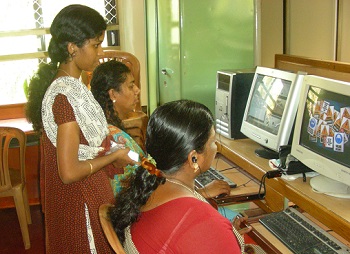
The project aimed to provide socially and economically impoverished women in India with the ability to participate in the democratic process and to strengthen their capacity to make decisions at individual, family and community levels. In addition to Computerized Vocational and Educational Training (CVET), which qualified beneficiaries for a wider range of employment opportunities and thus widen for them the scope of possibilities to achieve financial independence, Life Enrichment Education (LEE) activities, which comprised of video lectures and animated group discussions, complemented the women trainee’s entrepreneurial skills with democratic values and civic awareness, in order to transform them post-graduation into empowered participants of their local communities.
Evaluation Date
May 2014
Country
LESSON

Lesson Learned: Empowerment of Women in India through Innovative Vocational Education and Training

The grantee in India expanded the definition of existing target indicators for women’s participation by adding a variety of measurement options, which made the reporting of project outcomes less pertinent, as it lacked clear responses to the project document’s initial results framework.
Project Partner
Amrita University (Amritapuri Campus)
Project Description
The project aimed to provide socially and economically impoverished women in India with the ability to participate in the democratic process and to strengthen their capacity to make decisions at individual, family and community levels. In addition to Computerized Vocational and Educational Training (CVET), which qualified beneficiaries for a wider range of employment opportunities and thus widen for them the scope of possibilities to achieve financial independence, Life Enrichment Education (LEE) activities, which comprised of video lectures and animated group discussions, complemented the women trainee’s entrepreneurial skills with democratic values and civic awareness, in order to transform them post-graduation into empowered participants of their local communities.
Evaluation Date
May 2014
Country
LESSON

Lesson Learned: Empowerment of Women in India through Innovative Vocational Education and Training

Over 80% of the project’s enrolled trainees in India completed the course. Many former trainees praised the courses for delivering skills and providing them with employment opportunities, and acknowledged that the life enrichment courses and subsequent gatherings provided them with a much needed space, in which they could discuss how to resolve their social and economic issues.

Project Partner
Amrita University (Amritapuri Campus)
Project Description
The project aimed to provide socially and economically impoverished women in India with the ability to participate in the democratic process and to strengthen their capacity to make decisions at individual, family and community levels. In addition to Computerized Vocational and Educational Training (CVET), which qualified beneficiaries for a wider range of employment opportunities and thus widen for them the scope of possibilities to achieve financial independence, Life Enrichment Education (LEE) activities, which comprised of video lectures and animated group discussions, complemented the women trainee’s entrepreneurial skills with democratic values and civic awareness, in order to transform them post-graduation into empowered participants of their local communities.
Evaluation Date
May 2014
Country
LESSON

Lesson Learned: Empowerment of Women in India through Innovative Vocational Education and Training

The project generated 35 self-help groups which involved 451 former trainees in joint community and / or entrepreneurial activity in India. Graduates organised numerous initiatives to address community problems (e.g. alcoholism, domestic violence, poverty, social exclusion, traffic accidents).
Project Partner
Amrita University (Amritapuri Campus)
Project Description
The project aimed to provide socially and economically impoverished women in India with the ability to participate in the democratic process and to strengthen their capacity to make decisions at individual, family and community levels. In addition to Computerized Vocational and Educational Training (CVET), which qualified beneficiaries for a wider range of employment opportunities and thus widen for them the scope of possibilities to achieve financial independence, Life Enrichment Education (LEE) activities, which comprised of video lectures and animated group discussions, complemented the women trainee’s entrepreneurial skills with democratic values and civic awareness, in order to transform them post-graduation into empowered participants of their local communities.
Evaluation Date
May 2014
Country
LESSON

Lesson Learned: Raising Awareness about Women's Social, Political and Economic Rights in Afghanistan

The focus on “Afghan women” was hardly a focus at all. Findings of a baseline study, which indicated the particular need for learning about their rights on the part of less-educated women, were ignored. In fact, during implementation, project beneficiaries were principally better-educated, younger women.
Project Partner
Development and Public Awareness
Project Description
The project Raising Awareness about Women's Social, Political and Economic Rights in Afghanistan’s overall objective and outcomes were relevant to the development problem of women’s empowerment and facilitating a greater presence for women in public life. However, the evaluation concluded that the project was not implemented in full. While it appears to be the case that the radio and television roundtables planned for production and broadcast in the 15 target provinces did take place, other activities have been implemented in no more than six, and as few as three, of the provinces.
Evaluation Date
April 2014
Country
LESSON

Lesson Learned: Promoting Freedom of Information Activism at the Local Level in Brazil

While the network of grassroots organizations was involved in the design of the project, local stakeholders did not participate directly in the process and were not consulted. The different context in each of the five states in which the project was implemented demanded specific competencies that in many cases were not sufficiently developed. The focal points had no political experience. They needed skills to constructively participate in public debate, so that they would not be confined simply to reporting misconduct but could also offer solutions.
Project Partner
ARTICLE 19: Global Campaign for Free Expression
Project Description
The aim of the project was to promote the development of a more inclusive and equal society through promoting the free flow of information to the general public so that individuals, civil servants and civil society groups acting at the local level can hold their government to account, advocate for their rights and entitlements more effectively and influence policy-making processes. Specifically the project set out to foster local activism on freedom of information and to use access to information and transparency tools to strengthen participation within municipal governments across Brazil. The project strategy was built around four specific components: a strengthened and effective network of local activists working on access to information; increased public understanding of the importance of freedom of information and how to use the concept to encourage transparency and accountability; increased public demand for governments’ responsiveness to information requests at the local level; legislative and policy reform initiatives to promote transparency at the local level. The project was highly relevant since the Access to Public Information Act had recently come into effect. This Act required each municipality to draft regulations ensuring its proper enforcement. Yet surveys had indicated a lack of interest and knowledge in many municipalities about enforcing this law.
Evaluation Date
April 2014
Country
LESSON

Lesson Learned: Raising Awareness about Women's Social, Political and Economic Rights in Afghanistan

The project was poorly managed, and there was little apparent coordination among the partners in Afghanistan. Contracts were agreed between the grantee and two of its implementing partner yet management denied their existence, and no reference to them is made in project reports.
Project Partner
Development and Public Awareness
Project Description
The project Raising Awareness about Women's Social, Political and Economic Rights in Afghanistan’s overall objective and outcomes were relevant to the development problem of women’s empowerment and facilitating a greater presence for women in public life. However, the evaluation concluded that the project was not implemented in full. While it appears to be the case that the radio and television roundtables planned for production and broadcast in the 15 target provinces did take place, other activities have been implemented in no more than six, and as few as three, of the provinces.
Evaluation Date
April 2014
Country
LESSON

Lesson Learned: Raising Awareness about Women's Social, Political and Economic Rights in Afghanistan

Single television or radio programmes, with no linkage to ongoing campaigns or educational work, are unlikely to make a difference in enhancing the knowledge of viewers or listeners in Afghanistan.
Project Partner
Development and Public Awareness
Project Description
The project Raising Awareness about Women's Social, Political and Economic Rights in Afghanistan’s overall objective and outcomes were relevant to the development problem of women’s empowerment and facilitating a greater presence for women in public life. However, the evaluation concluded that the project was not implemented in full. While it appears to be the case that the radio and television roundtables planned for production and broadcast in the 15 target provinces did take place, other activities have been implemented in no more than six, and as few as three, of the provinces.
Evaluation Date
April 2014
Country