Lessons

LESSON

Lesson Learned: Active democracy and political participation of tribal communities in the Indian Himalayas

While this project in the Himalayan districts of India was well designed to be sustainable after funding had ended, the use of a volunteer workforce might put this at risk. This risk needs to be managed to ensure ongoing sustainability. Since even enthusiastic volunteers will not work for ever without compensation, consider providing modest honoraria to those who have volunteered and also to prepare new volunteers to replace those that drop out.

Project Partner
Pragya
Project Description
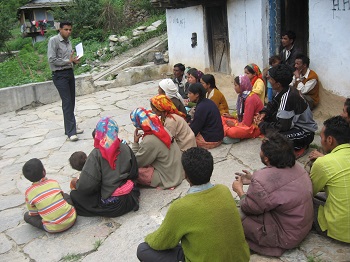
The project’s principal objectives were to enhance civic participation among Himalayan tribes and empower marginalized groups (women, people with disabilities and nomads); and to engage with governance issues and democratic dialogue. To this end, the project aimed to build a supportive environment for enhanced democratic participation through supporting state and non-state actors. The project consisted of 10 core components creating a continuum of involvement from awareness of rights to access to those rights, supported by the training and mobilization of relevant support actors and those who could make the rights a reality. The project design was logical and very much tuned to the needs of the beneficiaries and other stakeholders in this challenging region. There were no delays in project delivery, since it had been designed with the seasonal obstacles relevant to the target region in mind.
Evaluation Date
October 2012
Country
LESSON

Lesson Learned: Empowering Civil Society Inclusion on Democratic Policy-Making in Kosovo

As the project worked to change the structure of consultations rather than working on a specific law or case, it should have a wide impact. The institutionalization of government reforms made consultations less dependent on the individual good will of a public official. Further consolidation of these reforms was expected with the anticipated adoption of the Governmental Strategy for Cooperation with Civil Society. Much of that strategy is reportedly based on the contents of the manual that the project helped develop.
Project Partner
Kosovo Civil Society Foundation
Project Description
The project sought to strengthen the capacities of civil society to play an active role in shaping public policy and drafting laws. Its intended outcome was for civil society to become an active, informed and key partner in public policy and law making, so as to be able to react instantly on key public policy areas. The grantee capitalized on the government’s willingness for a more engaged and constructive civil society in policy development as well as the need for civil society organizations to have more information.  There was a substantial level of interest and participation in the project from both sides. The project’s strategy was sound as it built on the work already done by both CSOs and government offices. The project increased both the demand for and supply of public consultations.  
Evaluation Date
October 2012
Country
LESSON

Lesson Learned: Reinforcement of the role and image of women in West African media

The project design put an emphasis on economic, social and political problems specific to women in the region: access to land ownership, discrimination, gender-based and family violence. It also aimed to support women’s participation in democratic governance by highlighting women’s concerns and opinions. In that sense the projects expected results constituted appropriate responses to the problems identified.
Project Partner
Panos West Africa
Project Description
The project was to promote journalistic content countering negative images of women and reinforce the role of women journalists in the media, including at leadership level. The project’s impact was very clear in Niger were it contributed to the publication of a “Charter for the Improvement of the Image of Women in the Media”. In Mali and Burkina Faso, stakeholders mentioned positive changes in relation to journalists’ training on the use of oral testimony. The Femedia prizes given as part of the project had an impact beyond those journalists and media houses that participated in the competition. However, the overall impact of the project could have been greater if the grantee had developed and implemented an explicit advocacy strategy addressing government authorities and media regulators. As it was, the project only addressed these stakeholders indirectly.
Evaluation Date
October 2012
Country
LESSON

Lesson Learned: Active democracy and political participation of tribal communities in the Indian Himalayas

A principal reason for the project’s impact was the coherence between training/education, bridging processes and mobilization of stakeholder groups and community structures such as Resource Centres to support them. Training, education and sensitization will are more effective if there are processes or structures in place that can contribute to transforming them into practical outcomes.
Project Partner
Pragya
Project Description
The project’s principal objectives were to enhance civic participation among Himalayan tribes and empower marginalized groups (women, people with disabilities and nomads); and to engage with governance issues and democratic dialogue. To this end, the project aimed to build a supportive environment for enhanced democratic participation through supporting state and non-state actors. The project consisted of 10 core components creating a continuum of involvement from awareness of rights to access to those rights, supported by the training and mobilization of relevant support actors and those who could make the rights a reality. The project design was logical and very much tuned to the needs of the beneficiaries and other stakeholders in this challenging region. There were no delays in project delivery, since it had been designed with the seasonal obstacles relevant to the target region in mind.
Evaluation Date
October 2012
Country
LESSON

Lesson Learned: Electoral Justice Principles for Trust in the Electoral Process in Ghana, Kenya, Sierra Leone

The development of a new set of norms for electoral justice by the project was arguably not necessary. Most practitioners interviewed and who responded to the survey agreed that there is a large gap between the fast-paced nature of elections administration and the slower machinery of the judicial sector and judicial reform, but felt that there was already a large and well defined body of principles that applied to the issue, but which were not labeled as “electoral justice.
Project Partner
Tiri-Making Integrity Work
Project Description
The Electoral Justice Principles for Trust in the Electoral Process project sought to raise the integrity standard of the electoral processes in Africa by addressing the relations between the key electoral justice institutions and their relevance and accessibility to the electorate. Its main objectives were to: produce a set of electoral justice principles drafted by a group of chief justices and senior electoral and political leaders from Africa and other continents; and support the implementation of these principles in two African countries. Its intended outcomes were to increase trust in electoral justice authorities; reduce violence related to electoral dispute settlements, and to have political parties, candidates and civil society organizations (CSOs) in the pilot implementation country able to claim, advocate and defend rights for public integrity consultations. The project undertook minimal consultations with the large and dynamic electoral assistance sector and missed opportunities to tap its experience, explore collaboration and develop synergies with other efforts, such as the Global Commission on Elections, Democracy and Security that promote the integrity of elections. The norms themselves were not disseminated as planned so awareness of them is extremely limited and they were not endorsed by any international organization as anticipated. Most of those interviewed felt the principles needed wider consultations and did not have the weight required to make significant changes. The project was not Africa-specific and African involvement was limited primarily to the launch in Ghana and the APEJ-SL. The principles and guidelines were global in scope, and were not tailored to Sierra Leone for the pilot. It also focused on general electoral integrity issues and lacked a clear focus on electoral justice and how specifically this could be achieved through the creation of a steering committee.
Evaluation Date
September 2012
Theme
Country
LESSON

Lesson Learned: Lao Encouraging and Applying Democracy for Civil Society (LEAD)

Low quality outputs and results were attributable to the absence of a locally based project manager in Laos. The lack of a local project management capacity put the project’s sustainability at risk.
Project Partner
Kenan Institute Asia
Project Description
The grantee hoped to empower Civil Society Organizations and community leaders in Lao PDR and, to give them the skills and knowledge to contribute meaningfully to the country’s development. The project involved training various levels of staff in Lao non-profit associations to ensure that they would be able to share the technical knowledge and practical skills needed to transform their organizations into professionally run civil society organizations. The long term goal of these interventions was to build the capacity of the non-profit associations so that were managed in a more business-oriented manner. The participants in the project were satisfied by the organization of project events. Many of them had never been involved in training that combined lectures with practical, hands-on activities.
Evaluation Date
September 2012
LESSON

Lesson Learned: Electoral Justice Principles for Trust in the Electoral Process in Ghana, Kenya, Sierra Leone

There was also a large group of stakeholders active in supporting the electoral process in which the project was not integrated. This included the main election group chaired by the Ministry of Finance and Trade in Sierra Leone. There were other efforts that this project could have coordinated with. For example, the UN Peacebuilding Fund supported a non-state actors project which worked with wide range of groups to build consensus for political tolerance and non-violence, including civil society.
Project Partner
Tiri-Making Integrity Work
Project Description
The Electoral Justice Principles for Trust in the Electoral Process project sought to raise the integrity standard of the electoral processes in Africa by addressing the relations between the key electoral justice institutions and their relevance and accessibility to the electorate. Its main objectives were to: produce a set of electoral justice principles drafted by a group of chief justices and senior electoral and political leaders from Africa and other continents; and support the implementation of these principles in two African countries. Its intended outcomes were to increase trust in electoral justice authorities; reduce violence related to electoral dispute settlements, and to have political parties, candidates and civil society organizations (CSOs) in the pilot implementation country able to claim, advocate and defend rights for public integrity consultations. The project undertook minimal consultations with the large and dynamic electoral assistance sector and missed opportunities to tap its experience, explore collaboration and develop synergies with other efforts, such as the Global Commission on Elections, Democracy and Security that promote the integrity of elections. The norms themselves were not disseminated as planned so awareness of them is extremely limited and they were not endorsed by any international organization as anticipated. Most of those interviewed felt the principles needed wider consultations and did not have the weight required to make significant changes. The project was not Africa-specific and African involvement was limited primarily to the launch in Ghana and the APEJ-SL. The principles and guidelines were global in scope, and were not tailored to Sierra Leone for the pilot. It also focused on general electoral integrity issues and lacked a clear focus on electoral justice and how specifically this could be achieved through the creation of a steering committee.
Evaluation Date
September 2012
Theme
Country
LESSON

Lesson Learned: Electoral Justice Principles for Trust in the Electoral Process in Ghana, Kenya, Sierra Leone

The Steering Committee in Sierra Leone seemed to work efficiently. The National Election Commission subsidized most of the group’s effort. The project grant was given in mid-way through the process after the grantee met with two members of the Steering Committee that it sent to its integrity course in Budapest.
Project Partner
Tiri-Making Integrity Work
Project Description
The Electoral Justice Principles for Trust in the Electoral Process project sought to raise the integrity standard of the electoral processes in Africa by addressing the relations between the key electoral justice institutions and their relevance and accessibility to the electorate. Its main objectives were to: produce a set of electoral justice principles drafted by a group of chief justices and senior electoral and political leaders from Africa and other continents; and support the implementation of these principles in two African countries. Its intended outcomes were to increase trust in electoral justice authorities; reduce violence related to electoral dispute settlements, and to have political parties, candidates and civil society organizations (CSOs) in the pilot implementation country able to claim, advocate and defend rights for public integrity consultations. The project undertook minimal consultations with the large and dynamic electoral assistance sector and missed opportunities to tap its experience, explore collaboration and develop synergies with other efforts, such as the Global Commission on Elections, Democracy and Security that promote the integrity of elections. The norms themselves were not disseminated as planned so awareness of them is extremely limited and they were not endorsed by any international organization as anticipated. Most of those interviewed felt the principles needed wider consultations and did not have the weight required to make significant changes. The project was not Africa-specific and African involvement was limited primarily to the launch in Ghana and the APEJ-SL. The principles and guidelines were global in scope, and were not tailored to Sierra Leone for the pilot. It also focused on general electoral integrity issues and lacked a clear focus on electoral justice and how specifically this could be achieved through the creation of a steering committee.
Evaluation Date
September 2012
Theme
Country
LESSON

Lesson Learned: Electoral Justice Principles for Trust in the Electoral Process in Ghana, Kenya, Sierra Leone

The survey failed to differentiate between the five separate institutions involved in the security sector: the police, the armed forces, prisons, Fire Force and Native Administration security, all of which are coordinated by the Office of National Security. The research treated them as one group, which was not appropriate and led to a biased assessment.
Project Partner
Tiri-Making Integrity Work
Project Description
The Electoral Justice Principles for Trust in the Electoral Process project sought to raise the integrity standard of the electoral processes in Africa by addressing the relations between the key electoral justice institutions and their relevance and accessibility to the electorate. Its main objectives were to: produce a set of electoral justice principles drafted by a group of chief justices and senior electoral and political leaders from Africa and other continents; and support the implementation of these principles in two African countries. Its intended outcomes were to increase trust in electoral justice authorities; reduce violence related to electoral dispute settlements, and to have political parties, candidates and civil society organizations (CSOs) in the pilot implementation country able to claim, advocate and defend rights for public integrity consultations. The project undertook minimal consultations with the large and dynamic electoral assistance sector and missed opportunities to tap its experience, explore collaboration and develop synergies with other efforts, such as the Global Commission on Elections, Democracy and Security that promote the integrity of elections. The norms themselves were not disseminated as planned so awareness of them is extremely limited and they were not endorsed by any international organization as anticipated. Most of those interviewed felt the principles needed wider consultations and did not have the weight required to make significant changes. The project was not Africa-specific and African involvement was limited primarily to the launch in Ghana and the APEJ-SL. The principles and guidelines were global in scope, and were not tailored to Sierra Leone for the pilot. It also focused on general electoral integrity issues and lacked a clear focus on electoral justice and how specifically this could be achieved through the creation of a steering committee.
Evaluation Date
September 2012
Theme
Country
LESSON

Lesson Learned: Lao Encouraging and Applying Democracy for Civil Society (LEAD)

The skills gained through the training positively affected the participants’ day-to-day work, including their business development efforts and their attempts to enhance their communication with potential donors. Some CSOs in Laos reported they obtained an international funding as a direct impact of the grantee’s training programme.
Project Partner
Kenan Institute Asia
Project Description
The grantee hoped to empower Civil Society Organizations and community leaders in Lao PDR and, to give them the skills and knowledge to contribute meaningfully to the country’s development. The project involved training various levels of staff in Lao non-profit associations to ensure that they would be able to share the technical knowledge and practical skills needed to transform their organizations into professionally run civil society organizations. The long term goal of these interventions was to build the capacity of the non-profit associations so that were managed in a more business-oriented manner. The participants in the project were satisfied by the organization of project events. Many of them had never been involved in training that combined lectures with practical, hands-on activities.
Evaluation Date
September 2012