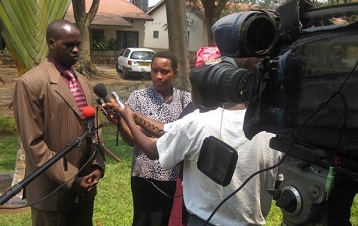
Women's empowerment

LESSON

Lesson Learned: Gender Equality and Equity - Follow Up to CEDAW and Romani women

Most project components were short of funds. All delivered the planned outputs, so commitments were lived up to. Yet all components of the project ended abruptly when they could have benefited from further work or follow-up. A more results-focused approach to budgeting might have brought about a change in the pattern of allocation of funds and the dropping of some components in favor of optimizing impact.
Project Partner
Roma Center Skopje
Project Description
The project had two primary audiences: Roma women’s NGOs and young Roma women activists. There were three additional audiences: local government officials; young people, Roma and non-Roma; and, officials of Roma political parties. This focus sought to address in a practical way the weakness of Roma civil society organizations, and particularly those led by, and working for, Roma women, in undertaking advocacy on behalf of their own people. The grantee accomplished a great deal with the small amount of funds provided. It built on the strategic plan developed for 2008-2010, and its earlier project “Implementation of CEDAW for Romani Women”, as well as follow-up initiatives (2005-2008). Through an extremely careful allocation of funds to different areas of activity, the organization was able to undertake a long list of activities and, thus, achieve its own objective. Yet, from an external perspective, it is apparent that there were insufficient funds for some activities, where follow-up was badly needed.
Evaluation Date
November 2011
LESSON

Lesson Learned: Appui à la participation politique et citoyenne de la femme dans le processus démocratique au Burundi

The project was closely linked to the 2010 electoral challenges in Burundi to encourage women to vote and to stand for election. The election process, with a mandatory quota of 30% female representatives within institutions, was an important lever to generate collective awareness among all these leaders and shapers of opinion. This project also went beyond the elections by suggesting the creation of a National Forum for dialogue, allowing women leaders to overcome political differences and to exchange ideas on priorities to be implemented in order to improve the living conditions of Burundian women.
Project Partner
Twungubumwe
Project Description
The goal of the project was to increase and strengthen political participation and citizenship among women within democratically elected institutions before, during, and after the election process of 2010. The underlying idea was to make use of this election period as a timeframe allowing for public debate in order to raise awareness among influential parties, such as the media and women leaders, of their rights in order to better know and to assert these rights by creating a National Forum.
Evaluation Date
November 2011
Country
LESSON

Lesson Learned: Appui à la participation politique et citoyenne de la femme dans le processus démocratique au Burundi

Although all planned activities were carried out, three unplanned activities were undertaken and the project was able to reach a large number of women, none of the expected goals were achieved. The grantee opted for an all-encompassing approach, rather than a more rigorous approach which would have contributed to the final objective. Beneficiaries were identified via a system of suggestions coming from the three regions without there being any kind of control mechanism in place and women leaders could not be efficiently identified. There is no indication of women leaders having been identified in all 17 provinces and thereby covering the whole country
Project Partner
Twungubumwe
Project Description
The goal of the project was to increase and strengthen political participation and citizenship among women within democratically elected institutions before, during, and after the election process of 2010. The underlying idea was to make use of this election period as a timeframe allowing for public debate in order to raise awareness among influential parties, such as the media and women leaders, of their rights in order to better know and to assert these rights by creating a National Forum.
Evaluation Date
November 2011
Country
LESSON

Lesson Learned: Gender Equality and Equity - Follow Up to CEDAW and Romani women

The training curricula and methodologies for delivering the training were very effective in the case of both the youth empowerment initiative and the preparation of young women activists to undertake field research on the situation of Roma women in local communities. The grantee may have discovered a niche for itself in training young people as a means to supporting their engagement with the public realm.
Project Partner
Roma Center Skopje
Project Description
The project had two primary audiences: Roma women’s NGOs and young Roma women activists. There were three additional audiences: local government officials; young people, Roma and non-Roma; and, officials of Roma political parties. This focus sought to address in a practical way the weakness of Roma civil society organizations, and particularly those led by, and working for, Roma women, in undertaking advocacy on behalf of their own people. The grantee accomplished a great deal with the small amount of funds provided. It built on the strategic plan developed for 2008-2010, and its earlier project “Implementation of CEDAW for Romani Women”, as well as follow-up initiatives (2005-2008). Through an extremely careful allocation of funds to different areas of activity, the organization was able to undertake a long list of activities and, thus, achieve its own objective. Yet, from an external perspective, it is apparent that there were insufficient funds for some activities, where follow-up was badly needed.
Evaluation Date
November 2011
LESSON

Lesson Learned: Gender Equality and Equity - Follow Up to CEDAW and Romani women

Despite earlier expressions of interest, at a time leading up to national elections, and despite persistent efforts by grantee, the political parties proved to be unwilling to share their programmes, or to meet with the expert retained by grantee to discuss the issue of gender equality. The grantee prepared a short, informative handbook, "Because It Matters: Empowerment of Women in Political Parties". A public meeting was held to launch the publication, and, among others, representatives of three of the six official Roma parties attended. Copies were distributed to all the Roma parties, as well as to NGOs and women activists. While this alternative was very much a “second best” option, it did represent a thoughtful way to rescue the situation and keep the issue alive.
Project Partner
Roma Center Skopje
Project Description
The project had two primary audiences: Roma women’s NGOs and young Roma women activists. There were three additional audiences: local government officials; young people, Roma and non-Roma; and, officials of Roma political parties. This focus sought to address in a practical way the weakness of Roma civil society organizations, and particularly those led by, and working for, Roma women, in undertaking advocacy on behalf of their own people. The grantee accomplished a great deal with the small amount of funds provided. It built on the strategic plan developed for 2008-2010, and its earlier project “Implementation of CEDAW for Romani Women”, as well as follow-up initiatives (2005-2008). Through an extremely careful allocation of funds to different areas of activity, the organization was able to undertake a long list of activities and, thus, achieve its own objective. Yet, from an external perspective, it is apparent that there were insufficient funds for some activities, where follow-up was badly needed.
Evaluation Date
November 2011
LESSON

Lesson Learned: Gender Equality and Equity - Follow Up to CEDAW and Romani women

In two of its components, the project was fighting an uphill battle to get the attention of potential partners. The first component concerned Roma political parties, and, the second, municipal government and cooperation with the Equality Commissions (committees) of the municipal councils. The lack of interest by these partners highlights the absence of effective political representation of Roma and their interests in a “patron-client” political system, where parties do a poor job of representing the priorities of their constituencies, or of responding to their concerns. The parties saw no benefits in opening themselves to cooperation with an NGO which they did not trust. There seems to be little interest on the part of local government units in committing resources to Roma issues, and Roma tend to be invisible in local decision-making. The work supported by the project in two of the three municipalities was useful, but had no impact in changing the disposition of local government towards Roma and Roma women’s organizations.
Project Partner
Roma Center Skopje
Project Description
The project had two primary audiences: Roma women’s NGOs and young Roma women activists. There were three additional audiences: local government officials; young people, Roma and non-Roma; and, officials of Roma political parties. This focus sought to address in a practical way the weakness of Roma civil society organizations, and particularly those led by, and working for, Roma women, in undertaking advocacy on behalf of their own people. The grantee accomplished a great deal with the small amount of funds provided. It built on the strategic plan developed for 2008-2010, and its earlier project “Implementation of CEDAW for Romani Women”, as well as follow-up initiatives (2005-2008). Through an extremely careful allocation of funds to different areas of activity, the organization was able to undertake a long list of activities and, thus, achieve its own objective. Yet, from an external perspective, it is apparent that there were insufficient funds for some activities, where follow-up was badly needed.
Evaluation Date
November 2011
LESSON

Lesson Learned: Appui à la participation politique et citoyenne de la femme dans le processus démocratique au Burundi

The grantee was unaware of the impact the political parties have on the alleged independence of candidates, representatives and leaders in the administration. The evaluation revealed that the true impact of women leaders within the political parties relied mainly on co-operation and loyalty to leading figures.
Project Partner
Twungubumwe
Project Description
The goal of the project was to increase and strengthen political participation and citizenship among women within democratically elected institutions before, during, and after the election process of 2010. The underlying idea was to make use of this election period as a timeframe allowing for public debate in order to raise awareness among influential parties, such as the media and women leaders, of their rights in order to better know and to assert these rights by creating a National Forum.
Evaluation Date
November 2011
Country
LESSON

Lesson Learned: Appui à la participation politique et citoyenne de la femme dans le processus démocratique au Burundi

The theoretical content of the training sessions, which were carried out almost exclusively in French even though women in rural zones rarely speak anything other than Kirundi, meant that the needs of the beneficiaries could not be efficiently met.
Project Partner
Twungubumwe
Project Description
The goal of the project was to increase and strengthen political participation and citizenship among women within democratically elected institutions before, during, and after the election process of 2010. The underlying idea was to make use of this election period as a timeframe allowing for public debate in order to raise awareness among influential parties, such as the media and women leaders, of their rights in order to better know and to assert these rights by creating a National Forum.
Evaluation Date
November 2011
Country
LESSON

Lesson Learned: Democracy for Women’s Rights in Sindh, Pakistan

The sustainability of the project has perhaps been compromised by the fact that elections in Pakistan were delayed. Given the prevailing lack of confidence in democratic processes, the failure to be able to exercise the right to vote, which the project participants had been educated about, could eventually compromise the results of the project.
Project Partner
Aasthan Latif Welfare Society
Project Description
The project’s objective was to enhance the quality of rural women’s political participation by raising their awareness of fundamental rights; the advantages of democracy and the importance of participation. The grantee aimed to mobilize and motivate rural women to actively participate in political life, and to organize them to take collective efforts on their own behalf.  Activities were targeted at both women and men in 680 communities in Sindh Province, Pakistan, and included data collection, participatory meetings, extensive media campaigns and social gatherings to stimulate community discussion, and the organization of local groups to promote and protect women’s rights. The project was relevant, given the fact that democratic participation in Pakistan, especially of women, was low. Underlying causes included the male-dominated social system, low awareness of fundamental freedoms and democratic rights, and a general lack of confidence in democratic processes.
Evaluation Date
October 2011
Country
LESSON

Lesson Learned: Strengthening promotion of women’s rights (Kenya)

In Kenya, community dialogues over the radio proved effective in raising rural women’s awareness about their rights. For example, many married women in conservative communities gave little thought to the fact that their husbands possessed their identity papers. Through radio shows highlighting women’s issues, women became aware of the fact that this practice deprived them of the possibility to vote. The project could have allocated more funds to radio journalism. In the evaluation report many interviewees stressed the importance of radio in rural areas in Kenya, as it reaches beneficiaries with low literacy rates in vernacular languages, without the need of internet access.

UNDEF/Kenya
Project Partner
African Woman and Child Feature Service
Project Description
The project focused on the role of the media as a source of information for women at grassroots level, and as an influencing agent on government and institutional processes, promoting women’s voices and issues in the media. Additionally, the project aimed to build the capacity of advocacy groups to work with the media on behalf of women and other marginalized groups. The project succeeded in bringing women’s issues into the national debate ahead of the political reform process in Kenya. Most prominent was the monthly publication of the online newsletter Kenyan Woman which effectively framed women’s issues to more than 3 million subscribers. Kenyan Woman caught the attention of senior politicians, brought women’s stories to the attention of Kenya’s Truth, Justice and Reconciliation Commission, and influenced mainstream media to increase their focus on women’s issues.
Evaluation Date
October 2011
Country