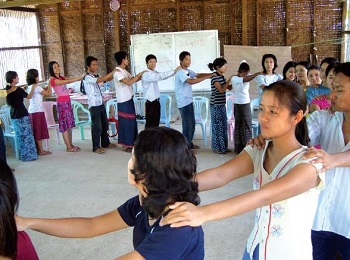
Youth engagement

LESSON

Lesson Learned: Cultivating Democratic Leaders from Marginalized Groups in Thailand

One criterion for selection of youth was perceived leadership ability, not their potential influence in their community nor the likely longevity of their participation in community activities.
Project Partner
The Asia Foundation
Project Description
The project was designed to engage young people from marginalized populations in four regions of Thailand, to empower them to voice their needs, access their rights, participate in political processes, and improve their lives and communities. The grantee set out to create new leaders among young people to lead actions in the disenfranchised communities. While the project supported the implementing partners financially and to a lesser extent with expertise, it did not demonstrate significant added-value in the area of democratic development. The trainees were by and large already engaged in development work in their communities and, once the project ended, the partners and the young people continued as before. The project designers would have been more aware of this, and potentially had a chance to rethink the relevance of the design, if they had reviewed existing and earlier practice in this area, and had considered in more depth the way NGOs in the regions work and from where they get their funding. The project fell into the trap of becoming, essentially, a short-term provider of funds.
Evaluation Date
December 2010
Country
LESSON

Lesson Learned: Cultivating Democratic Leaders from Marginalized Groups in Thailand

An unanticipated outcome of the project was the impact on young people of being brought together from the four different regions. The opportunity to move outside their own area of concern and experience differences and similarities among other young people was mentioned by several participants as the most memorable aspect of the project.
Project Partner
The Asia Foundation
Project Description
The project was designed to engage young people from marginalized populations in four regions of Thailand, to empower them to voice their needs, access their rights, participate in political processes, and improve their lives and communities. The grantee set out to create new leaders among young people to lead actions in the disenfranchised communities. While the project supported the implementing partners financially and to a lesser extent with expertise, it did not demonstrate significant added-value in the area of democratic development. The trainees were by and large already engaged in development work in their communities and, once the project ended, the partners and the young people continued as before. The project designers would have been more aware of this, and potentially had a chance to rethink the relevance of the design, if they had reviewed existing and earlier practice in this area, and had considered in more depth the way NGOs in the regions work and from where they get their funding. The project fell into the trap of becoming, essentially, a short-term provider of funds.
Evaluation Date
December 2010
Country
LESSON

Lesson Learned: Cultivating Democratic Leaders from Marginalized Groups in Thailand

Media as a component of project activity is not the same as involving media in order to publicize the project or organizations involved. Survey results might have been of interest to the media generally (including international media) and media coverage might have contributed to putting some serious social issues on the political agenda.
Project Partner
The Asia Foundation
Project Description
The project was designed to engage young people from marginalized populations in four regions of Thailand, to empower them to voice their needs, access their rights, participate in political processes, and improve their lives and communities. The grantee set out to create new leaders among young people to lead actions in the disenfranchised communities. While the project supported the implementing partners financially and to a lesser extent with expertise, it did not demonstrate significant added-value in the area of democratic development. The trainees were by and large already engaged in development work in their communities and, once the project ended, the partners and the young people continued as before. The project designers would have been more aware of this, and potentially had a chance to rethink the relevance of the design, if they had reviewed existing and earlier practice in this area, and had considered in more depth the way NGOs in the regions work and from where they get their funding. The project fell into the trap of becoming, essentially, a short-term provider of funds.
Evaluation Date
December 2010
Country
LESSON

Lesson Learned: Cultivating Democratic Leaders from Marginalized Groups in Thailand

The one potentially new element of the project – the participant survey – did not underpin the activities of the project participants; the issues actually addressed were those that have been the focus of actions in this region for some time and which are the focus of other local projects. Trainees were already engaged in development work in their communities and, once the project ended, continued as before. The project designers would have been more aware of this if they had reviewed existing and earlier practice in this area, and had considered in more depth the way NGOs in the regions work and their funding sources.
Project Partner
The Asia Foundation
Project Description
The project was designed to engage young people from marginalized populations in four regions of Thailand, to empower them to voice their needs, access their rights, participate in political processes, and improve their lives and communities. The grantee set out to create new leaders among young people to lead actions in the disenfranchised communities. While the project supported the implementing partners financially and to a lesser extent with expertise, it did not demonstrate significant added-value in the area of democratic development. The trainees were by and large already engaged in development work in their communities and, once the project ended, the partners and the young people continued as before. The project designers would have been more aware of this, and potentially had a chance to rethink the relevance of the design, if they had reviewed existing and earlier practice in this area, and had considered in more depth the way NGOs in the regions work and from where they get their funding. The project fell into the trap of becoming, essentially, a short-term provider of funds.
Evaluation Date
December 2010
Country
LESSON

Lesson Learned: Cultivating Democratic Leaders from Marginalized Groups in Thailand

After a project ends local partners should be able to continue the work begun. Specifically, mobilized young people should have follow-up, guidance and resources. Building fundraising techniques into the project design could address this issue. Such forward planning may include developing networks that can support young people including local authorities, media and potential donors (private and public sector).
Project Partner
The Asia Foundation
Project Description
The project was designed to engage young people from marginalized populations in four regions of Thailand, to empower them to voice their needs, access their rights, participate in political processes, and improve their lives and communities. The grantee set out to create new leaders among young people to lead actions in the disenfranchised communities. While the project supported the implementing partners financially and to a lesser extent with expertise, it did not demonstrate significant added-value in the area of democratic development. The trainees were by and large already engaged in development work in their communities and, once the project ended, the partners and the young people continued as before. The project designers would have been more aware of this, and potentially had a chance to rethink the relevance of the design, if they had reviewed existing and earlier practice in this area, and had considered in more depth the way NGOs in the regions work and from where they get their funding. The project fell into the trap of becoming, essentially, a short-term provider of funds.
Evaluation Date
December 2010
Country
LESSON

Lesson Learned: Deepening Democratization Processes Through Youth Leadership in Myanmar

The project far exceeded its own expectations, reaching more than 100,000 people through project activities. In part, this was a result of the intelligent and robust implementation structure put in place, with the grantee working closely with a number of reliable grassroots organizations in the regions where activities were undertaken.
Project Partner
ActionAid International in Myanmar
Project Description
The project aimed to identify new youth fellows, train them in leadership and concepts of democracy and governance, and prepare them to lead development projects in their communities. The strategy to do this was through "placements" with local grassroots organizations. The 130 trained youth fellows were supported through the fellowship network, including meetings at local and state levels and by identifying 400 youth volunteers through community "reflect circles" that the fellows facilitated. Together, the fellows and volunteers led and established a large number of development projects within the communities, ranging from pig rearing to the building of early education centres. The model is ideally suited to both produce the expected outcomes and also lay the groundwork for potential future representation at national level. The project far exceeded its own expectations, reaching more than 100,000 people through project activities. However, planned training of journalists and the development of a website proved not to be possible in the political climate in Myanmar and were replaced by the production of a series of newsletters for the fellows and for broader dissemination.
Evaluation Date
September 2010
Country
LESSON

Lesson Learned: Deepening Democratization Processes Through Youth Leadership in Myanmar

The project was carefully planned to work within remaining restrictions and designed not to create conflict or controversy, to ensure that participants at the grassroots level were not put at unnecessary risk. Its design as part of a broader, longer-term undertaking means that it is embedded in processes that already have legitimacy among both communities and authorities.

Project Partner
ActionAid International in Myanmar
Project Description
The project aimed to identify new youth fellows, train them in leadership and concepts of democracy and governance, and prepare them to lead development projects in their communities. The strategy to do this was through "placements" with local grassroots organizations. The 130 trained youth fellows were supported through the fellowship network, including meetings at local and state levels and by identifying 400 youth volunteers through community "reflect circles" that the fellows facilitated. Together, the fellows and volunteers led and established a large number of development projects within the communities, ranging from pig rearing to the building of early education centres. The model is ideally suited to both produce the expected outcomes and also lay the groundwork for potential future representation at national level. The project far exceeded its own expectations, reaching more than 100,000 people through project activities. However, planned training of journalists and the development of a website proved not to be possible in the political climate in Myanmar and were replaced by the production of a series of newsletters for the fellows and for broader dissemination.
Evaluation Date
September 2010
Country
LESSON

Lesson Learned: Deepening Democratization Processes Through Youth Leadership in Myanmar

The grantee continued to use the fellowship model in other countries, and a global youth forum hub has been relocated from Nepal to Myanmar. Within this project, community groups were also brought together at state level with a view to initiating a state-level process that would endure beyond the end of project activity and involve both local development practitioners and government functionaries.
Project Partner
ActionAid International in Myanmar
Project Description
The project aimed to identify new youth fellows, train them in leadership and concepts of democracy and governance, and prepare them to lead development projects in their communities. The strategy to do this was through "placements" with local grassroots organizations. The 130 trained youth fellows were supported through the fellowship network, including meetings at local and state levels and by identifying 400 youth volunteers through community "reflect circles" that the fellows facilitated. Together, the fellows and volunteers led and established a large number of development projects within the communities, ranging from pig rearing to the building of early education centres. The model is ideally suited to both produce the expected outcomes and also lay the groundwork for potential future representation at national level. The project far exceeded its own expectations, reaching more than 100,000 people through project activities. However, planned training of journalists and the development of a website proved not to be possible in the political climate in Myanmar and were replaced by the production of a series of newsletters for the fellows and for broader dissemination.
Evaluation Date
September 2010
Country
LESSON

Lesson Learned: Deepening Democratization Processes Through Youth Leadership in Myanmar

Apart from the obvious advantage of documenting all that has happened for internal use, clearly identifying outputs, outcomes and also lessons-learned is useful for attracting ongoing donor support and for underpinning future project design and implementation.
Project Partner
ActionAid International in Myanmar
Project Description
The project aimed to identify new youth fellows, train them in leadership and concepts of democracy and governance, and prepare them to lead development projects in their communities. The strategy to do this was through "placements" with local grassroots organizations. The 130 trained youth fellows were supported through the fellowship network, including meetings at local and state levels and by identifying 400 youth volunteers through community "reflect circles" that the fellows facilitated. Together, the fellows and volunteers led and established a large number of development projects within the communities, ranging from pig rearing to the building of early education centres. The model is ideally suited to both produce the expected outcomes and also lay the groundwork for potential future representation at national level. The project far exceeded its own expectations, reaching more than 100,000 people through project activities. However, planned training of journalists and the development of a website proved not to be possible in the political climate in Myanmar and were replaced by the production of a series of newsletters for the fellows and for broader dissemination.
Evaluation Date
September 2010
Country
LESSON

Lesson Learned: Deepening Democratization Processes Through Youth Leadership in Myanmar

The major impact of the project was the successful "fellowship" established, with more than 100 youth fellows trained to become leaders and agents of change in their communities. The project trained 30 new fellows but also gave further training to some 100 existing fellows, establishing a "phased" introduction of new fellows to eventually replace those who move on.

Project Partner
ActionAid International in Myanmar
Project Description
The project aimed to identify new youth fellows, train them in leadership and concepts of democracy and governance, and prepare them to lead development projects in their communities. The strategy to do this was through "placements" with local grassroots organizations. The 130 trained youth fellows were supported through the fellowship network, including meetings at local and state levels and by identifying 400 youth volunteers through community "reflect circles" that the fellows facilitated. Together, the fellows and volunteers led and established a large number of development projects within the communities, ranging from pig rearing to the building of early education centres. The model is ideally suited to both produce the expected outcomes and also lay the groundwork for potential future representation at national level. The project far exceeded its own expectations, reaching more than 100,000 people through project activities. However, planned training of journalists and the development of a website proved not to be possible in the political climate in Myanmar and were replaced by the production of a series of newsletters for the fellows and for broader dissemination.
Evaluation Date
September 2010
Country