
baseline

LESSON

Lesson Learned: For Participation of Persons with Disabilities in Disaster and Climate Risk Governance in the Philippines

There should be a more nuanced, context-specific approach to empowering the Organizations of Persons with Disabilities. In the present project, some Organizations of Persons with Disabilities were more organizationally mature, with empowered leaders. This variation, especially regarding organizational maturity, should have been better captured in the rapid appraisal conducted at the onset of the project, enabling a more efficient organizational capacitation plan for each organization.
Project Partner
A2D Project-Research Group for Alternatives to Development Inc.
Project Description

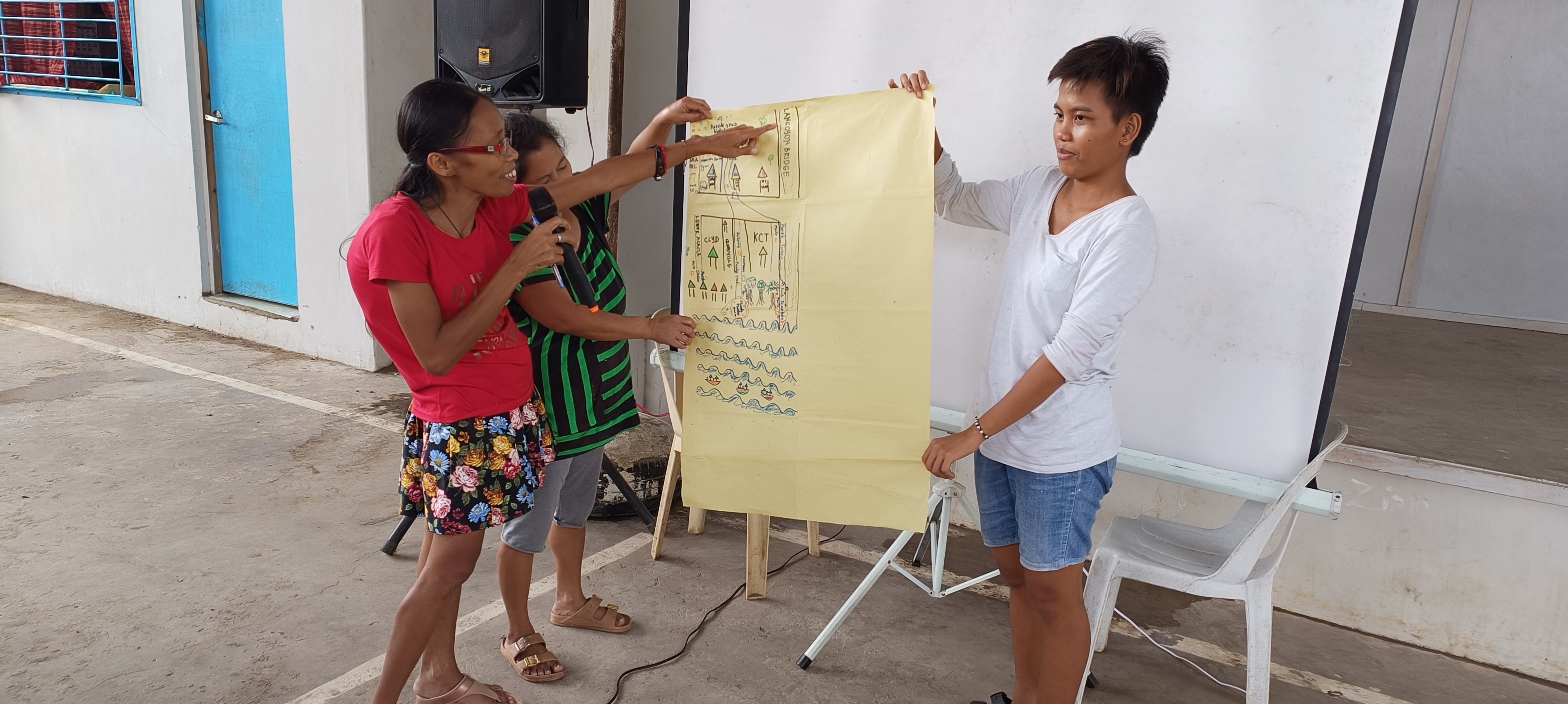
This project works to empower people with disabilities to participate in disaster risk reduction approaches in 20 local government units in Cebu Province. It will build capacity for 20 organizations of persons with disabilities to have a real voice in formal community planning processes, with the goal of influencing local government to break barriers, open spaces for inclusion, and encourage at-risk populations to take an active role in disaster preparedness, risk reduction and other community development agenda issues.

Evaluation Date
December 2025
Country
LESSON

Lesson Learned: Democracy Academy for Young Adults in El Salvador

Project design should focus on the detailed definitions of Global Objective, Specific Objectives, Actions, Indicators (at outcome and output level), Baseline and Targets. As it stands, the project definition lacked a clear project design matrix; overall and specific objectives and outputs were missing; outcome indicators were missing (outcome indicators were in fact output indicators), and outputs were not defined. Lastly, no sources of information/means of verification were formulated.

Project Partner
Fundación Salvadoreña para el Desarrollo Económico y Social
Project Description
The Democracy Academy for Young Adults (DAY) is a project that contributes to the strengthening and the promotion ofe democracy through the formation and active participation of young leaders in spaces of dialogue, social control, and defense of the democratic system with civil society and key political actors. The digital platforms used are essential to deepen and expand the exercise of democratic practices in this time of technological revolution.
Evaluation Date
March 2023
Country
LESSON

Lesson Learned: Jeunesse et participation électorale au Burkina Faso

Grantees need to be disciplined in their monitoring and reporting, making best use of the comprehensive guidance available on the UNDEF website. Grantees should feel free to suggest to UNDEF alternative baselines, target indicators and means of verification if data collection against initially planned Results Frameworks proves more difficult than expected or impossible.
Project Partner
Association Jeunesse Espoir d’Afrique
Project Description
Le projet vise à renforcer davantage la mobilisation sociale et l'engagement de la jeunesse dans les processus électoraux en cours au Burkina en vue des élections couplées législatives et présidentielle de 2020. Il s’agira au cours du projet de faire le monitoring de l’enrôlement biométrique des électeurs, de mener des actions de préservation de la cohésion sociale pour un processus électoral apaisé. Il est également prévu la prévention des conflits électoraux par la réalisation du monitoring de la violence.
Evaluation Date
May 2022
Country
LESSON

Lesson Learned: Fostering the Electoral Participation of Internally Displaced Persons in Georgia

Elections-related projects aimed at contributing to the democratic consolidation, cannot be seen as self-sufficient, stand-alone initiatives. In the current case, not considering the deviation of the team’s assumptions from the actual baseline and the lack of subsequent review of the implementation strategy negatively affected the project’s relevance and overall impact. When drafting and implementing such projects, it is therefore important to consider the wide range of factors related not only to the micro dimension but also those related to the macro dimension, which are relevant for the project’s integration and relevance within the larger policy context and important for the sustainability and impact to reach beyond the project’s immediate lifetime.
Project Partner
Consortium Legal Aid Georgia
Project Description
The project aims to increase awareness of electoral processes and to create an informed type of participation for internally displaced persons in Georgia. This will be achieved through mobilization and training to improve knowledge of electoral processes and encourage meaningful electoral involvement in the upcoming 2020 parliamentary election, and 2021 municipal elections. Capacity building activities will target civil society organizations who observe and monitor local elections.
Evaluation Date
November 2021
Country
LESSON

Lesson Learned: Transparency and Public Accountability in Education in Brazil

For an objective assessment of the project impact, the results frameworks must contain baseline, indicators and target that are specific, measurable, achievable, relevant and time-bound (SMART). Use a Monitoring work-plan to determine how the project’s specific activities and results are contributing to the achievement of the project’s outcomes and final impact.
Project Partner
Transparencia Brasil
Project Description
The project works to improve access to education in Brazil, by tackling mismanagement in construction of schools; empowering civil society groups to pressure local and federal government official for more accountability; building a network of local monitoring organizations; gathering robust information on problems in several phases of construction and delivery, presented in semi-annual reports to Federal Government and media; holding a final conference on lessons learned and how to redesign policies for effective monitoring and control with the help of local civil society organizations.
Evaluation Date
June 2020
Country
LESSON

Lesson Learned: Developing alternative models of natural resource governance based on indigenous community participation in Aceh

The inclusion of baseline data was a good idea, but the survey carried out by the grantee used unrealistic indicators which made it difficult to measure changes and impact. The baseline data did not clearly identify the nature of the Mukims’ weaknesses in dealing with the community, village and local government which resulted in inappropriate activities and ultimately in inadequate appreciation of results.
Project Partner
Perkumpulan Prodeelat
Project Description
The project’s objective was to strengthen the capacities of selected local Mukim communities in the Aceh province of Indonesia. A Mukim is a subdivision of a subdistrict and comprise of a number of villages. The aim of the project was to develop, advocate for and implement an alternative model of natural resource governance that promotes the participation and protects the rights of local communities, fosters environmental sustainability, and advances the interests of vulnerable and marginalized populations. The grantee’s approach was inspired by alternative governance models previously implemented by other local Mukim communities. At the time of project implementation, the legal framework which recognizes the Mukims’s authority and asserts its rights to manage its natural resources under Aceh's Special Autonomy status was not yet enforced. As Mukims represent indigenous communities in Aceh, the intended strategy was suited to the need of enhancing the credibility of Mukims. The existing Mukim associations had not previouslyt been in district policy making since they lacked visions, skills, orientations and strategies to build equal relations with public and governmental authorities.
Evaluation Date
July 2016
Country
LESSON

Lesson Learned: Empowering the Voice of a New Generation in Pakistan

The usefulness of the baseline study that was used to select the CBO partners in 20 locations in Pakistan, was uncertain as it assessed CBOs and their attributes rather than their qualifications. Some of the CBOs seemed extremely competent, but others might not have been the most appropriate choices. For instance, at least two did not appear to have offices where the Voice of a New Generation groups were expected to meet and the Information Resource Centres to be housed.
Project Partner
Civil Society Support Programme
Project Description
The project’s objective was to increase the role of youth in public affairs and policy development in 20 locations in Pakistan. Its intended outcomes were: a strengthened networking and institutional capacities of the programme; enhanced understanding of the Voice of New Generation youth on social, political and development issues; and increased participation of Voice of New Generation groups in research and advocacy for policy making on youth issues.   The project design addressed issues directly relevant to youth and incorporated community based organizations into programme delivery which helped ensure an effective intervention and continuity of efforts. However, it assumed all participants were literate, had internet access, and the time and drive to develop and sustain a Voice of a New Generation effort within their area. This was the case for only a small minority of the targeted youth. This significantly reduced the relevance of the project.
Evaluation Date
August 2014
Country
LESSON

Lesson Learned: Raising Awareness about Women's Social, Political and Economic Rights in Afghanistan

The focus on “Afghan women” was hardly a focus at all. Findings of a baseline study, which indicated the particular need for learning about their rights on the part of less-educated women, were ignored. In fact, during implementation, project beneficiaries were principally better-educated, younger women.
Project Partner
Development and Public Awareness
Project Description
The project Raising Awareness about Women's Social, Political and Economic Rights in Afghanistan’s overall objective and outcomes were relevant to the development problem of women’s empowerment and facilitating a greater presence for women in public life. However, the evaluation concluded that the project was not implemented in full. While it appears to be the case that the radio and television roundtables planned for production and broadcast in the 15 target provinces did take place, other activities have been implemented in no more than six, and as few as three, of the provinces.
Evaluation Date
April 2014
Country
LESSON

Lesson Learned: Promoting democratic and human rights values among Rwandan youth

A baseline survey was conducted at the start of the project. It showed respondent’s level of agreement with a number of statements about human rights and democracy in Rwanda, but not their level of knowledge. The project would have benefited from a more qualitative approach in which respondents could explain the rationale for their views.
Project Partner
Never Again Rwanda
Project Description
The overall objective of the project was to empower Rwandan youth to play an active role in the democratic process and good governance of their country, and to understand and stand up for human rights to further nation-building processes. The project targeted 7,000 youth members of Never Again Rwanda (NAR) clubs and associations to make them “ambassadors of change”. The targeted youth were to “reach out” to other young people and the general public through “knowledge and skills sharing and advocacy initiatives and drives”. The key activities of the project were to: train youth on human rights and advocacy skills; hold debates and theatre shows on human rights and democracy; and support the trained youth to play a role in democratic processes and good governance. The project was generally well designed in that it took into account the sensitive socio-political context of Rwanda under its post-genocide government.
Evaluation Date
February 2014
Country
LESSON

Lesson Learned: Promoting Good Governance among Tribal Inhabitants in Bangladesh (PROGGATI)

The project met its outputs however the extent of its impact is unclear. It did undertake a baseline in Year 1 that provided some descriptive but useful information on the targeted communities. However, this baseline was not repeated so there is no end-of-project data that it could be compared to.
Project Partner
Green Hill
Project Description
The project aimed to increase the political participation of indigenous (tribal) communities and community based organizations (CBOs) in the Rangamati Hill District of Bangladesh leading to an increase in their demand for more responsive public services and policies. The project set out to do this by increasing the dialogue between formal and traditional forms of local governance. Specifically, the project’s objectives were: enhance the capacities of local government leaders, CBOs and tribal community leaders; enable better coordination between stakeholders; and, promote democratic processes to ensure pro-poor service delivery and resource allocation. Its intended outcomes were: empowered CBOs and alternative community leaders; improved participation by traditional community leaders in the formal governance system; increased women’s participation; more pro-poor gender-sensitive local services; greater trust between the different stakeholders - indigenous inhabitants, Bengalis, CBOs and local government - and regular media reporting on governance issues in the Rangamati Hill District. The project did seem to help resolve small but important issues for the communities, and helped to increase the visibility of the open budget system by promoting its use by its committees. It also seems to have increased the general level of awareness of project participants on governance issues.
Evaluation Date
December 2013
Country