sustainable

LESSON

Lesson Learned: For Participation of Persons with Disabilities in Disaster and Climate Risk Governance in the Philippines

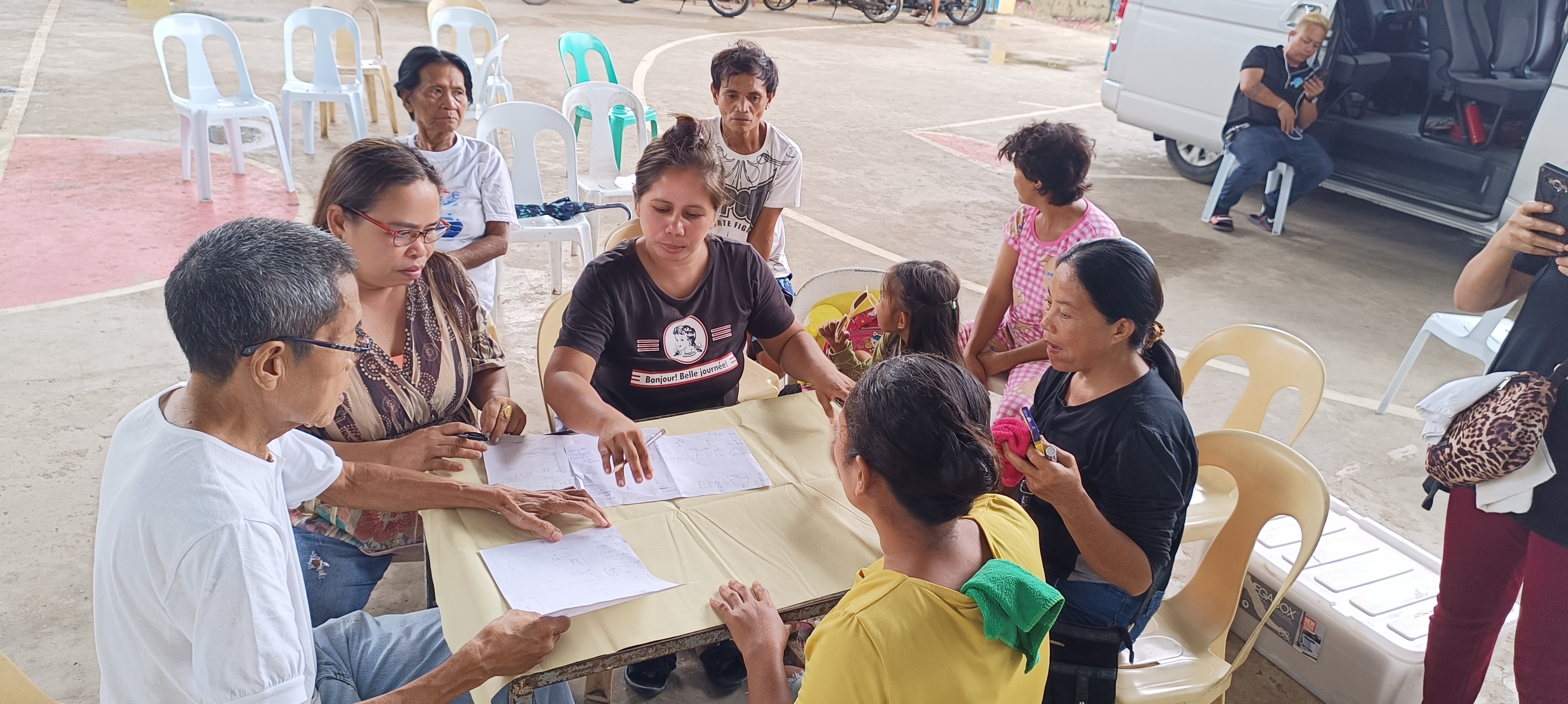
The best way to ensure the success of projects for Persons with Disabilities is to leverage the existing legal framework that mandates and, consequently, secures the participation of local government units. This permanent institutional structure will remain in the locality long after the project has ended. Further, the Local Government Units' buy-in serves as a signal to the community about the project's merits. It would also ensure active participation by community members, along with other civil society groups working with Persons with Disabilities. However, as was the case in this project, the existence of national policies to improve the conditions of Persons with Disabilities alone does not guarantee vibrant participation by Local Government Units in initiatives for Persons with Disabilities (PWD). In the future, an external oversight body could be established to monitor the disbursement of PWD budgets and ensure the proper utilization of PWD fund allocations as prescribed by national laws.

Project Partner
A2D Project-Research Group for Alternatives to Development Inc.
Project Description

This project works to empower people with disabilities to participate in disaster risk reduction approaches in 20 local government units in Cebu Province. It will build capacity for 20 organizations of persons with disabilities to have a real voice in formal community planning processes, with the goal of influencing local government to break barriers, open spaces for inclusion, and encourage at-risk populations to take an active role in disaster preparedness, risk reduction and other community development agenda issues.
Evaluation Date
December 2025
Country
LESSON

Lesson Learned: For Participation of Persons with Disabilities in Disaster and Climate Risk Governance in the Philippines

The capacity development of Organizations of Persons with Disabilities to manage a viable livelihood enterprise requires a longer period than the usual project life span. Project efficiency could have been improved by prioritizing capacity building early on in the project, so that additional technical support and organizational mentoring could have been provided within the project timeframe, with adequate budget allocation. Compared to the present project's approach, future project designs should highlight the importance of early provisions for adequate organizational capability building, with sufficient time and budget allocation.

Project Partner
A2D Project-Research Group for Alternatives to Development Inc.
Project Description

This project works to empower people with disabilities to participate in disaster risk reduction approaches in 20 local government units in Cebu Province. It will build capacity for 20 organizations of persons with disabilities to have a real voice in formal community planning processes, with the goal of influencing local government to break barriers, open spaces for inclusion, and encourage at-risk populations to take an active role in disaster preparedness, risk reduction and other community development agenda issues.
Evaluation Date
December 2025
Country
LESSON

Lesson Learned: For Participation of Persons with Disabilities in Disaster and Climate Risk Governance in the Philippines

To avoid the vacuum associated with the end of projects, mentoring and monitoring of project partners should be part of the project's withdrawal plan, drawn up by the implementors in partnership with the Local Government Units and the civil society groups working with Persons with Disabilities. In the present case, this provision would have prevented the loss of learning from the project's training and workshops and, at the same time, provided the Organizations of Persons with Disabilities a sense of continuity on the variety of projects they were working on. All Organizations of Persons with Disabilities in the project already have some form of organizational structure, but they must be regularly mentored to continuously improve their representation at the local development council.

Project Partner
A2D Project-Research Group for Alternatives to Development Inc.
Project Description

This project works to empower people with disabilities to participate in disaster risk reduction approaches in 20 local government units in Cebu Province. It will build capacity for 20 organizations of persons with disabilities to have a real voice in formal community planning processes, with the goal of influencing local government to break barriers, open spaces for inclusion, and encourage at-risk populations to take an active role in disaster preparedness, risk reduction and other community development agenda issues.
Evaluation Date
December 2025
Country
LESSON

Lesson Learned: Raising the Social and Political Profile of Youth in Mozambique

Integrating project activities with existing municipality initiatives involving youth has proven to be a successful strategy for ensuring project sustainability. In addition to creating new dialogue spaces between municipal authorities and youth, this project leveraged existing platforms, such as annual meetings with the local councilors, to include youth consultation in the municipal annual activity plans. This approach fostered stronger youth participation following the project capacity-building activities.
Project Partner
Associação Gender Links Moçambique
Project Description
The project supports young people's participation in local and national issues by developing youth councils and youth councilor training workshops. Young people will have their voices heard on key social and political platforms, and will be better represented at the center of local and national policies and decision-making, within and outside selected councils. Project activities incorporate actions in response to the Covid-19 crisis as it impacts youth.
Evaluation Date
April 2024
Country
LESSON

Lesson Learned: Safeguarding the Rights of Transgender & Intersex Communities in Pakistan

Connected, aware and empowered CSOs and Human Rights Defenders can become a strong catalyst for change at the grassroots level in order to promote local action aimed at promoting transgender persons’ rights. In this case, the engagement provided them a chance to liaise and establish a link with government officials and departments which continued beyond the project.

Project Partner
Formation Awareness & Community Empowerment Society
Project Description
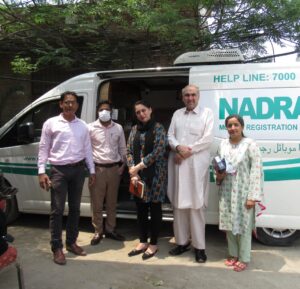
The project objective is to work for the protection and promotion of human rights and fundamental freedoms of LGBTI persons, particularly transgender and intersex, in Lahore and Faisalabad districts. Expected outcomes include support for 5000 LGTQI/transgender persons; enhanced capacity of 50 civil society and human rights organizations; increased public awareness of LGBTI rights; registration of transgender and intersex persons for computerized national identity cards; improved policy framework and legal provision on the rights of transgender and intersex person.
Evaluation Date
March 2024
Theme
Country
LESSON

Lesson Learned: Safeguarding the Rights of Transgender & Intersex Communities in Pakistan

The project experience clearly indicates that project interventions when anchored in or leveraging existing government initiatives have greater stakeholder endorsement and higher chance to sustain. In this case, the grantee successfully tapped in and leveraged existing government initiatives that support, for example, the issuance of identity documentation as well as literacy and nonformal education.

Project Partner
Formation Awareness & Community Empowerment Society
Project Description
The project objective is to work for the protection and promotion of human rights and fundamental freedoms of LGBTI persons, particularly transgender and intersex, in Lahore and Faisalabad districts. Expected outcomes include support for 5000 LGTQI/transgender persons; enhanced capacity of 50 civil society and human rights organizations; increased public awareness of LGBTI rights; registration of transgender and intersex persons for computerized national identity cards; improved policy framework and legal provision on the rights of transgender and intersex person.
Evaluation Date
March 2024
Theme
Country
LESSON

Lesson Learned: Safeguarding the Rights of Transgender & Intersex Communities in Pakistan

Meaningful and transformative change to safeguard rights of transgender community is possible through legislative action. Creating adequate legal frameworks and making justice work for transgender community requires rigorous policy advocacy and extensive engagement with policy and law makers. In this case, while the grantee took a number of initiatives including legal and policy review as well as development of a draft law on Transgender Rights, it met with limited success to generate ownership to steer the legal reform process due to limited engagement with parliamentarians and policy makers.

Project Partner
Formation Awareness & Community Empowerment Society
Project Description
The project objective is to work for the protection and promotion of human rights and fundamental freedoms of LGBTI persons, particularly transgender and intersex, in Lahore and Faisalabad districts. Expected outcomes include support for 5000 LGTQI/transgender persons; enhanced capacity of 50 civil society and human rights organizations; increased public awareness of LGBTI rights; registration of transgender and intersex persons for computerized national identity cards; improved policy framework and legal provision on the rights of transgender and intersex person.
Evaluation Date
March 2024
Theme
Country
LESSON

Lesson Learned: Safeguarding the Rights of Transgender & Intersex Communities in Pakistan

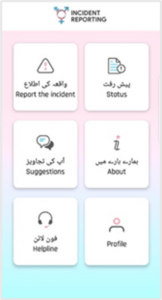
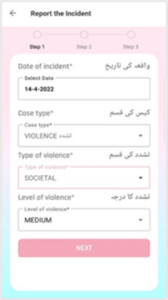
Effective institutionalization of a technology driven initiative in government departments requires an assessment of their capacity and readiness. Technical and capacity support may be provided to ensure smooth transfer and successful adoption of technology. In the present project, an App developed to report human rights incidents and violations was handed off without prior assessment to a public office unprepared for ensuring its maintenance and use.

Project Partner
Formation Awareness & Community Empowerment Society
Project Description
The project objective is to work for the protection and promotion of human rights and fundamental freedoms of LGBTI persons, particularly transgender and intersex, in Lahore and Faisalabad districts. Expected outcomes include support for 5000 LGTQI/transgender persons; enhanced capacity of 50 civil society and human rights organizations; increased public awareness of LGBTI rights; registration of transgender and intersex persons for computerized national identity cards; improved policy framework and legal provision on the rights of transgender and intersex person.
Evaluation Date
March 2024
Theme
Country
LESSON

Lesson Learned: Promoting Youth Participation through Development Policy in Burkina Faso

The establishment of an institutional consultation strategy between the project and institutional, social and international stakeholders has emerged as a key element to optimize resources, avoid redundancies and strengthen coordination. This approach, which encourages collaboration and close communication with various stakeholders, should be actively promoted in all projects to maximize the impact and sustainability of interventions.
Project Partner
Balai Citoyen
Project Description
This project aims to both increase citizen participation of young people in the electoral process and implement the formulation and monitoring of public policies in seven municipalities in Burkina Faso. Advocacy and a series of awareness-raising actions will allow the establishment of at least seven local networks dedicated to the promotion of citizen participation of youth at the level of decision-making bodies. These actions will also lead public authorities to take formal measures in response to the demands formulated by young people. Project activities integrate actions in response to the Covid-19 crisis and its various implications for youth.
Evaluation Date
December 2023
Country
LESSON

Lesson Learned: Strengthening Democracy Through LGBT Political Participation in South Africa

Clarity around how, and who, to engage within political party structures is important for targeting interventions at those most likely to embed learning in the structure. But even when internal learning structures within political parties are engaged – like the ANCs OR Tambo School of Leadership, a lack of resources to cascade learning can limit the number of indirect beneficiaries.
Project Partner
Triangle Project
Project Description
The project aims to strengthen South Africa's democracy through increasing equal participation of lesbian, gay, bisexual, trans and intersex people and promoting understanding among political parties and the Independent Electoral Commission around the importance of diverse representation. This will be achieved through the training of lesbian, gay, bisexual, trans and intersex leaders in civic engagement strategy and working with parties and the Commission to adopt policies and procedures to improve their representation, participation, voter registration and turn out.
Evaluation Date
August 2023
Theme
Country