ownership

LESSON

Lesson Learned: For Participation of Persons with Disabilities in Disaster and Climate Risk Governance in the Philippines

The best way to ensure the success of projects for Persons with Disabilities is to leverage the existing legal framework that mandates and, consequently, secures the participation of local government units. This permanent institutional structure will remain in the locality long after the project has ended. Further, the Local Government Units' buy-in serves as a signal to the community about the project's merits. It would also ensure active participation by community members, along with other civil society groups working with Persons with Disabilities. However, as was the case in this project, the existence of national policies to improve the conditions of Persons with Disabilities alone does not guarantee vibrant participation by Local Government Units in initiatives for Persons with Disabilities (PWD). In the future, an external oversight body could be established to monitor the disbursement of PWD budgets and ensure the proper utilization of PWD fund allocations as prescribed by national laws.

Project Partner
A2D Project-Research Group for Alternatives to Development Inc.
Project Description

This project works to empower people with disabilities to participate in disaster risk reduction approaches in 20 local government units in Cebu Province. It will build capacity for 20 organizations of persons with disabilities to have a real voice in formal community planning processes, with the goal of influencing local government to break barriers, open spaces for inclusion, and encourage at-risk populations to take an active role in disaster preparedness, risk reduction and other community development agenda issues.
Evaluation Date
December 2025
Country
LESSON

Lesson Learned: Strengthening Gender-Responsive Local Government in Nepal

Citizen led accountability (CLA) monitoring is a particularly useful initiative to promote gender responsive local governance. However, institutionalizing it requires extensive capacity building of local communities to enable them to continue it independently. In the present case, while the project piloted a Citizens Report Card successfully by acquiring a consultant, the knowledge and skills transfer to the community for developing it independently and regularly would have made it locally driven and owned, as well as sustainable.

Project Partner
South Asia Partnership Nepal
Project Description

The project aims to empower Musahar women and strengthen their representation in local decision-making procedures for promoting gender-responsive local governance in two rural municipalities and two town municipalities. It will work through three main approaches:empowerment of Musahar women to claim their rights, accountability of local government authorities, and strengthening multi-stakeholder partnerships for gender-responsive local governance.

Evaluation Date
December 2024
Country
LESSON

Lesson Learned: Strengthening Gender-Responsive Local Government in Nepal

As the project experience indicates, engaging a community representative organization like the National Musahar Association is an effective strategy to build trust and gain access to the community focused on by the project.

Project Partner
South Asia Partnership Nepal
Project Description

The project aims to empower Musahar women and strengthen their representation in local decision-making procedures for promoting gender-responsive local governance in two rural municipalities and two town municipalities. It will work through three main approaches:empowerment of Musahar women to claim their rights, accountability of local government authorities, and strengthening multi-stakeholder partnerships for gender-responsive local governance.

Evaluation Date
December 2024
Country
LESSON

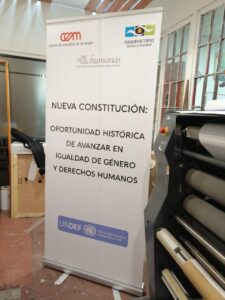
Lesson Learned: A New Constitution: Historical Opportunity to Advance Gender Equality and Women’s Rights in Chile

Capturing, and preserving for future use, key takeaways and materials should be an integral part of any successful and well-run project. In the present case, the experience of the constitutional reform processes in Chile and lessons learned from the project will self-evidently be of wider interest in the Latin American region, and beyond.

Project Partner
Centro Regional de Derechos Humanos y Justicia de Género
Project Description
The project objective is to promote women’s participation and gender content in Chile’s current constitutional process; advance women’s understanding of a new constitution’s importance to them and their rights; generate debates on key gender issues; advocate for the inclusion of gender aspects in the drafting process. The project is highly relevant in the Covid-19 world and its aftermath, where it will be essential to address the massive impact of the crisis on women, ensuring that responses uphold their rights and are inclusive of their needs.
Evaluation Date
May 2024
Country
LESSON

Lesson Learned: Raising the Social and Political Profile of Youth in Mozambique

The project experience revealed that regular follow-up with project partners to monitor key activities, such as beneficiary selection, ensures accountability and maintains alignment with project goals and objectives. In this case, the project focal points across the provinces undertook the task of beneficiary selection without the consistent guidance and follow-up from the grantee. This led to the adoption of diverse selection criteria, some of which inadvertently contributed to higher participant turnover rates.

UDF-18-794-MOZ
Project Partner
Associação Gender Links Moçambique
Project Description
The project supports young people's participation in local and national issues by developing youth councils and youth councilor training workshops. Young people will have their voices heard on key social and political platforms, and will be better represented at the center of local and national policies and decision-making, within and outside selected councils. Project activities incorporate actions in response to the Covid-19 crisis as it impacts youth.
Evaluation Date
April 2024
Country
LESSON

Lesson Learned: Safeguarding the Rights of Transgender & Intersex Communities in Pakistan

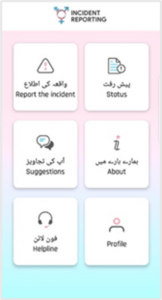
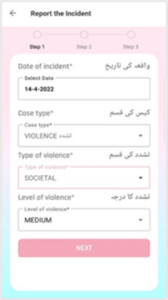
Effective institutionalization of a technology driven initiative in government departments requires an assessment of their capacity and readiness. Technical and capacity support may be provided to ensure smooth transfer and successful adoption of technology. In the present project, an App developed to report human rights incidents and violations was handed off without prior assessment to a public office unprepared for ensuring its maintenance and use.

Project Partner
Formation Awareness & Community Empowerment Society
Project Description
The project objective is to work for the protection and promotion of human rights and fundamental freedoms of LGBTI persons, particularly transgender and intersex, in Lahore and Faisalabad districts. Expected outcomes include support for 5000 LGTQI/transgender persons; enhanced capacity of 50 civil society and human rights organizations; increased public awareness of LGBTI rights; registration of transgender and intersex persons for computerized national identity cards; improved policy framework and legal provision on the rights of transgender and intersex person.
Evaluation Date
March 2024
Theme
Country
LESSON

Lesson Learned: Strengthening Media to Promote Inclusive Democracy in Mali

Project activity costs can be reduced through close coordination, mutual trust and regular consultation with key implementing partners that can lead to financial burden sharing and increased buy-in. This project, for example, reduced costs by persuading implementing partners to share some of the financial burden for certain events, when co-hosting.
Project Partner
Journalists for Human Rights
Project Description
This two-year project aims at strengthening media to play a role in fostering an effective, inclusive and transparent democracy in Mali. Based on field assessments of media outlets and CSOs, the project will build the capacity of media to report on good governance and human rights issues, break the financial dependency on political sponsorship through training on business skills and greater sector accountability, and help journalists and civil society actors to work together on data projects.
Evaluation Date
January 2023
Theme
Country
LESSON

Lesson Learned: Enabling Women to Participate in Sustainable Water Management in Armenia

In transitioning societies with the control and accountability mechanisms under development having tangible assets delivered, strategic position-holders interested, and locally recognized agents of change with multiplication potential involved are important to ensure the target population’s immediate interest, as well as the longer-term sense of ownership to be developed and the sustainability of the project to be achieved. Whenever possible, adding the beneficiary financial contribution element, such as community funds, can help in enhancing the sense of ownership and accountability for public expenditures and improving processes for public consultation in development planning.
Project Partner
Armenian Women for Health and Healthy Environment NGO
Project Description
The project aims to contribute to strategies regarding the sustainable management of natural water resources in the Ararat Valley through enhancement of women’s groups that supply oversight and equity in community water and sanitation resources. Three groups will be interlinked in their actions to facilitate discussion on tariff compensation; monitor the participation of oversight activities on irrigation; and implement four pilot projects at the community level. Pilot projects will identify community-based participatory approaches to decision-making involving women to improve access and management of water resources.
Evaluation Date
November 2021
Country
LESSON

Lesson Learned: Empowering Female and Youth Domestic Workers in Uganda

In designing a project that addresses knowledge gaps, builds and strengthens locally owned association structures and looks to improve the legal environment, PLA created outcomes that support each other, and the overall objective of the project.
Project Partner
Platform for Labour Action
Project Description
The project aims to promote the recognition of domestic work as decent work and domestic workers (WDs) contribution to society. 3500 domestic workers reached will be positioned to take individual and collective actions to improve working conditions. Two Associations of existing 61 mutual support groups of the domestic workers will be established to build solidarity and support for each other, develop advocacy strategies and represent themselves with support from PLA in influencing change. This project will also further the participation of female and youth DWs in claiming their rights, accessing services including legal aid and inclusion in decision making in policy, local and national government processes.
Evaluation Date
September 2020
Theme
Country
LESSON

Lesson Learned: Strengthening Participation of Women in Geographically Deprived Communities in Local Governance in Ghana

Initially, transport allowances for participants were useful to motivate beneficiaries, but in the long-term individual contributions should be requested to build a spirit of self-sufficiency and self-reliance.
Project Partner
Gender Centre for Empowering Development
Project Description
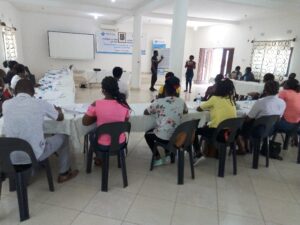
The project’s objective was to increase participation of women in decision making to develop sustainable, decentralized, bottom-up planning processes in Ghana. The grantee institutionalized Women’s Group Advocacy (WOMGA) Platforms to engage and dialogue with local government authorities in decision making processes on public service delivery. At the heart of the project strategy was the mobilization and empowerment of 150 women, who were trained and deployed to monitor policy implementation at the district level using a Gender Monitoring and Tracking Tool, and to champion the participation of women in local planning and implementation processes. The project’s intervention logic was sound and had clarity and coherence. Institutionalizing the WOMGA Platforms facilitated regular engagement with local government authorities, and hence effectively contributed to the overall development goal of increasing women’s participation in decision-making process on public service delivery. Local officials commended the high level of preparation they had to undertake for the public sessions the project held, during which they faced thorough questioning by the WOMGA members and the community.
Evaluation Date
June 2017
Country