
participation

LESSON

Lesson Learned: Cultivating Democratic Leaders from Marginalized Groups in Thailand

Raising expectations of young people and then leaving them unmet because there is no follow-up is bad practice. Building sustainability into actions that depend on a group that is by nature evolving and likely to move on is also difficult. Consulting young people and involving them in project design, monitoring and evaluation may help. Set up “buddy” systems where more senior/experienced/older youth agreed to mentor younger people not yet of an age to participate in the project formally.
Project Partner
The Asia Foundation
Project Description
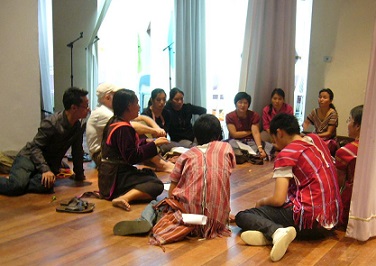
The project was designed to engage young people from marginalized populations in four regions of Thailand, to empower them to voice their needs, access their rights, participate in political processes, and improve their lives and communities. The grantee set out to create new leaders among young people to lead actions in the disenfranchised communities. While the project supported the implementing partners financially and to a lesser extent with expertise, it did not demonstrate significant added-value in the area of democratic development. The trainees were by and large already engaged in development work in their communities and, once the project ended, the partners and the young people continued as before. The project designers would have been more aware of this, and potentially had a chance to rethink the relevance of the design, if they had reviewed existing and earlier practice in this area, and had considered in more depth the way NGOs in the regions work and from where they get their funding. The project fell into the trap of becoming, essentially, a short-term provider of funds.
Evaluation Date
December 2010
Country
LESSON

Lesson Learned: Enhancing Political Participation of Marginalised Women in Nepal

The project strategy was designed to operate progressively in stages, beginning with a database that tracked progress with measurable indicators. The activities designed and developed by the stakeholders were modified with the findings of rapid assessment reports. All stages were discussed by the target audience. This approach helped identify related grassroots capacity-building needs, develop suitable awareness and training materials, and forge ties between marginalized women and local authorities.
Project Partner
Association of District Development Committees of Nepal
Project Description
The project organized women into informal Women's Democracy Forums to build a culture of collaboration between marginalized women from different social backgrounds in five Nepalese districts. It intended to give women a voice at the district and village level by providing information, education, and communication materials and offering training courses on women's rights. Project activities combined traditional and alternative means of communication, such as street theater. This oral mode of education was adapted to the needs of remote communities. The project's visibility was also enhanced by the production of weekly radio programs; 72 episodes on the political empowerment of women and democratic processes were produced and broadcast over a six–month period. Local authorities and grassroots resource persons increased their commitment to the political inclusion of women. All of these activities were innovative in these Nepalese districts and were skillfully carried out by the implementing team. All activities were successfully concluded and delivered results over and above expectations.
Evaluation Date
September 2010
Country
LESSON

Lesson Learned: Enhancing Political Participation of Marginalised Women in Nepal

The target audience was directly involved with outputs such as training and advocacy tools. All progress was shared and discussed directly with the target audience at the local and national level. The methodological and operational project framework was adopted and adjusted with the direct participation of the target groups. This contributed to the project’s efficiency and set a precedent for joint work with women’s communities, local authorities, and political parties beyond ethnic lines or political ideology.
Project Partner
Association of District Development Committees of Nepal
Project Description
The project organized women into informal Women's Democracy Forums to build a culture of collaboration between marginalized women from different social backgrounds in five Nepalese districts. It intended to give women a voice at the district and village level by providing information, education, and communication materials and offering training courses on women's rights. Project activities combined traditional and alternative means of communication, such as street theater. This oral mode of education was adapted to the needs of remote communities. The project's visibility was also enhanced by the production of weekly radio programs; 72 episodes on the political empowerment of women and democratic processes were produced and broadcast over a six–month period. Local authorities and grassroots resource persons increased their commitment to the political inclusion of women. All of these activities were innovative in these Nepalese districts and were skillfully carried out by the implementing team. All activities were successfully concluded and delivered results over and above expectations.
Evaluation Date
September 2010
Country
LESSON

Lesson Learned: Underpinning and developing the democratic electoral processes in Azerbaijan

The major weakness of the project from a relevance point of view was that it bore no real relationship to needed governance reforms. The elections process in Azerbaijan is flawed. While increasing women’s participation in a flawed process is a valid goal, the project would have added more value if it had addressed basic issues in governance. While the project may have had some impact on women’s empowerment, it had none on democratization.
Project Partner
Center Women and Modern World (CWMW)
Project Description
The project was conducted by Center Women and Modern World (CWMW) in partnership with Baku Volunteer Center (BVC), and New Shamakhi Foundation (NSHF). The project was directed promote democratic values and mobilize women for participation in elections. I’s primary focus was on involving women in elections with journalists and local NGO heads as secondary beneficiaries. The project was carried out in 10 regions located close to Shamakhi, which is three hours’ drive outside the capital Baku.
Evaluation Date
August 2010
Country