
sustainability

LESSON

Lesson Learned: Civil Society Engagement for Democracy and Good Governance

Neither the civil society organizations at local level, nor the monitoring committees had the necessary autonomy to pursue further citizen oversight activities or provide minimum stability to their members. It is unclear that activities will continue after project completion.
Project Partner
West Africa Network For Peacebuilding - Côte d'Ivoire
Project Description
The main focus of the project in Côte d’Ivoire was to put in place five departmental committees and one national committee for the monitoring of democracy and good governance. By strengthening the capacity of the members of these committees, the project promoted voluntary involvement in the management of communes and the exercise of civic control. By relying on the country’s policy of decentralization, the project helped local populations develop an interest in governing local affairs through learning about their roles as citizens. This was done through cooperation and engaging in dialogue with locally elected leaders. With this project the grantee integrated strategic priorities of the national decentralization policy into local governance. It also managed to take into account the context of the Ivorian crisis, which was characterized by a weakness of democracy and poor governance. It was therefore a kind of post-crisis pilot project on raising awareness and approaches to training in democratic education and good governance. The project could have applied a more nuanced approach in relation to the different groups that were part of the target population, particularly women and young people and provided more local support.
Evaluation Date
January 2013
Country
LESSON

Lesson Learned: Training of Justice System Professionals to Litigate before the Inter-American Court of Human Rights

Expectations and demands arose that posed challenges for the implementing partners. The beneficiaries considered the training as a first step. The project made them realized they need to receive further training covering a variety of aspects of their work as defenders specialized in international human rights. Despite the success of the project it appears, however, that the need for a sound strategy for sustainability and consolidation has not been addressed.
Project Partner
Centro de Derechos Humanos de la Facultad de Derecho de la Universidad de Chile
Project Description
The aim of the project was to increase victims’ access to international justice through the Inter-American Court of Human Rights, following an amendment of the court’s rules of procedure to improve the victims’ access to legal representation. The project focused on upgrading the technical and legal advocacy skills of justice system professionals for the promotion and protection of human rights and improving their understanding of international human rights standards. It also focused on raising awareness of the 100 Rules of Brasilia Regulations, and the Inter-American Human Rights System. This was the first initiative in the region aimed specifically at training Inter-American Defenders. The beneficiary groups acknowledged that they have gained a better understanding of the Inter-American Human Rights system at the regional and national level and that their capacity to litigate before the Inter-American Court of Human Rights, an increasingly specialized and complex process, had qualitatively improved.
Evaluation Date
January 2013
Theme
Country
LESSON

Lesson Learned: Civic Education and Civil Society Empowerment in Remote Areas in Myanmar

The project created an initial impetus for political change at a regional level. Participants’ perception of government changed: they viewed themselves as rights-holders that can engage the government and hold it accountable. The project also created a desire for continued learning, for example in training institutes that participants and implementers themselves have created. These centers may continue to teach civic education after grantee funding and trainings have ceased. The subject material they teach is also likely to be specific to regional concerns and taught in the local language.
Project Partner
Myanmar Egress/Network Activities Groups (NAG)
Project Description
The project general objective was to support the development of good governance in Myanmar through civic education and building advocacy skills of civil society. Activities included civic education trainings and township level meetings to support good governance; organization of core leader meetings; training in how to write policy papers to strengthen policy advocacy; and the creation of a website for civil society to exchange experience and knowledge. All quantifiable targets were reached or surpassed, and the participants interviewed spoke highly of the training. The project implementation team overcame significant bureaucratic and logistical obstacles, as well as difficult operating conditions. The project appears to have had a great deal of positive 'knock-on effects’. Although the training program attracted a large number of participants, participation was dictated by informal networks and affinities. The township-level forum did not succeed in soliciting initiatives and brainstorming on regional/local issues. Likewise, the policy papers exhibited significant weaknesses in particular a lack of readers. The website was also not used as an effective tool for knowledge and information sharing by any of the participants interviewed.
Evaluation Date
December 2012
Country
LESSON

Lesson Learned: Promoting Active Participation of Civil Society in Environmental Governance

Following the completion of the project, the Vietnam Institute for Human Rights required external support to train future trainers at the provincial and district-level officials and civil servants. The withdrawal of support from the Institute after the end of the project could have been predicted.
Project Partner
International Union for Conservation of Nature - Vietnam
Project Description
The project aimed to improve environmental conditions in Viet Nam. The grantee worked with the Vietnam Institute of Human Rights (VIHR) of the Ho Chi Minh National Academy of Politics and Public Administration (HCMPA) to prepare a curriculum for high-level government officials designed to provide a better understanding of the benefits of civil society participation in environmental policy. The grantee also worked with the Center of Environmental Training and Communications (CETAC) of the Vietnam Environmental Administration (VEA) to train journalists in the use of independent research methods and sources of investigation. In addition, the project supported the capacity building of local NGOs in the areas of strategic planning, financial management, and communications, in order to help them address key donor expectations.
Evaluation Date
December 2012
Country
LESSON

Lesson Learned: Civic Education and Civil Society Empowerment in Remote Areas in Myanmar

Although the grantee lacked a systematic means of monitoring alumni activity, its 40,000 alumni stay closely connected via an alumni association. Although lines of causality are unclear, many programme participants are now more politically active. The grantee should have developed tools to monitor its two category target populations: young educated people, and more mature and experienced individuals.
Project Partner
Myanmar Egress/Network Activities Groups (NAG)
Project Description
The project general objective was to support the development of good governance in Myanmar through civic education and building advocacy skills of civil society. Activities included civic education trainings and township level meetings to support good governance; organization of core leader meetings; training in how to write policy papers to strengthen policy advocacy; and the creation of a website for civil society to exchange experience and knowledge. All quantifiable targets were reached or surpassed, and the participants interviewed spoke highly of the training. The project implementation team overcame significant bureaucratic and logistical obstacles, as well as difficult operating conditions. The project appears to have had a great deal of positive 'knock-on effects’. Although the training program attracted a large number of participants, participation was dictated by informal networks and affinities. The township-level forum did not succeed in soliciting initiatives and brainstorming on regional/local issues. Likewise, the policy papers exhibited significant weaknesses in particular a lack of readers. The website was also not used as an effective tool for knowledge and information sharing by any of the participants interviewed.
Evaluation Date
December 2012
Country
LESSON

Lesson Learned: Empowering Civil Society Inclusion on Democratic Policy-Making in Kosovo

As the project worked to change the structure of consultations rather than working on a specific law or case, it should have a wide impact. The institutionalization of government reforms made consultations less dependent on the individual good will of a public official. Further consolidation of these reforms was expected with the anticipated adoption of the Governmental Strategy for Cooperation with Civil Society. Much of that strategy is reportedly based on the contents of the manual that the project helped develop.
Project Partner
Kosovo Civil Society Foundation
Project Description
The project sought to strengthen the capacities of civil society to play an active role in shaping public policy and drafting laws. Its intended outcome was for civil society to become an active, informed and key partner in public policy and law making, so as to be able to react instantly on key public policy areas. The grantee capitalized on the government’s willingness for a more engaged and constructive civil society in policy development as well as the need for civil society organizations to have more information.  There was a substantial level of interest and participation in the project from both sides. The project’s strategy was sound as it built on the work already done by both CSOs and government offices. The project increased both the demand for and supply of public consultations.  
Evaluation Date
October 2012
Country
LESSON

Lesson Learned: Active democracy and political participation of tribal communities in the Indian Himalayas

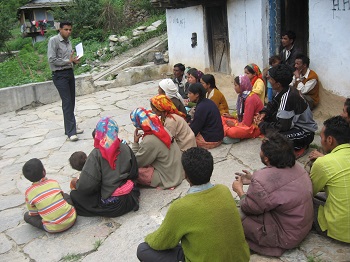
While this project in the Himalayan districts of India was well designed to be sustainable after funding had ended, the use of a volunteer workforce might put this at risk. This risk needs to be managed to ensure ongoing sustainability. Since even enthusiastic volunteers will not work for ever without compensation, consider providing modest honoraria to those who have volunteered and also to prepare new volunteers to replace those that drop out.

Project Partner
Pragya
Project Description
The project’s principal objectives were to enhance civic participation among Himalayan tribes and empower marginalized groups (women, people with disabilities and nomads); and to engage with governance issues and democratic dialogue. To this end, the project aimed to build a supportive environment for enhanced democratic participation through supporting state and non-state actors. The project consisted of 10 core components creating a continuum of involvement from awareness of rights to access to those rights, supported by the training and mobilization of relevant support actors and those who could make the rights a reality. The project design was logical and very much tuned to the needs of the beneficiaries and other stakeholders in this challenging region. There were no delays in project delivery, since it had been designed with the seasonal obstacles relevant to the target region in mind.
Evaluation Date
October 2012
Country
LESSON

Lesson Learned: Electoral Justice Principles for Trust in the Electoral Process in Ghana, Kenya, Sierra Leone

A number of persons interviewed, including some of the participants in the Bali and Ghana conferences, questioned the relevance of the group of individuals that the grantee referred to as the “Electoral Integrity Group” (EIG). They felt the association of these individuals, who were senior current and former election commissioners and justice, gave weight to the effort, but that more than ‘big names’ were needed for this type of an effort.
Project Partner
Tiri-Making Integrity Work
Project Description
The Electoral Justice Principles for Trust in the Electoral Process project sought to raise the integrity standard of the electoral processes in Africa by addressing the relations between the key electoral justice institutions and their relevance and accessibility to the electorate. Its main objectives were to: produce a set of electoral justice principles drafted by a group of chief justices and senior electoral and political leaders from Africa and other continents; and support the implementation of these principles in two African countries. Its intended outcomes were to increase trust in electoral justice authorities; reduce violence related to electoral dispute settlements, and to have political parties, candidates and civil society organizations (CSOs) in the pilot implementation country able to claim, advocate and defend rights for public integrity consultations. The project undertook minimal consultations with the large and dynamic electoral assistance sector and missed opportunities to tap its experience, explore collaboration and develop synergies with other efforts, such as the Global Commission on Elections, Democracy and Security that promote the integrity of elections. The norms themselves were not disseminated as planned so awareness of them is extremely limited and they were not endorsed by any international organization as anticipated. Most of those interviewed felt the principles needed wider consultations and did not have the weight required to make significant changes. The project was not Africa-specific and African involvement was limited primarily to the launch in Ghana and the APEJ-SL. The principles and guidelines were global in scope, and were not tailored to Sierra Leone for the pilot. It also focused on general electoral integrity issues and lacked a clear focus on electoral justice and how specifically this could be achieved through the creation of a steering committee.
Evaluation Date
September 2012
Theme
Country
LESSON

Lesson Learned: Electoral Justice Principles for Trust in the Electoral Process in Ghana, Kenya, Sierra Leone

The implementing partners in the project document were not used. Instead the grantee implemented the project directly, hiring consultants to do some of the work and using a few of the members from the implementing partners to form additional groups.
Project Partner
Tiri-Making Integrity Work
Project Description
The Electoral Justice Principles for Trust in the Electoral Process project sought to raise the integrity standard of the electoral processes in Africa by addressing the relations between the key electoral justice institutions and their relevance and accessibility to the electorate. Its main objectives were to: produce a set of electoral justice principles drafted by a group of chief justices and senior electoral and political leaders from Africa and other continents; and support the implementation of these principles in two African countries. Its intended outcomes were to increase trust in electoral justice authorities; reduce violence related to electoral dispute settlements, and to have political parties, candidates and civil society organizations (CSOs) in the pilot implementation country able to claim, advocate and defend rights for public integrity consultations. The project undertook minimal consultations with the large and dynamic electoral assistance sector and missed opportunities to tap its experience, explore collaboration and develop synergies with other efforts, such as the Global Commission on Elections, Democracy and Security that promote the integrity of elections. The norms themselves were not disseminated as planned so awareness of them is extremely limited and they were not endorsed by any international organization as anticipated. Most of those interviewed felt the principles needed wider consultations and did not have the weight required to make significant changes. The project was not Africa-specific and African involvement was limited primarily to the launch in Ghana and the APEJ-SL. The principles and guidelines were global in scope, and were not tailored to Sierra Leone for the pilot. It also focused on general electoral integrity issues and lacked a clear focus on electoral justice and how specifically this could be achieved through the creation of a steering committee.
Evaluation Date
September 2012
Theme
Country
LESSON

Lesson Learned: Democratizing governance for development: LDC civil society engagement

Over-reliance on one person’s credibility and profile is a risk. Succession planning, especially in between major events - like the international conferences on Least Developed Countries -  should be a priority.
Project Partner
LDC Watch
Project Description
The project was timed to coincide with UN processes related to follow-up of the outcome document of the Third UN Conference on the Least Developed Countries (LDC-III) in Brussels in 2001, known as the Brussels Programme of Action (BPoA) and preparations for the Fourth UN Conference on the LDCs (LDC-IV) held in Istanbul in May 2011. The project aimed to build the capacity of civil society organizations in Least Developed Countries to mobilize and consolidate their energy, expertise and commitment to achieving quality inputs to the Comprehensive Review Summit in 2010, and strengthening democratic decision making in international development processes. It had three intended outcomes: Enhanced capacity of CSOs and CBOs; Increased awareness and coverage of LDC issues; Progress and setbacks on MDGs and BPoA reviewed. The project aimed to undertake activities in 20 countries: 13 in Africa, 2 in South Asia, 2 in South-East Asia and 3 in Pacific Island Countries (PICs). However planned activities changed throughout the project.
Evaluation Date
August 2012
Country