
Lessons

LESSON

Lesson Learned: Learning and Living Democracy in Bosnia-Herzegovina

The project influenced not only the individuals but also the BiH educational system at large through the inclusion of education quality standards required by European countries in the framework of the Bologna process. The project tackles also the modernization of the education system through application of interactive and up-to date working methodologies for teachers.

Project Partner
Democracy and Human Rights Education Center CIVITAS
Project Description
The project identified institutional educational weaknesses and proposed pragmatic approaches to address them. Overall the project was a success. The following elements contributed to the quality of the strategy: an appropriate response to the complex political and social context in the country drawn from the NGO‟s long time experience; a sound assessment of the political context based on long term partnership with education ministries in Bosnia and a good understanding of the targeted audience needs, based on the grantee’s experience of certifying teachers and their involvement in official curricula content design taught in all public schools.
Evaluation Date
September 2010
Theme
LESSON

Lesson Learned: Rights and freedoms for all in Togo

The grantee could reinforce the effectiveness of its actions promoting democracy in Togo by developing partnerships with civil society organisations experienced in working on women’s rights and on economic and social rights in rural areas.
Project Partner
Centre d'Observation et de Promotion de l'Etat de Droit
Project Description
The objective of the project was to promote democratic culture at all levels in society irrespective of social status, political, religious, ethnic or regional allegiance. Activities included awareness-raising of rural populations on the concept of democracy; training of local elites on participatory democracy, human rights and citizenship; information, education and communication to promote participation in the 2010 presidential elections and in local elections; and debates in secondary and high schools on democratic values and principles. While the grantee responded to a priority need in Togo for the development of a democratic culture, significant weaknesses in design and implementation limited the project’s relevance. Important stakeholders such as the judicial and law-enforcement sectors were not addressed by the project’s actions and there were months-long periods when very few activities were implemented.
Evaluation Date
September 2010
Country
LESSON

Lesson Learned: Enhancing Political Participation of Marginalised Women in Nepal

Since top-down government approaches have failed to address social exclusion and effective participation of marginalized women, the project combined a top-down strategy within a bottom-up approach. Planned activities were supported by strong top-down mechanisms and implementing partners were firmly rooted in a bottom-up approach, with the direct participation of the target audience. The adoption of the community organization pyramid, which involved monitoring of all activities by resource persons appointed by beneficiaries, consolidated the networks step by step. Stakeholders were able to collaborate at the local level while remaining connected to Kathmandu.
Project Partner
Association of District Development Committees of Nepal
Project Description
The project organized women into informal Women's Democracy Forums to build a culture of collaboration between marginalized women from different social backgrounds in five Nepalese districts. It intended to give women a voice at the district and village level by providing information, education, and communication materials and offering training courses on women's rights. Project activities combined traditional and alternative means of communication, such as street theater. This oral mode of education was adapted to the needs of remote communities. The project's visibility was also enhanced by the production of weekly radio programs; 72 episodes on the political empowerment of women and democratic processes were produced and broadcast over a six–month period. Local authorities and grassroots resource persons increased their commitment to the political inclusion of women. All of these activities were innovative in these Nepalese districts and were skillfully carried out by the implementing team. All activities were successfully concluded and delivered results over and above expectations.
Evaluation Date
September 2010
Country
LESSON

Lesson Learned: Deepening Democratization Processes Through Youth Leadership in Myanmar

One of the by-products of the project was the positive impact on partner organizations working at grassroots level. Although partners were chosen on the basis of their strengths and were treated within the project as equal partners, it was recognized that they did not necessarily have staff who were trained and experienced. The project therefore encouraged younger members of staff to sign up as fellows, and facilitated some fellows later joining as staff.
Project Partner
ActionAid International in Myanmar
Project Description
The project aimed to identify new youth fellows, train them in leadership and concepts of democracy and governance, and prepare them to lead development projects in their communities. The strategy to do this was through "placements" with local grassroots organizations. The 130 trained youth fellows were supported through the fellowship network, including meetings at local and state levels and by identifying 400 youth volunteers through community "reflect circles" that the fellows facilitated. Together, the fellows and volunteers led and established a large number of development projects within the communities, ranging from pig rearing to the building of early education centres. The model is ideally suited to both produce the expected outcomes and also lay the groundwork for potential future representation at national level. The project far exceeded its own expectations, reaching more than 100,000 people through project activities. However, planned training of journalists and the development of a website proved not to be possible in the political climate in Myanmar and were replaced by the production of a series of newsletters for the fellows and for broader dissemination.
Evaluation Date
September 2010
Country
LESSON

Lesson Learned: Media, Transparency and Accountability in Albania

National public TV (TVSH) and other TV stations in Albania with nationwide coverage would not broadcast its programmes because of the nature of their content. To compensate, the grantee productions were uploaded onto YouTube and the grantee helped to create a project website to serve as a repository for its programmes, which was originally not anticipated in the project.


Project Partner
IREX Europe/Hapur
Project Description
Media, Transparency and Accountability in Albania sought to strengthen the role of the Albanian media to promote transparency and government accountability by 1) investigating and informing citizens on issues of civic concern and corruption, and 2) developing, implementing and enforcing its own ethical and professional standards. The project did help to improve the media’s capacity to investigate and inform citizens on issues of corruption and civic concern, but that the difficulty in airing the shows on national TV, and in particular, national public TV, limited its potential impact, as did the lack of synergies with other anti-corruption or good governance activities. The mix of local and national topics for its reports seemed appropriate as it attracted the interest of both audiences and drew national attention to some of the problems in the local areas.
Evaluation Date
September 2010
Theme
Country
LESSON

Lesson Learned: Enhancing Political Participation of Marginalised Women in Nepal

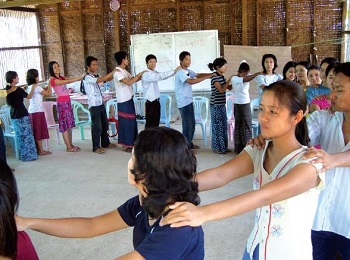
Women are commonly separated from one another in Nepal by caste identity. One of the major achievements of the project was getting the highest and lowest castes to cooperate with each other, which is normally a social taboo. Under this project, Brahmins worked with Dalits and Janajatis. It is noteworthy that Brahmins were involved, as they represent one of the highest castes in Nepal. It confirmed how innovative this project was in stimulating cooperation between different castes.
Project Partner
Association of District Development Committees of Nepal
Project Description
The project organized women into informal Women's Democracy Forums to build a culture of collaboration between marginalized women from different social backgrounds in five Nepalese districts. It intended to give women a voice at the district and village level by providing information, education, and communication materials and offering training courses on women's rights. Project activities combined traditional and alternative means of communication, such as street theater. This oral mode of education was adapted to the needs of remote communities. The project's visibility was also enhanced by the production of weekly radio programs; 72 episodes on the political empowerment of women and democratic processes were produced and broadcast over a six–month period. Local authorities and grassroots resource persons increased their commitment to the political inclusion of women. All of these activities were innovative in these Nepalese districts and were skillfully carried out by the implementing team. All activities were successfully concluded and delivered results over and above expectations.
Evaluation Date
September 2010
Country
LESSON

Lesson Learned: Deepening Democratization Processes Through Youth Leadership in Myanmar

The project far exceeded its own expectations, reaching more than 100,000 people through project activities. In part, this was a result of the intelligent and robust implementation structure put in place, with the grantee working closely with a number of reliable grassroots organizations in the regions where activities were undertaken.
Project Partner
ActionAid International in Myanmar
Project Description
The project aimed to identify new youth fellows, train them in leadership and concepts of democracy and governance, and prepare them to lead development projects in their communities. The strategy to do this was through "placements" with local grassroots organizations. The 130 trained youth fellows were supported through the fellowship network, including meetings at local and state levels and by identifying 400 youth volunteers through community "reflect circles" that the fellows facilitated. Together, the fellows and volunteers led and established a large number of development projects within the communities, ranging from pig rearing to the building of early education centres. The model is ideally suited to both produce the expected outcomes and also lay the groundwork for potential future representation at national level. The project far exceeded its own expectations, reaching more than 100,000 people through project activities. However, planned training of journalists and the development of a website proved not to be possible in the political climate in Myanmar and were replaced by the production of a series of newsletters for the fellows and for broader dissemination.
Evaluation Date
September 2010
Country
LESSON

Lesson Learned: Deepening Democratization Processes Through Youth Leadership in Myanmar

The original project design foresaw training of journalists and the placement of a number of articles in the media, but this was not done. The political realities of Myanmar, at a time of heightened political sensitivity around election, made working with the media – especially within a project clearly labelled “deepening democratization processes” – impossible. This should have been anticipated when the project was designed.
Project Partner
ActionAid International in Myanmar
Project Description
The project aimed to identify new youth fellows, train them in leadership and concepts of democracy and governance, and prepare them to lead development projects in their communities. The strategy to do this was through "placements" with local grassroots organizations. The 130 trained youth fellows were supported through the fellowship network, including meetings at local and state levels and by identifying 400 youth volunteers through community "reflect circles" that the fellows facilitated. Together, the fellows and volunteers led and established a large number of development projects within the communities, ranging from pig rearing to the building of early education centres. The model is ideally suited to both produce the expected outcomes and also lay the groundwork for potential future representation at national level. The project far exceeded its own expectations, reaching more than 100,000 people through project activities. However, planned training of journalists and the development of a website proved not to be possible in the political climate in Myanmar and were replaced by the production of a series of newsletters for the fellows and for broader dissemination.
Evaluation Date
September 2010
Country
LESSON

Lesson Learned: Learning and Living Democracy in Bosnia-Herzegovina

The grantee had been involved – theoretically and pedagogically - in the education sector for a long time. This contributed to the project’s success Through an effective and official partnership within the relevant education ministries the project was able to encourage and support student’s policy projects over the school year.
Project Partner
Democracy and Human Rights Education Center CIVITAS
Project Description
The project identified institutional educational weaknesses and proposed pragmatic approaches to address them. Overall the project was a success. The following elements contributed to the quality of the strategy: an appropriate response to the complex political and social context in the country drawn from the NGO‟s long time experience; a sound assessment of the political context based on long term partnership with education ministries in Bosnia and a good understanding of the targeted audience needs, based on the grantee’s experience of certifying teachers and their involvement in official curricula content design taught in all public schools.
Evaluation Date
September 2010
Theme
LESSON

Lesson Learned: Rights and freedoms for all in Togo

The production of broadcasts in Togo involved a partnership with Radio Lomé, which was effective at getting messages across. The media regulation authority, the Truth and Reconciliation Commission and the Electoral Commission were involved as resource persons for training activities and content. It is recommended that the grantee continues to develop and formalize these partnerships.
Project Partner
Centre d'Observation et de Promotion de l'Etat de Droit
Project Description
The objective of the project was to promote democratic culture at all levels in society irrespective of social status, political, religious, ethnic or regional allegiance. Activities included awareness-raising of rural populations on the concept of democracy; training of local elites on participatory democracy, human rights and citizenship; information, education and communication to promote participation in the 2010 presidential elections and in local elections; and debates in secondary and high schools on democratic values and principles. While the grantee responded to a priority need in Togo for the development of a democratic culture, significant weaknesses in design and implementation limited the project’s relevance. Important stakeholders such as the judicial and law-enforcement sectors were not addressed by the project’s actions and there were months-long periods when very few activities were implemented.
Evaluation Date
September 2010
Country