Lessons

LESSON

Lesson Learned: Youth Partnership for Improved Budgetary Governance in Lebanese Municipalities: Musharaka

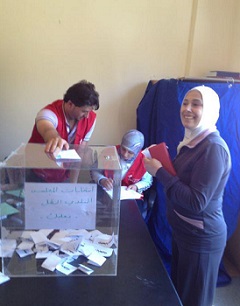
The project involved a specific activity on how to conduct elections. This resulted in the democratic election of five Youth Shadow Councils which has boosted the culture of democracy among the citizenry and the beneficiary groups alike.

UNDEF/ Lebanon
Project Partner
Lebanese Transparency Association
Project Description
The project was a follow-up to an earlier initiative that targeted 15 municipalities in the six Lebanese governorates. Under the UNDEF grant, the project was an extension of the initial programme, more focused on the areas of Western and Northern Bekaa to ensure a greater impact at the country level. The aim of the project was to empower youth, and tje wider community through them, to render municipal councils of Western and Northern Bekaa more transparent and accountable. The project was divided into two phases: in the first phase, five democratically elected Youth Shadow Councils (YSCs) received thematic and technical training on good governance, advocacy strategies, conducting needs assessments, access to public services, and budget analysis. In the second phase, the elected council was responsible for training another group of participants in order to disseminate the principles of transparency and accountability and motivate citizens to advocate for reforms and get involved in their community’s development process. The project mobilized and trained 200 young women and men aged 17-29 in the municipalities of Der El Ahmar, Baalbeck, Taalbaya, Saadnayel, and Sawireh. It had a relevant and well-defined strategy with concrete indicators that facilitated the monitoring of achievement levels.
Evaluation Date
October 2014
Country
LESSON

Lesson Learned: Renforcement des capacités des journalistes et blogueurs arabes pour la promotion des droits de l’Homme

The project was relatively weak in that costs were high and that it cannot be considered that the results achieved were commensurate with the expectations arising from the project document, or with the resources expended, even when taking into account the fact that political instability in the region increased the cost of activities.
Project Partner
Arab Institute for Human Rights
Project Description
The objective of the project was to reinforce the capacities of Arab citizen journalists and bloggers in relation to the promotion and protection of human rights. The project was relevant as a human rights education activity, to the extent it responded to the fact that the targeted bloggers and journalists were not always familiar with the human rights principles and the international procedures for the protection of human rights. The project activities led to the acquisition of new skills by the participants which contributed to changes in the way they have carried out their blogging and journalistic work after the training sessions. It is of course not clear that the participants’ work has influenced the wider public. However, comments posted by readers suggest that some of the participants were able to encourage tolerant attitudes among their readers, for example in relation to gender equality or in debates about democracy.
Evaluation Date
October 2014
Theme
Country
LESSON

Lesson Learned: Civil Society Monitoring of Governorate Councils in Iraq

Although factors like the security situation in Iraq made it difficult to probe the impact of the intervention, significant advances were made in short-term government responsiveness and transparency to the public. The grantee published Annual Monitoring Reports to highlight the gap between public expectations and the actual performance of the Governorate Councils. These were circulated widely and managed to attract considerable interest from the mass media and senior government officials. In response, several of the participating Governorates Councils devoted greater efforts to transparency and providing information to the public. Further, the central government expressed their interest in expanding civil society monitoring to all provinces in the country.
Project Partner
UM-Alyateem Foundation
Project Description
The project sought to enhance government transparency at provincial level in Iraq by training civil society organizations in monitoring and accountability. This approach was particularly relevant in the Iraqi political context, where provincial legislatures’ (Governorates Councils) capacities are weak. Although impact was difficult to measure for the evaluation team, and much work remains to be done in order to meet overall objectives, the short-term achievements of the project were considerable. The project illustrated how civil society monitoring of provincial authorities in Iraq effectively can enhance government accountability – if both civil society and authorities are willing to make the effort.
Evaluation Date
August 2014
Country
LESSON

Lesson Learned: Empowering the Voice of a New Generation in Pakistan

The project attracted educated male youth who were able to take advantage of the activities offered but the project did not put in place measures to increase the number of female participants and bring in the less educated and poorer youth. This led to an imbalance in the representation of youth in the project’s groups.
Project Partner
Civil Society Support Programme
Project Description
The project’s objective was to increase the role of youth in public affairs and policy development in 20 locations in Pakistan. Its intended outcomes were: a strengthened networking and institutional capacities of the programme; enhanced understanding of the Voice of New Generation youth on social, political and development issues; and increased participation of Voice of New Generation groups in research and advocacy for policy making on youth issues.   The project design addressed issues directly relevant to youth and incorporated community based organizations into programme delivery which helped ensure an effective intervention and continuity of efforts. However, it assumed all participants were literate, had internet access, and the time and drive to develop and sustain a Voice of a New Generation effort within their area. This was the case for only a small minority of the targeted youth. This significantly reduced the relevance of the project.
Evaluation Date
August 2014
Country
LESSON

Lesson Learned: Strengthening Municipal Capacity for Access to Public Information in El Salvador

The methodology which the project applied to the educational processes was highly relevant, adapting successfully to the different audiences in El Salvador. Collaboration with an EU-funded project enabled the grantee to undertake a baseline study. The project’s advantage was that it was a “design-in-progress” depending on the specific needs of the beneficiaries, which meant that its effectiveness could be maximized. The intervention ultimately had an impact on local and national institutions, putting the enforcement of the Law on local agendas, creating links between different levels of government and speeding up the process of appointing information officers in the municipalities.

Project Partner
Fundacion Dr. Guillermo Manuel Ungo
Project Description
The grantee sought to improve the fundamental conditions for democracy in El Salvador by helping municipal governments enforce the Law on the Access to Public Information. The project strategy focused on strengthening the capacities of public and private stakeholders to publicize, implement and enhance citizen oversight of enforcement of the law. The project successfully contributed to improving the cultural and institutional conditions required for transparency and the participation of citizens in democratic institutions. At the same time there was an increase in the knowledge of citizens about the importance of the right to public information and of citizen oversight. It is worth stressing the relevance and good design of the proposed methodology which was based on training multipliers and carrying out an in-depth analysis of the needs of the actors involved.
Evaluation Date
August 2014
Theme
Country
LESSON

Lesson Learned: Judicial Reform: empowering magistrate-civil society collaboration for Guinea’s new democratic future

Reform of the judiciary was one of the key priorities announced by the President of the Republic of Guinea in 2010. Following the legislative elections of September 2013, which marked a turning point in the process of transitioning the country from the earlier dictatorship, the focus on judicial reform became more relevant. The project’s complex but well-articulated process used to identify the specific scope of action ensured that the project was aligned with government objectives regarding reform.
Project Partner
The BEFORE Project in Guinea
Project Description
The project aimed to contribute to the judiciary reform process in Guinea through establishing a new social contract on justice linking CSOs, magistrates and auxiliaries of justice. Strategically, the project was based on two outcome components, to support increased capacity for advocacy, monitoring and judicial oversight, and enhanced capacity for dialogue and collaboration between civil society and the judiciary on ways to improve the judicial system in order for it to become more responsive to the needs of civil society. This strategic approach appropriate for the limited scope of the project; its key points of strength were the acknowledgement that training was a first step before the setting up a platform for dialogue and the inclusion of a mini-grant scheme. The project was ambitious but realistic. However, the methodology did not include a mechanism to replicate project experiences beyond the target areas of Conakry and Kankan - the most important judicial districts in Guinea - once the project ended.
Evaluation Date
August 2014
Country
LESSON

Lesson Learned: Judicial Reform: empowering magistrate-civil society collaboration for Guinea’s new democratic future

The project team were able to adapt to unforeseeable events and to minimize their impact on the project activities. Throughout 2013 Guinea experienced political and social turbulence including mass protests against the elections and ethnic tensions. These events had an impact on the activities planned for the second year of the project with many events needing to be rescheduled. However, this did not impact the overall project efficiency.
Project Partner
The BEFORE Project in Guinea
Project Description
The project aimed to contribute to the judiciary reform process in Guinea through establishing a new social contract on justice linking CSOs, magistrates and auxiliaries of justice. Strategically, the project was based on two outcome components, to support increased capacity for advocacy, monitoring and judicial oversight, and enhanced capacity for dialogue and collaboration between civil society and the judiciary on ways to improve the judicial system in order for it to become more responsive to the needs of civil society. This strategic approach appropriate for the limited scope of the project; its key points of strength were the acknowledgement that training was a first step before the setting up a platform for dialogue and the inclusion of a mini-grant scheme. The project was ambitious but realistic. However, the methodology did not include a mechanism to replicate project experiences beyond the target areas of Conakry and Kankan - the most important judicial districts in Guinea - once the project ended.
Evaluation Date
August 2014
Country
LESSON

Lesson Learned: Civil Society Monitoring of Governorate Councils in Iraq

The monitoring training had some weaknesses. The training attempted to cover a great deal of detail, much of it technical, in two, short intensive workshops. More time should have been given to allow the trainees to fully absorb new knowledge. Another weakness was the decision to provide monitoring training to only one individual per partner organization. Such an approach limited the opportunity to build CSO institutional capacity, and is likely to limit the depth of commitment of the participating organizations to the monitoring process in Iraq.
Project Partner
UM-Alyateem Foundation
Project Description
The project sought to enhance government transparency at provincial level in Iraq by training civil society organizations in monitoring and accountability. This approach was particularly relevant in the Iraqi political context, where provincial legislatures’ (Governorates Councils) capacities are weak. Although impact was difficult to measure for the evaluation team, and much work remains to be done in order to meet overall objectives, the short-term achievements of the project were considerable. The project illustrated how civil society monitoring of provincial authorities in Iraq effectively can enhance government accountability – if both civil society and authorities are willing to make the effort.
Evaluation Date
August 2014
Country
LESSON

Lesson Learned: Empowering the Voice of a New Generation in Pakistan

The usefulness of the baseline study that was used to select the CBO partners in 20 locations in Pakistan, was uncertain as it assessed CBOs and their attributes rather than their qualifications. Some of the CBOs seemed extremely competent, but others might not have been the most appropriate choices. For instance, at least two did not appear to have offices where the Voice of a New Generation groups were expected to meet and the Information Resource Centres to be housed.
Project Partner
Civil Society Support Programme
Project Description
The project’s objective was to increase the role of youth in public affairs and policy development in 20 locations in Pakistan. Its intended outcomes were: a strengthened networking and institutional capacities of the programme; enhanced understanding of the Voice of New Generation youth on social, political and development issues; and increased participation of Voice of New Generation groups in research and advocacy for policy making on youth issues.   The project design addressed issues directly relevant to youth and incorporated community based organizations into programme delivery which helped ensure an effective intervention and continuity of efforts. However, it assumed all participants were literate, had internet access, and the time and drive to develop and sustain a Voice of a New Generation effort within their area. This was the case for only a small minority of the targeted youth. This significantly reduced the relevance of the project.
Evaluation Date
August 2014
Country
LESSON

Lesson Learned: Empowering the Voice of a New Generation in Pakistan

Links were made with some universities that contributed to several project events, such as a national conference, but there were no links demonstrated with other youth or democratic governance efforts underway in Pakistan, including a similar UNDEF funded project for youth done in some of the same locations as this project.
Project Partner
Civil Society Support Programme
Project Description
The project’s objective was to increase the role of youth in public affairs and policy development in 20 locations in Pakistan. Its intended outcomes were: a strengthened networking and institutional capacities of the programme; enhanced understanding of the Voice of New Generation youth on social, political and development issues; and increased participation of Voice of New Generation groups in research and advocacy for policy making on youth issues.   The project design addressed issues directly relevant to youth and incorporated community based organizations into programme delivery which helped ensure an effective intervention and continuity of efforts. However, it assumed all participants were literate, had internet access, and the time and drive to develop and sustain a Voice of a New Generation effort within their area. This was the case for only a small minority of the targeted youth. This significantly reduced the relevance of the project.
Evaluation Date
August 2014
Country