
Media

LESSON

Lesson Learned: Empowering people through citizens’ journalism in Albania

The project objectives and activities were relevant given the difficulties of youth and civil society organizations in Albania to access the media, voice their opinion or raise social issues. Although the Albanian media is free, mainstream media requires payment for airtime that NGOs cannot afford, and it has shown a general lack of interest in covering social issues as part of the news. Organizations were extremely interested in obtaining access to media, especially if it was free of charge and could reach a national audience as was intended with the university radio in Tirana. Participating youth were interested in citizen journalism and reporting on social issues.
Project Partner
Institute for Democracy, Media and Cultural Exchange
Project Description
Empowering people through citizens’ journalism in Albania sought to strengthen the outreach of CSOs representing socially vulnerable groups to the community through citizen journalism by 1) equipping CSOs with public communication skills, 2) establishing a community radio station and a web portal at Tirana University, and 3) training students to report on socially relevant topics. The project was unable to establish the on-air radio but continued some training components at the University of Tirana. Activities were also extended to the University of Elbasan which had an existing campus radio station and a dean interested in community radio and citizen journalism. The project created an internet portal called “YouRadio” that it based in the IRIOM project office where it could record and upload its programming. It also branched out to broadcast each programme on a national FM radio station run by Ora, through paid airtime at a regular time each week. Towards the end of the project, it also found the private Marlin Barleti University in Tirana interested in establishing a campus radio station and provided the project equipment to its communications department.
Evaluation Date
October 2011
Theme
Country
LESSON

Lesson Learned: Empowering people through citizens’ journalism in Albania

The project did not develop synergies with other efforts in the sector, which included another UNDEF-funded media project and a youth radio funded by other donors in Albania. It had training programmes on investigatory journalism and professional standards, and produced broadcasts on issues of community and national importance with which this project could have linked to exchange programming and training opportunities. There was also Radio Aktive, an independent radio funded by the National Endowment for Democracy and the Open Society Foundation run by the NGO Mjaff. It was intended to provide citizens a voice and raise awareness on civic and social issues. It aired daily reports from youth, including journalism students from the University of Tirana who served as reporters. It also created an online radio portal “Radiostation.”16 UNICEF also funded “Speak Out” (TROC) which supported younger students in Albania to produce a weekly show broadcast on the national public TV station. It trained youth in reporting and supplied technical equipment to 11 bureaus across Albania. They produced 150 reports giving the youth perspective on a broad range of issues.
Project Partner
Institute for Democracy, Media and Cultural Exchange
Project Description
Empowering people through citizens’ journalism in Albania sought to strengthen the outreach of CSOs representing socially vulnerable groups to the community through citizen journalism by 1) equipping CSOs with public communication skills, 2) establishing a community radio station and a web portal at Tirana University, and 3) training students to report on socially relevant topics. The project was unable to establish the on-air radio but continued some training components at the University of Tirana. Activities were also extended to the University of Elbasan which had an existing campus radio station and a dean interested in community radio and citizen journalism. The project created an internet portal called “YouRadio” that it based in the IRIOM project office where it could record and upload its programming. It also branched out to broadcast each programme on a national FM radio station run by Ora, through paid airtime at a regular time each week. Towards the end of the project, it also found the private Marlin Barleti University in Tirana interested in establishing a campus radio station and provided the project equipment to its communications department.
Evaluation Date
October 2011
Theme
Country
LESSON

Lesson Learned: Empowering people through citizens’ journalism in Albania

The project was unable to establish the on-air radio but continued some training components at the University of Tirana, Albania. For similar projects in the future, the evaluators recommend that the formal agreements with the universities and for licensing be done before the project is submitted for funding.
Project Partner
Institute for Democracy, Media and Cultural Exchange
Project Description
Empowering people through citizens’ journalism in Albania sought to strengthen the outreach of CSOs representing socially vulnerable groups to the community through citizen journalism by 1) equipping CSOs with public communication skills, 2) establishing a community radio station and a web portal at Tirana University, and 3) training students to report on socially relevant topics. The project was unable to establish the on-air radio but continued some training components at the University of Tirana. Activities were also extended to the University of Elbasan which had an existing campus radio station and a dean interested in community radio and citizen journalism. The project created an internet portal called “YouRadio” that it based in the IRIOM project office where it could record and upload its programming. It also branched out to broadcast each programme on a national FM radio station run by Ora, through paid airtime at a regular time each week. Towards the end of the project, it also found the private Marlin Barleti University in Tirana interested in establishing a campus radio station and provided the project equipment to its communications department.
Evaluation Date
October 2011
Theme
Country
LESSON

Lesson Learned: Strengthening Somali Media Capacity for Democracy and Human Rights

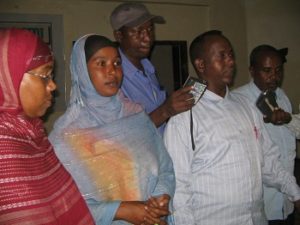
The project took due account of the requirements for gender balance in terms of participation. However, the contents of the training sessions did not sufficiently emphasize the gender aspects of human rights and governance, which are particularly important in a conflict context such as Somalia’s.

Project Partner
National Union of Somali Journalists
Project Description
The project aimed strengthened the capacity of the Somali media to implement principles and practices of democracy and respect for human rights by providing professional training to Somali journalists across the country, focusing on ethics and good journalistic practices, and holding workshops on good governance and human rights. The use of training sessions and workshops was appropriate to address the issue of journalists’ skills development. Creation of a media centre was also useful in helping journalists to do their work. However, the project's planned activities were not sufficient to address all its objectives. The number of participating journalists was on target, as was the ratio of women participants (30%). This is a very significant achievement, considering the prevalence of armed violence and high levels of political instability in many parts of Somalia during the project period. Significantly, the project benefited about half of Somalia’s journalists. On the other hand, the failure to address other stakeholders - government, editors, and publishers - reduced the likelihood of positive changes. However, the very fact that the project took place has to be seen as an achievement in its own right.
Evaluation Date
October 2011
Theme
Country
LESSON

Lesson Learned: Strengthening Somali Media Capacity for Democracy and Human Rights

The failure to adequately engage editors and publishers/owners undermined the project’s objectives, because the value of work on human rights, good governance and freedom of expression was not specifically conveyed to this important set of stakeholders (eg, many journalists fail to publish stories on human rights and good governance because editors and owners refuse them.
Project Partner
National Union of Somali Journalists
Project Description
The project aimed strengthened the capacity of the Somali media to implement principles and practices of democracy and respect for human rights by providing professional training to Somali journalists across the country, focusing on ethics and good journalistic practices, and holding workshops on good governance and human rights. The use of training sessions and workshops was appropriate to address the issue of journalists’ skills development. Creation of a media centre was also useful in helping journalists to do their work. However, the project's planned activities were not sufficient to address all its objectives. The number of participating journalists was on target, as was the ratio of women participants (30%). This is a very significant achievement, considering the prevalence of armed violence and high levels of political instability in many parts of Somalia during the project period. Significantly, the project benefited about half of Somalia’s journalists. On the other hand, the failure to address other stakeholders - government, editors, and publishers - reduced the likelihood of positive changes. However, the very fact that the project took place has to be seen as an achievement in its own right.
Evaluation Date
October 2011
Theme
Country
LESSON

Lesson Learned: Strengthening Somali Media Capacity for Democracy and Human Rights

Additional guidance from a partner organization would probably have helped the grantee make better use of its members’ energy and commitment to engage in advocacy on matters of rights and policy. The project would have benefited from strategic advice. The grantee lacked project management capacity, time and inclination to consider "big picture" policy and strategic issues. The grantee to some extent anticipated its own weakness by suggesting in the project document that an Advisory Committee including UN representatives would be appointed to help it implement the project. Regrettably, the committee did not get established, partly because grantee did not follow up on the idea.
Project Partner
National Union of Somali Journalists
Project Description
The project aimed strengthened the capacity of the Somali media to implement principles and practices of democracy and respect for human rights by providing professional training to Somali journalists across the country, focusing on ethics and good journalistic practices, and holding workshops on good governance and human rights. The use of training sessions and workshops was appropriate to address the issue of journalists’ skills development. Creation of a media centre was also useful in helping journalists to do their work. However, the project's planned activities were not sufficient to address all its objectives. The number of participating journalists was on target, as was the ratio of women participants (30%). This is a very significant achievement, considering the prevalence of armed violence and high levels of political instability in many parts of Somalia during the project period. Significantly, the project benefited about half of Somalia’s journalists. On the other hand, the failure to address other stakeholders - government, editors, and publishers - reduced the likelihood of positive changes. However, the very fact that the project took place has to be seen as an achievement in its own right.
Evaluation Date
October 2011
Theme
Country
LESSON

Lesson Learned: Democratic Dialogue through Media in Sierra Leone

The grantee attempted sustainability by setting up a structure named Human Rights Reporters Network. However this structure proved short-lived, mainly because its members did not have the capacity or will to maintain it. The current strategy, consisting in working with existing media-related association is more likely to be sustainable.
Project Partner
Journalists for Human Rights
Project Description
The project aimed to build capacity of local media in Sierra Leone to facilitate a national dialogue among civil society, government and citizens. It targeted primary beneficiaries that included: journalists from radio and print media who were awarded fellowships and trained in investigative journalism through production and publishing human right stories; NGO grantees; and local communities targeted through forums and workshops to increase public knowledge on the role of the media in human rights protection and promotion. The project responded to a need for improved democratic dialogue, and correctly identified the need for enhanced democratic debate as a precondition for entrenching democratic values and policies in post-war Sierra Leone. It also correctly identified the media as a key player, both as a space to “host” that debate and as a provider of substantive information. However the project's relevance was reduced by its failure formally to engage with editors/publishers and with relevant high-level institutional actors. The project document lacked a complete analysis of the stakeholders, their respective needs and the various messages that should be addressed to them. Nevertheless, the project contributed to establishing a critical mass of journalists aware of human rights reporting and of the challenges of balanced political reporting.
Evaluation Date
March 2011
Theme
Country
LESSON

Lesson Learned: Democratic Dialogue through Media in Sierra Leone

While the project component that worked with the journalists was sustainable, a more systematic engagement with the range of key stakeholders would have further enhanced sustainability. A project strategy section with a more explicit stakeholder analysis and a clearer justification of intermediary results would have identified government officials and elected representatives as target audiences needing to be addressed with specific techniques.
Project Partner
Journalists for Human Rights
Project Description
The project aimed to build capacity of local media in Sierra Leone to facilitate a national dialogue among civil society, government and citizens. It targeted primary beneficiaries that included: journalists from radio and print media who were awarded fellowships and trained in investigative journalism through production and publishing human right stories; NGO grantees; and local communities targeted through forums and workshops to increase public knowledge on the role of the media in human rights protection and promotion. The project responded to a need for improved democratic dialogue, and correctly identified the need for enhanced democratic debate as a precondition for entrenching democratic values and policies in post-war Sierra Leone. It also correctly identified the media as a key player, both as a space to “host” that debate and as a provider of substantive information. However the project's relevance was reduced by its failure formally to engage with editors/publishers and with relevant high-level institutional actors. The project document lacked a complete analysis of the stakeholders, their respective needs and the various messages that should be addressed to them. Nevertheless, the project contributed to establishing a critical mass of journalists aware of human rights reporting and of the challenges of balanced political reporting.
Evaluation Date
March 2011
Theme
Country
LESSON

Lesson Learned: Democratic Dialogue through Media in Sierra Leone

Flaws in design and strategy hampered the relevance of the project: lack of explicit engagement with editors/publishers and with relevant high-level institutional actors. These weaknesses were already visible in the project document: the “Situation Analysis” section appropriately identified the needs summarised above, as well as the views of civil society about the media, but did not provide an analysis of the causes of the identified weaknesses. The project document lacked an explicit stakeholder analysis that would have identified the project's planned level of engagement with each stakeholder, the message directed at them and the engagement techniques to be used. In other words, the project document was built on the assumption that improving journalistic skills in human rights reporting, together with activities such as NGO and community training, would lead to enhanced democratic debate. But there was no explicit description of how these results would derive from the planned activities.
Project Partner
Journalists for Human Rights
Project Description
The project aimed to build capacity of local media in Sierra Leone to facilitate a national dialogue among civil society, government and citizens. It targeted primary beneficiaries that included: journalists from radio and print media who were awarded fellowships and trained in investigative journalism through production and publishing human right stories; NGO grantees; and local communities targeted through forums and workshops to increase public knowledge on the role of the media in human rights protection and promotion. The project responded to a need for improved democratic dialogue, and correctly identified the need for enhanced democratic debate as a precondition for entrenching democratic values and policies in post-war Sierra Leone. It also correctly identified the media as a key player, both as a space to “host” that debate and as a provider of substantive information. However the project's relevance was reduced by its failure formally to engage with editors/publishers and with relevant high-level institutional actors. The project document lacked a complete analysis of the stakeholders, their respective needs and the various messages that should be addressed to them. Nevertheless, the project contributed to establishing a critical mass of journalists aware of human rights reporting and of the challenges of balanced political reporting.
Evaluation Date
March 2011
Theme
Country
LESSON

Lesson Learned: Democratic Dialogue through Media in Sierra Leone

In addition to individual articles, the project also contributed to creating conditions for other related stories to be published. For example the trainer assigned to one newspaper was able to prompt it to establish a weekly column on women's issues, which continued to be published after the end of her stay with the paper.
Project Partner
Journalists for Human Rights
Project Description
The project aimed to build capacity of local media in Sierra Leone to facilitate a national dialogue among civil society, government and citizens. It targeted primary beneficiaries that included: journalists from radio and print media who were awarded fellowships and trained in investigative journalism through production and publishing human right stories; NGO grantees; and local communities targeted through forums and workshops to increase public knowledge on the role of the media in human rights protection and promotion. The project responded to a need for improved democratic dialogue, and correctly identified the need for enhanced democratic debate as a precondition for entrenching democratic values and policies in post-war Sierra Leone. It also correctly identified the media as a key player, both as a space to “host” that debate and as a provider of substantive information. However the project's relevance was reduced by its failure formally to engage with editors/publishers and with relevant high-level institutional actors. The project document lacked a complete analysis of the stakeholders, their respective needs and the various messages that should be addressed to them. Nevertheless, the project contributed to establishing a critical mass of journalists aware of human rights reporting and of the challenges of balanced political reporting.
Evaluation Date
March 2011
Theme
Country