Lessons

LESSON

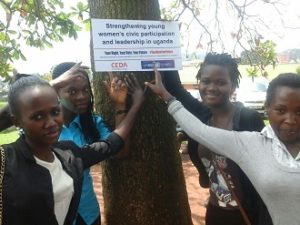
Lesson Learned: Strengthening Young Women’s Civic Participation and Leadership in Uganda

The international grantee involved implementing partners in Uganda - namely ten universities in three target areas - from the very beginning, in the design of the project objectives. This enabled good support during project implementation and a certain degree of ownership of the results among the universities. However, the project might have been more efficient at the implementation stage if a detailed memorandum of understanding among the partners had been formulated defining roles and responsibilities.
Project Partner
Century Entrepreneurship Development Agency
Project Description
The project’s objective was to strengthen the political leadership capacity of 1,500 young women from 10 public and private universities based in five districts of Uganda. The grantee aimed to increase awareness among the project’s target group and to provide them with access to information about women’s political life, as well as civic, voting, electoral and democratic processes. This was expected to enhance the leadership capacities of the young women to participate in the March 2016 general elections. Following these elections, an additional component was included in order to create a platform for leadership development of young women in Uganda. Although women’s political advancement at the time of project implementation was a national priority, the actual implementation of related international, regional and national legal and policy commitments remained an important challenge. This was due to persisting socio-cultural factors, such as the high illiteracy rate among youth and girls, lack of access to appropriate information related to political, human and civic rights, early marriage and sexual and gender based violence. While highly relevant in this respect, the project did not address the significant risk of SGBV that young women are exposed to because of their interest in political participation.
Evaluation Date
May 2017
Country
LESSON

Lesson Learned: Strengthening Young Women’s Civic Participation and Leadership in Uganda

Male perceptions regarding the risks encountered by politically empowered women within their communities need to change. Active involvement of men and boys in the needs assessment would have helped in identifying from the very beginning, specific risks related to sexual and gender based violence that challenged the project, and would have helped gain active support of young men in preventing SGBV and discrimination against young female leaders in Uganda.
Project Partner
Century Entrepreneurship Development Agency
Project Description
The project’s objective was to strengthen the political leadership capacity of 1,500 young women from 10 public and private universities based in five districts of Uganda. The grantee aimed to increase awareness among the project’s target group and to provide them with access to information about women’s political life, as well as civic, voting, electoral and democratic processes. This was expected to enhance the leadership capacities of the young women to participate in the March 2016 general elections. Following these elections, an additional component was included in order to create a platform for leadership development of young women in Uganda. Although women’s political advancement at the time of project implementation was a national priority, the actual implementation of related international, regional and national legal and policy commitments remained an important challenge. This was due to persisting socio-cultural factors, such as the high illiteracy rate among youth and girls, lack of access to appropriate information related to political, human and civic rights, early marriage and sexual and gender based violence. While highly relevant in this respect, the project did not address the significant risk of SGBV that young women are exposed to because of their interest in political participation.
Evaluation Date
May 2017
Country
LESSON

Lesson Learned: Supporting local democratic governance in the mining regions of northern Upper Guinea

The training materials could have been more relevant and accessible to the target beneficiaries. The resources should have been translated into the most frequently used languages. Learning materials should have also incorporated more visual elements and used radio broadcasts since many of the beneficiaries were illiterate.
Project Partner
Centre d'Appui pour le Developpement Economique et Social
Project Description
The project’s overall objective was to strengthen local democratic governance in mining regions in northern Upper Guinea in order to promote socio-economic development. Specifically the project aimed to enhance civic participation and transparency in public administration in the three urban municipalities of Dabola, inguiraye and Kouroussa. The grantee set out to create transparent spaces for civic participation and consultation; as well to strengthen drafting skills and to promote local governance such as Local Development Plans, an Annual Investment Plan and municipal budgets. The activities aimed to empower the most vulnerable groups, women and young people. The project was relevant since it addressed the main problems facing public administrations - a lack of knowledge and skills within local government and the reluctance of citizens to get involved and to participate in managing public affairs.
Evaluation Date
September 2016
Theme
Country
LESSON

Lesson Learned: Supporting local democratic governance in the mining regions of northern Upper Guinea

The grassroots civil society organizations involved in the project learned from the capacity-building sessions. Following the project, they are better able to fulfil their role vis-à-vis local authorities by analysing local problems and soliciting people’s opinions. They are also better able to provide training and encouragement to citizens to participate more in local management.
Project Partner
Centre d'Appui pour le Developpement Economique et Social
Project Description
The project’s overall objective was to strengthen local democratic governance in mining regions in northern Upper Guinea in order to promote socio-economic development. Specifically the project aimed to enhance civic participation and transparency in public administration in the three urban municipalities of Dabola, inguiraye and Kouroussa. The grantee set out to create transparent spaces for civic participation and consultation; as well to strengthen drafting skills and to promote local governance such as Local Development Plans, an Annual Investment Plan and municipal budgets. The activities aimed to empower the most vulnerable groups, women and young people. The project was relevant since it addressed the main problems facing public administrations - a lack of knowledge and skills within local government and the reluctance of citizens to get involved and to participate in managing public affairs.
Evaluation Date
September 2016
Theme
Country
LESSON

Lesson Learned: Supporting local democratic governance in the mining regions of northern Upper Guinea

The project methodology took into account the participants’ needs and adapted activities to address them. The project also took place during the Ebola health crisis in Guinea and the grantee was able to adapt to address the crisis, for example by persuading elected officials in the target communities get more involved in the fight against the virus. The project shifted its focus to raise awareness among vulnerable citizens so that they were more engaged in working with the state and development partners to combat the virus.
Project Partner
Centre d'Appui pour le Developpement Economique et Social
Project Description
The project’s overall objective was to strengthen local democratic governance in mining regions in northern Upper Guinea in order to promote socio-economic development. Specifically the project aimed to enhance civic participation and transparency in public administration in the three urban municipalities of Dabola, inguiraye and Kouroussa. The grantee set out to create transparent spaces for civic participation and consultation; as well to strengthen drafting skills and to promote local governance such as Local Development Plans, an Annual Investment Plan and municipal budgets. The activities aimed to empower the most vulnerable groups, women and young people. The project was relevant since it addressed the main problems facing public administrations - a lack of knowledge and skills within local government and the reluctance of citizens to get involved and to participate in managing public affairs.
Evaluation Date
September 2016
Theme
Country
LESSON

Lesson Learned: Supporting local democratic governance in the mining regions of northern Upper Guinea

The capacity-building component created social capital in the region and engaged participants and beneficiaries in absorbing and integrating sustainable local governance practices. Facilitators confirmed their continued involvement in the community affairs and their continued participation in Reflection Circles, which have become transparent spaces for civic debate, focused on the promotion of local governance tools such as the Local Development Plans, the annual investment plan and the municipal budgets.
Project Partner
Centre d'Appui pour le Developpement Economique et Social
Project Description
The project’s overall objective was to strengthen local democratic governance in mining regions in northern Upper Guinea in order to promote socio-economic development. Specifically the project aimed to enhance civic participation and transparency in public administration in the three urban municipalities of Dabola, inguiraye and Kouroussa. The grantee set out to create transparent spaces for civic participation and consultation; as well to strengthen drafting skills and to promote local governance such as Local Development Plans, an Annual Investment Plan and municipal budgets. The activities aimed to empower the most vulnerable groups, women and young people. The project was relevant since it addressed the main problems facing public administrations - a lack of knowledge and skills within local government and the reluctance of citizens to get involved and to participate in managing public affairs.
Evaluation Date
September 2016
Theme
Country
LESSON

Lesson Learned: Supporting local democratic governance in the mining regions of northern Upper Guinea

The project established Reflection Circles on the topics of civic participation and consultation. These Circles were one of the project’s strong points. The Reflection Circles provided a link between the citizens and the municipal authorities and enhanced public debate on issues of local interest. Each Circle was led by a facilitator and applied a dynamic, participative methodology focused on debate in order to organise an optimal and effective framework for learning, making it possible to identify and analyse situations and problems in the daily life of the communities.

Project Partner
Centre d'Appui pour le Developpement Economique et Social
Project Description
The project’s overall objective was to strengthen local democratic governance in mining regions in northern Upper Guinea in order to promote socio-economic development. Specifically the project aimed to enhance civic participation and transparency in public administration in the three urban municipalities of Dabola, inguiraye and Kouroussa. The grantee set out to create transparent spaces for civic participation and consultation; as well to strengthen drafting skills and to promote local governance such as Local Development Plans, an Annual Investment Plan and municipal budgets. The activities aimed to empower the most vulnerable groups, women and young people. The project was relevant since it addressed the main problems facing public administrations - a lack of knowledge and skills within local government and the reluctance of citizens to get involved and to participate in managing public affairs.
Evaluation Date
September 2016
Theme
Country
LESSON

Lesson Learned: Civic education and empowerment for more women in leadership, from villages to parliament in Fiji

One of the main project impacts was to get a significant number of women and the vulnerable population to go to vote. Rural women gained a better understanding of the importance of participating in the elections and young sex workers and street women who had never been involved in electoral events, got registered and went to vote.
Project Partner
National Council of Women Fiji
Project Description
The project aimed to increase women’s representation in public office as part of wider support for women’s representation in political processes and civic leadership in Fiji. The project strategy was structured around three expected outcomes: increased awareness and knowledge of civic education principles among potential women leaders in Fiji; increased capacity of potential women leaders for active participation in civil leadership within both parliament and administrative boards and councils in Fiji and increased awareness within the broader community of the importance of the involvement of women in political processes and civic leadership in Fiji. The project had some success, in particular in training marginal women who are usually excluded from mainstream education and in working with church groups and political parties from across the political spectrum. Implementation, however, was marred by a number of administrative and management shortcomings including a lack of SMART indicators and irregular communication. In addition, the project encountered a number of external challenges including political tensions that generated delays in implementation and the tropical cyclone in February 2016 that left homeless ten thousands of people.
Evaluation Date
July 2016
Country
LESSON

Lesson Learned: Developing alternative models of natural resource governance based on indigenous community participation in Aceh

The inclusion of baseline data was a good idea, but the survey carried out by the grantee used unrealistic indicators which made it difficult to measure changes and impact. The baseline data did not clearly identify the nature of the Mukims’ weaknesses in dealing with the community, village and local government which resulted in inappropriate activities and ultimately in inadequate appreciation of results.
Project Partner
Perkumpulan Prodeelat
Project Description
The project’s objective was to strengthen the capacities of selected local Mukim communities in the Aceh province of Indonesia. A Mukim is a subdivision of a subdistrict and comprise of a number of villages. The aim of the project was to develop, advocate for and implement an alternative model of natural resource governance that promotes the participation and protects the rights of local communities, fosters environmental sustainability, and advances the interests of vulnerable and marginalized populations. The grantee’s approach was inspired by alternative governance models previously implemented by other local Mukim communities. At the time of project implementation, the legal framework which recognizes the Mukims’s authority and asserts its rights to manage its natural resources under Aceh's Special Autonomy status was not yet enforced. As Mukims represent indigenous communities in Aceh, the intended strategy was suited to the need of enhancing the credibility of Mukims. The existing Mukim associations had not previouslyt been in district policy making since they lacked visions, skills, orientations and strategies to build equal relations with public and governmental authorities.
Evaluation Date
July 2016
Country
LESSON

Lesson Learned: Civic education and empowerment for more women in leadership, from villages to parliament in Fiji

The project design and logical framework were weak and too ambitious. Lack of baseline studies and mapping of women participation in politics was another handicap, as well as the inappropriate indicators for selecting the trainers.
Project Partner
National Council of Women Fiji
Project Description
The project aimed to increase women’s representation in public office as part of wider support for women’s representation in political processes and civic leadership in Fiji. The project strategy was structured around three expected outcomes: increased awareness and knowledge of civic education principles among potential women leaders in Fiji; increased capacity of potential women leaders for active participation in civil leadership within both parliament and administrative boards and councils in Fiji and increased awareness within the broader community of the importance of the involvement of women in political processes and civic leadership in Fiji. The project had some success, in particular in training marginal women who are usually excluded from mainstream education and in working with church groups and political parties from across the political spectrum. Implementation, however, was marred by a number of administrative and management shortcomings including a lack of SMART indicators and irregular communication. In addition, the project encountered a number of external challenges including political tensions that generated delays in implementation and the tropical cyclone in February 2016 that left homeless ten thousands of people.
Evaluation Date
July 2016
Country