Tools for knowledge

LESSON

Lesson Learned: Empowering Vulnerable People through Internet: E-Learning Initiative for Young Migrant Workers in China

The project tried to do too much with too many beneficiaries in too many locations. A more focused project would have been both more efficient and more effective. For the most part, project resources were deployed well in support of the project plan. However, in retrospect, given the limited success of the E-Learning and social media components, as well as the limited duration of the engagement that the project had with most youth trainees, there are questions as to whether project resources were utilized in the most efficient way to support the designated beneficiaries.
Project Partner
ICO Institute for Social Agenda
Project Description
The project succeeded in meeting its targets in its final phase, including the development of 20 proposals and petitions by young migrant workers and CSOs working with them, concerning desired improvements in working and living conditions. Of these, eight described practical initiatives or small projects. Each of the eight was awarded a small grant to implement the plans proposed. While some students gained valuable experience, many of those involved lacked the commitment to taking an active role in support of the young migrant workers. Further, the role assigned to the students in “assisting young migrant workers using social media” was vague, and they lacked guidance on what to do and how to do it. In addition, the students, as well as the academic coordinators and the CSO representatives interviewed, all commented on the wide social gap between students and the young workers, which made communication difficult.
Evaluation Date
April 2015
Country
LESSON

Lesson Learned: Empowering Vulnerable People through Internet: E-Learning Initiative for Young Migrant Workers in China

Three of the problems encountered, which arose from mistaken assumptions about three of the principal set of participants in the project, were rather basic, suggesting gaps in the initial needs analysis and feasibility assessment conducted by the project team. The first concerned the primary beneficiaries, the young migrant workers, and a lack of fit between the character of planned project activities and their way-of-life. It was discovered that they had limited time availability and an unpredictable schedule of working hours. Given what is widely known about the conditions of work and living of migrant workers, this should not have been a surprise.
Project Partner
ICO Institute for Social Agenda
Project Description
The project succeeded in meeting its targets in its final phase, including the development of 20 proposals and petitions by young migrant workers and CSOs working with them, concerning desired improvements in working and living conditions. Of these, eight described practical initiatives or small projects. Each of the eight was awarded a small grant to implement the plans proposed. While some students gained valuable experience, many of those involved lacked the commitment to taking an active role in support of the young migrant workers. Further, the role assigned to the students in “assisting young migrant workers using social media” was vague, and they lacked guidance on what to do and how to do it. In addition, the students, as well as the academic coordinators and the CSO representatives interviewed, all commented on the wide social gap between students and the young workers, which made communication difficult.
Evaluation Date
April 2015
Country
LESSON

Lesson Learned: Active democracy and political participation of tribal communities in the Indian Himalayas

The project was coherent, gender-appropriate and highly relevant to the needs of the beneficiaries living in the Himalaya region. The design of this project within a broader strategic planning and programming process also led to the individual actions being well designed and relevant.
Project Partner
Pragya
Project Description
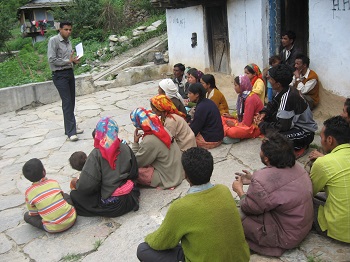
The project’s principal objectives were to enhance civic participation among Himalayan tribes and empower marginalized groups (women, people with disabilities and nomads); and to engage with governance issues and democratic dialogue. To this end, the project aimed to build a supportive environment for enhanced democratic participation through supporting state and non-state actors. The project consisted of 10 core components creating a continuum of involvement from awareness of rights to access to those rights, supported by the training and mobilization of relevant support actors and those who could make the rights a reality. The project design was logical and very much tuned to the needs of the beneficiaries and other stakeholders in this challenging region. There were no delays in project delivery, since it had been designed with the seasonal obstacles relevant to the target region in mind.
Evaluation Date
October 2012
Country
LESSON

Lesson Learned: Active democracy and political participation of tribal communities in the Indian Himalayas

When people are encouraged to claim their rights and entitlements, there is a risk that they will not be successful or that the services they are seeking will not materialize, and this risk must be taken into account. It is inevitable that not all those who apply for government schemes and entitlements will receive them and it is also possible that promised services may not materialize, or that louder voices may prevail. In order to mitigate negative examples they may see, put in place an active process for sharing success stories.

Project Partner
Pragya
Project Description
The project’s principal objectives were to enhance civic participation among Himalayan tribes and empower marginalized groups (women, people with disabilities and nomads); and to engage with governance issues and democratic dialogue. To this end, the project aimed to build a supportive environment for enhanced democratic participation through supporting state and non-state actors. The project consisted of 10 core components creating a continuum of involvement from awareness of rights to access to those rights, supported by the training and mobilization of relevant support actors and those who could make the rights a reality. The project design was logical and very much tuned to the needs of the beneficiaries and other stakeholders in this challenging region. There were no delays in project delivery, since it had been designed with the seasonal obstacles relevant to the target region in mind.
Evaluation Date
October 2012
Country
LESSON

Lesson Learned: Active democracy and political participation of tribal communities in the Indian Himalayas

There were no delays in project delivery, since it had been designed with the seasonal obstacles relevant to the target region in mind. The high Himalayan districts are cut off from the rest of the country for four to five months a year. Therefore, the project was extremely effective. It achieved its objectives and in many cases exceeded the quantitative targets set.

Project Partner
Pragya
Project Description
The project’s principal objectives were to enhance civic participation among Himalayan tribes and empower marginalized groups (women, people with disabilities and nomads); and to engage with governance issues and democratic dialogue. To this end, the project aimed to build a supportive environment for enhanced democratic participation through supporting state and non-state actors. The project consisted of 10 core components creating a continuum of involvement from awareness of rights to access to those rights, supported by the training and mobilization of relevant support actors and those who could make the rights a reality. The project design was logical and very much tuned to the needs of the beneficiaries and other stakeholders in this challenging region. There were no delays in project delivery, since it had been designed with the seasonal obstacles relevant to the target region in mind.
Evaluation Date
October 2012
Country
LESSON

Lesson Learned: Active democracy and political participation of tribal communities in the Indian Himalayas

While this project in the Himalayan districts of India was well designed to be sustainable after funding had ended, the use of a volunteer workforce might put this at risk. This risk needs to be managed to ensure ongoing sustainability. Since even enthusiastic volunteers will not work for ever without compensation, consider providing modest honoraria to those who have volunteered and also to prepare new volunteers to replace those that drop out.

Project Partner
Pragya
Project Description
The project’s principal objectives were to enhance civic participation among Himalayan tribes and empower marginalized groups (women, people with disabilities and nomads); and to engage with governance issues and democratic dialogue. To this end, the project aimed to build a supportive environment for enhanced democratic participation through supporting state and non-state actors. The project consisted of 10 core components creating a continuum of involvement from awareness of rights to access to those rights, supported by the training and mobilization of relevant support actors and those who could make the rights a reality. The project design was logical and very much tuned to the needs of the beneficiaries and other stakeholders in this challenging region. There were no delays in project delivery, since it had been designed with the seasonal obstacles relevant to the target region in mind.
Evaluation Date
October 2012
Country
LESSON

Lesson Learned: Active democracy and political participation of tribal communities in the Indian Himalayas

A principal reason for the project’s impact was the coherence between training/education, bridging processes and mobilization of stakeholder groups and community structures such as Resource Centres to support them. Training, education and sensitization will are more effective if there are processes or structures in place that can contribute to transforming them into practical outcomes.
Project Partner
Pragya
Project Description
The project’s principal objectives were to enhance civic participation among Himalayan tribes and empower marginalized groups (women, people with disabilities and nomads); and to engage with governance issues and democratic dialogue. To this end, the project aimed to build a supportive environment for enhanced democratic participation through supporting state and non-state actors. The project consisted of 10 core components creating a continuum of involvement from awareness of rights to access to those rights, supported by the training and mobilization of relevant support actors and those who could make the rights a reality. The project design was logical and very much tuned to the needs of the beneficiaries and other stakeholders in this challenging region. There were no delays in project delivery, since it had been designed with the seasonal obstacles relevant to the target region in mind.
Evaluation Date
October 2012
Country
LESSON

Lesson Learned: Civil society advocating for quality education & healthcare in Mexico

The electoral process is a part of the political process, and should be seen as an opportunity for public debate on agenda issues, obtaining candidate endorsements should be done for agenda items and following up on those commitments once they enter office.
Project Partner
Rostros y Voces FDS, A.C.
Project Description
The project sought to strengthen the collective voice and action of civil society in the Mexican states of Chiapas, Hidalgo and Guerrero. The focus was on increasing the ability of local CSOs and women, indigenous groups and youth to demand equitable and quality public education and healthcare services through strengthening the ability of CSOs to train, inform, and raise awareness of these rights, and giving opportunities for them to advocate for these services as a basic human right. The use of local level CSOs was an effective approach to implement community-based activities, but the lack of an integrated programme between the states and national level limited its usefulness and potential impact. The use of a diagnostic to develop training and an agenda for action was a good technique, but required more focus on issues of voice and civic participation which were the main objectives of the project. The project strengthened advocacy efforts for more equitable health and education services in its targeted areas in Chiapas, Hidalgo and Guerrero. In particular, it increased individual knowledge, capacity and leadership among participating CSOs and community members. However, the extent of results is unknown due to the lack of outcome data. Changes are likely to be sustainable at the level of personal empowerment and relationships built with some public officials and the agenda provides CSOs with some of the key health and education issues to raise with officials in the future.
Evaluation Date
February 2012
Country
LESSON

Lesson Learned: Civil society advocating for quality education & healthcare in Mexico

The project’s decentralized nature allowed the three CSO partners to adapt the project to their own local context during implementation. In some aspects, this increased the relevance for the participating CSOs as well their participants. Formalize relationships between subgrantees and their implementers with a written agreement that clearly articulates the roles and responsibilities of each, the project purpose, timelines, targets and performance indicator and reporting requirements even if this is only to be done verbally.
Project Partner
Rostros y Voces FDS, A.C.
Project Description
The project sought to strengthen the collective voice and action of civil society in the Mexican states of Chiapas, Hidalgo and Guerrero. The focus was on increasing the ability of local CSOs and women, indigenous groups and youth to demand equitable and quality public education and healthcare services through strengthening the ability of CSOs to train, inform, and raise awareness of these rights, and giving opportunities for them to advocate for these services as a basic human right. The use of local level CSOs was an effective approach to implement community-based activities, but the lack of an integrated programme between the states and national level limited its usefulness and potential impact. The use of a diagnostic to develop training and an agenda for action was a good technique, but required more focus on issues of voice and civic participation which were the main objectives of the project. The project strengthened advocacy efforts for more equitable health and education services in its targeted areas in Chiapas, Hidalgo and Guerrero. In particular, it increased individual knowledge, capacity and leadership among participating CSOs and community members. However, the extent of results is unknown due to the lack of outcome data. Changes are likely to be sustainable at the level of personal empowerment and relationships built with some public officials and the agenda provides CSOs with some of the key health and education issues to raise with officials in the future.
Evaluation Date
February 2012
Country
LESSON

Lesson Learned: Civil society advocating for quality education & healthcare in Mexico

The project’s objectives were also directly relevant to the grantee’s institutional mandate and vision of strengthening civil society and enabling people to exercise their rights to create a more equitable and democratic society. However, the extremely decentralized approach used for project implementation undermined the programmatic relevance of grantee beyond providing the general outlines for the project and serving as a grant manager for the three CSOs.
Project Partner
Rostros y Voces FDS, A.C.
Project Description
The project sought to strengthen the collective voice and action of civil society in the Mexican states of Chiapas, Hidalgo and Guerrero. The focus was on increasing the ability of local CSOs and women, indigenous groups and youth to demand equitable and quality public education and healthcare services through strengthening the ability of CSOs to train, inform, and raise awareness of these rights, and giving opportunities for them to advocate for these services as a basic human right. The use of local level CSOs was an effective approach to implement community-based activities, but the lack of an integrated programme between the states and national level limited its usefulness and potential impact. The use of a diagnostic to develop training and an agenda for action was a good technique, but required more focus on issues of voice and civic participation which were the main objectives of the project. The project strengthened advocacy efforts for more equitable health and education services in its targeted areas in Chiapas, Hidalgo and Guerrero. In particular, it increased individual knowledge, capacity and leadership among participating CSOs and community members. However, the extent of results is unknown due to the lack of outcome data. Changes are likely to be sustainable at the level of personal empowerment and relationships built with some public officials and the agenda provides CSOs with some of the key health and education issues to raise with officials in the future.
Evaluation Date
February 2012
Country