
Media

LESSON

Lesson Learned: Empowering people through citizens’ journalism in Albania

Outside of a few main service contracts, most of the supervision, reporting and contracting was informal. This resulted in the project not having readily available information on its activities, outputs, contracting or expenditures, and its financial and programmatic reports were not submitted to UNDEF in a timely manner. This delayed release of the second tranche of project funding, pushing back activities and requiring a time extension to complete the project in Albania.
Project Partner
Institute for Democracy, Media and Cultural Exchange
Project Description
Empowering people through citizens’ journalism in Albania sought to strengthen the outreach of CSOs representing socially vulnerable groups to the community through citizen journalism by 1) equipping CSOs with public communication skills, 2) establishing a community radio station and a web portal at Tirana University, and 3) training students to report on socially relevant topics. The project was unable to establish the on-air radio but continued some training components at the University of Tirana. Activities were also extended to the University of Elbasan which had an existing campus radio station and a dean interested in community radio and citizen journalism. The project created an internet portal called “YouRadio” that it based in the IRIOM project office where it could record and upload its programming. It also branched out to broadcast each programme on a national FM radio station run by Ora, through paid airtime at a regular time each week. Towards the end of the project, it also found the private Marlin Barleti University in Tirana interested in establishing a campus radio station and provided the project equipment to its communications department.
Evaluation Date
October 2011
Theme
Country
LESSON

Lesson Learned: Empowering people through citizens’ journalism in Albania

Some CSOs also felt their opportunities to benefit from the skills training beyond the participation of their student volunteers was limited which affected relevance for their organization. The training reached the student volunteers, but not in most cases to the organization, and any benefits accrued in terms of strengthening was with the individual students rather than the CSO.
Project Partner
Institute for Democracy, Media and Cultural Exchange
Project Description
Empowering people through citizens’ journalism in Albania sought to strengthen the outreach of CSOs representing socially vulnerable groups to the community through citizen journalism by 1) equipping CSOs with public communication skills, 2) establishing a community radio station and a web portal at Tirana University, and 3) training students to report on socially relevant topics. The project was unable to establish the on-air radio but continued some training components at the University of Tirana. Activities were also extended to the University of Elbasan which had an existing campus radio station and a dean interested in community radio and citizen journalism. The project created an internet portal called “YouRadio” that it based in the IRIOM project office where it could record and upload its programming. It also branched out to broadcast each programme on a national FM radio station run by Ora, through paid airtime at a regular time each week. Towards the end of the project, it also found the private Marlin Barleti University in Tirana interested in establishing a campus radio station and provided the project equipment to its communications department.
Evaluation Date
October 2011
Theme
Country
LESSON

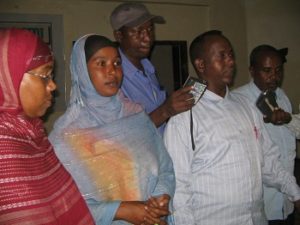
Lesson Learned: Strengthening Somali Media Capacity for Democracy and Human Rights

The promotion of the role of the media and freedom of expression should have been the object of advocacy activities beyond the workshops. The grantee did conduct some advocacy activities, but these were not part of the UNDEF-funded project and addressed mainly the international community. Any follow-up project should include an advocacy dimension directed at government and local authorities, and should consider ways in which training sessions can be followed-up to further support participating journalists, for example through the use of social networks.
Project Partner
National Union of Somali Journalists
Project Description
The project aimed strengthened the capacity of the Somali media to implement principles and practices of democracy and respect for human rights by providing professional training to Somali journalists across the country, focusing on ethics and good journalistic practices, and holding workshops on good governance and human rights. The use of training sessions and workshops was appropriate to address the issue of journalists’ skills development. Creation of a media centre was also useful in helping journalists to do their work. However, the project's planned activities were not sufficient to address all its objectives. The number of participating journalists was on target, as was the ratio of women participants (30%). This is a very significant achievement, considering the prevalence of armed violence and high levels of political instability in many parts of Somalia during the project period. Significantly, the project benefited about half of Somalia’s journalists. On the other hand, the failure to address other stakeholders - government, editors, and publishers - reduced the likelihood of positive changes. However, the very fact that the project took place has to be seen as an achievement in its own right.
Evaluation Date
October 2011
Theme
Country
LESSON

Lesson Learned: Strengthening Somali Media Capacity for Democracy and Human Rights

The project also failed adequately to involve government authorities where it could have been possible. Although local officials were informed of activities, and occasionally invited to take part, there was no explicit attempt to convey the concerns of journalists to authorities or otherwise to associate them to a search for policy solutions.
Project Partner
National Union of Somali Journalists
Project Description
The project aimed strengthened the capacity of the Somali media to implement principles and practices of democracy and respect for human rights by providing professional training to Somali journalists across the country, focusing on ethics and good journalistic practices, and holding workshops on good governance and human rights. The use of training sessions and workshops was appropriate to address the issue of journalists’ skills development. Creation of a media centre was also useful in helping journalists to do their work. However, the project's planned activities were not sufficient to address all its objectives. The number of participating journalists was on target, as was the ratio of women participants (30%). This is a very significant achievement, considering the prevalence of armed violence and high levels of political instability in many parts of Somalia during the project period. Significantly, the project benefited about half of Somalia’s journalists. On the other hand, the failure to address other stakeholders - government, editors, and publishers - reduced the likelihood of positive changes. However, the very fact that the project took place has to be seen as an achievement in its own right.
Evaluation Date
October 2011
Theme
Country
LESSON

Lesson Learned: Empowering people through citizens’ journalism in Albania

Although risks were accurately identified, there was no alternative strategy developed as a fall back, specifically regarding the continued participation of the University of Tirana as an implementing partner and the ability to obtain a broadcast license for a campus station. As these were the basis for the project, the implementation plan needed to be reworked and new partners found well after the project had started. But the campus radio at Elbasan was not used as the hub for the project and project efforts were then split between Tirana and Elbasan and the YouRadio web portal equipment placed in the IRIOM office.
Project Partner
Institute for Democracy, Media and Cultural Exchange
Project Description
Empowering people through citizens’ journalism in Albania sought to strengthen the outreach of CSOs representing socially vulnerable groups to the community through citizen journalism by 1) equipping CSOs with public communication skills, 2) establishing a community radio station and a web portal at Tirana University, and 3) training students to report on socially relevant topics. The project was unable to establish the on-air radio but continued some training components at the University of Tirana. Activities were also extended to the University of Elbasan which had an existing campus radio station and a dean interested in community radio and citizen journalism. The project created an internet portal called “YouRadio” that it based in the IRIOM project office where it could record and upload its programming. It also branched out to broadcast each programme on a national FM radio station run by Ora, through paid airtime at a regular time each week. Towards the end of the project, it also found the private Marlin Barleti University in Tirana interested in establishing a campus radio station and provided the project equipment to its communications department.
Evaluation Date
October 2011
Theme
Country
LESSON

Lesson Learned: Empowering people through citizens’ journalism in Albania

Outside of a few main service contracts, most of the supervision, reporting and contracting was informal. This resulted in the project not having readily available information on its activities, outputs, contracting or expenditures, and its financial and programmatic reports were not submitted to UNDEF in a timely manner. This delayed release of the second tranche of project funding, pushing back activities and requiring a time extension to complete the project in Albania.
Project Partner
Institute for Democracy, Media and Cultural Exchange
Project Description
Empowering people through citizens’ journalism in Albania sought to strengthen the outreach of CSOs representing socially vulnerable groups to the community through citizen journalism by 1) equipping CSOs with public communication skills, 2) establishing a community radio station and a web portal at Tirana University, and 3) training students to report on socially relevant topics. The project was unable to establish the on-air radio but continued some training components at the University of Tirana. Activities were also extended to the University of Elbasan which had an existing campus radio station and a dean interested in community radio and citizen journalism. The project created an internet portal called “YouRadio” that it based in the IRIOM project office where it could record and upload its programming. It also branched out to broadcast each programme on a national FM radio station run by Ora, through paid airtime at a regular time each week. Towards the end of the project, it also found the private Marlin Barleti University in Tirana interested in establishing a campus radio station and provided the project equipment to its communications department.
Evaluation Date
October 2011
Theme
Country
LESSON

Lesson Learned: Democratic Dialogue through Media in Sierra Leone

Placing the media at the centre of a dialogue process with government, civil society and citizens was overambitious because the project was not designed to address the government and other state institutions. The project had the means and methodologies to address the media and NGOs but was relatively ill-prepared to address government officials and elected Members of the Sierra Leone Parliament.
Project Partner
Journalists for Human Rights
Project Description
The project aimed to build capacity of local media in Sierra Leone to facilitate a national dialogue among civil society, government and citizens. It targeted primary beneficiaries that included: journalists from radio and print media who were awarded fellowships and trained in investigative journalism through production and publishing human right stories; NGO grantees; and local communities targeted through forums and workshops to increase public knowledge on the role of the media in human rights protection and promotion. The project responded to a need for improved democratic dialogue, and correctly identified the need for enhanced democratic debate as a precondition for entrenching democratic values and policies in post-war Sierra Leone. It also correctly identified the media as a key player, both as a space to “host” that debate and as a provider of substantive information. However the project's relevance was reduced by its failure formally to engage with editors/publishers and with relevant high-level institutional actors. The project document lacked a complete analysis of the stakeholders, their respective needs and the various messages that should be addressed to them. Nevertheless, the project contributed to establishing a critical mass of journalists aware of human rights reporting and of the challenges of balanced political reporting.
Evaluation Date
March 2011
Theme
Country
LESSON

Lesson Learned: Democratic Dialogue through Media in Sierra Leone

The project strategy was two-pronged: on the one hand it enhanced the skills of journalists in researching and producing human rights stories - the “supply side” - and on the other hand, work was done with civil society organizations, journalism students and the broader public to raise awareness about the role that media can play in the promotion and protection of human rights - the “demand side”.
Project Partner
Journalists for Human Rights
Project Description
The project aimed to build capacity of local media in Sierra Leone to facilitate a national dialogue among civil society, government and citizens. It targeted primary beneficiaries that included: journalists from radio and print media who were awarded fellowships and trained in investigative journalism through production and publishing human right stories; NGO grantees; and local communities targeted through forums and workshops to increase public knowledge on the role of the media in human rights protection and promotion. The project responded to a need for improved democratic dialogue, and correctly identified the need for enhanced democratic debate as a precondition for entrenching democratic values and policies in post-war Sierra Leone. It also correctly identified the media as a key player, both as a space to “host” that debate and as a provider of substantive information. However the project's relevance was reduced by its failure formally to engage with editors/publishers and with relevant high-level institutional actors. The project document lacked a complete analysis of the stakeholders, their respective needs and the various messages that should be addressed to them. Nevertheless, the project contributed to establishing a critical mass of journalists aware of human rights reporting and of the challenges of balanced political reporting.
Evaluation Date
March 2011
Theme
Country
LESSON

Lesson Learned: Democratic Dialogue through Media in Sierra Leone

The trainers hired to work with journalists were sometimes more skilled and better educated than their editors, but lacked the seniority that would have allowed them to speak with more authority to media managers and owners. This ultimately led some trainers to switch media outlets, though it did not hamper the implementation of the project as a whole because the key relationships, built and nurtured by the project, were between trainers and individual journalists, not trainers and media outlets.
Project Partner
Journalists for Human Rights
Project Description
The project aimed to build capacity of local media in Sierra Leone to facilitate a national dialogue among civil society, government and citizens. It targeted primary beneficiaries that included: journalists from radio and print media who were awarded fellowships and trained in investigative journalism through production and publishing human right stories; NGO grantees; and local communities targeted through forums and workshops to increase public knowledge on the role of the media in human rights protection and promotion. The project responded to a need for improved democratic dialogue, and correctly identified the need for enhanced democratic debate as a precondition for entrenching democratic values and policies in post-war Sierra Leone. It also correctly identified the media as a key player, both as a space to “host” that debate and as a provider of substantive information. However the project's relevance was reduced by its failure formally to engage with editors/publishers and with relevant high-level institutional actors. The project document lacked a complete analysis of the stakeholders, their respective needs and the various messages that should be addressed to them. Nevertheless, the project contributed to establishing a critical mass of journalists aware of human rights reporting and of the challenges of balanced political reporting.
Evaluation Date
March 2011
Theme
Country
LESSON

Lesson Learned: Democratic Dialogue through Media in Sierra Leone

The project design should have included a more explicit strategy to address editors and publishers, particularly those of media outlets to which trainers were assigned. The grantee sent trainers to selected media outlets, which had made a formal expression of interest and had received a briefing about the tasks to be carried out by the trainers and the support that the media outlets were expected to give. In addition, each media organisation was asked to sign a Memorandum of Understanding setting out each side's key responsibilities. This MoU covered a range of practical issues, but did not require media outlets to commit themselves to enhance their coverage of human rights issues, or otherwise to facilitate the fulfilment of the project's objective.
Project Partner
Journalists for Human Rights
Project Description
The project aimed to build capacity of local media in Sierra Leone to facilitate a national dialogue among civil society, government and citizens. It targeted primary beneficiaries that included: journalists from radio and print media who were awarded fellowships and trained in investigative journalism through production and publishing human right stories; NGO grantees; and local communities targeted through forums and workshops to increase public knowledge on the role of the media in human rights protection and promotion. The project responded to a need for improved democratic dialogue, and correctly identified the need for enhanced democratic debate as a precondition for entrenching democratic values and policies in post-war Sierra Leone. It also correctly identified the media as a key player, both as a space to “host” that debate and as a provider of substantive information. However the project's relevance was reduced by its failure formally to engage with editors/publishers and with relevant high-level institutional actors. The project document lacked a complete analysis of the stakeholders, their respective needs and the various messages that should be addressed to them. Nevertheless, the project contributed to establishing a critical mass of journalists aware of human rights reporting and of the challenges of balanced political reporting.
Evaluation Date
March 2011
Theme
Country