
institutional

LESSON

Lesson Learned: For Participation of Persons with Disabilities in Disaster and Climate Risk Governance in the Philippines

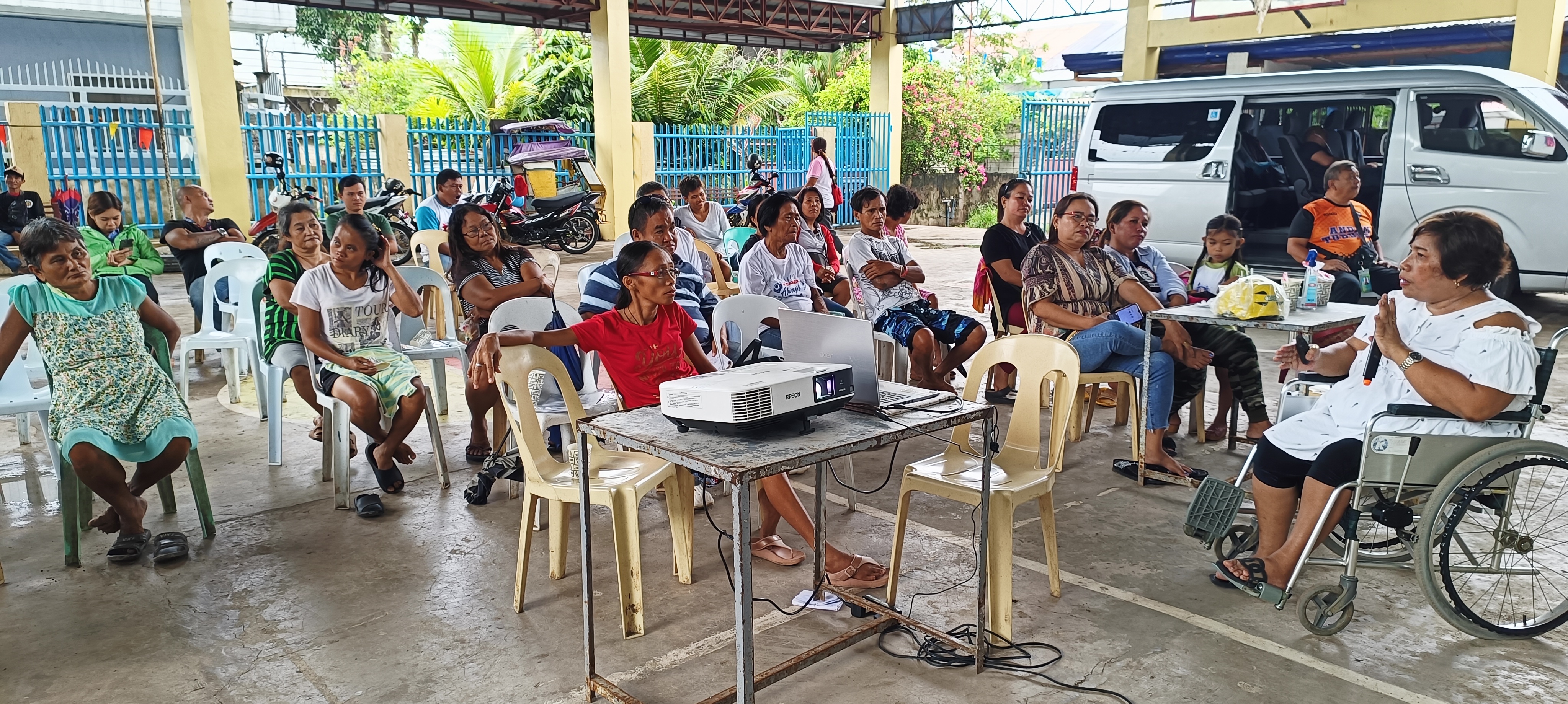
With sufficient capability-building interventions, Persons with Disabilities, at both the individual and organizational levels, can be highly capable and dynamic contributors to local governance processes. However, the shift in dynamics, whereby some decision-making powers, including the allocation of resources for Persons with Disabilities, are shared between the Local Government Units and the Organizations of Persons with Disabilities, should be managed effectively by providing additional project inputs on socio-political change.
Project Partner
A2D Project-Research Group for Alternatives to Development Inc.
Project Description

This project works to empower people with disabilities to participate in disaster risk reduction approaches in 20 local government units in Cebu Province. It will build capacity for 20 organizations of persons with disabilities to have a real voice in formal community planning processes, with the goal of influencing local government to break barriers, open spaces for inclusion, and encourage at-risk populations to take an active role in disaster preparedness, risk reduction and other community development agenda issues.

Evaluation Date
December 2025
Country
LESSON

Lesson Learned: Enabling National Initiatives to Take Democracy Beyond Elections

Engaging with civil servants and elected government officials from the outset is a critical strategy that can ensure state-level buy-in for the Citizen Assembly approach which in turn can reduce the risk that it is seen as adversarial, but rather a mechanism that can capture and reflect citizens perspectives in ways that strengthens state credibility and even legitimacy. In this project, all local partners sought to engage state officials as partners in Citizen Assembly processes by providing opportunities for them to attend sessions and/or through regular progress updates.

Project Partner
The newDemocracy Foundation
Project Description

Making democracies more inclusive requires bold and innovative reforms to bring the young, the poor, and minorities into the political system. Some countries have piloted initiatives for assemblies on specific issues where members are not nominated by political parties but chosen at random for a limited term to represent all sectors of society, to prevent the formation of self-serving and self-perpetuating political classes disconnected from their electorates. The project aims to enable more countries to develop initiatives of this kind. It will develop and distribute a handbook on ‘Democracy Beyond Elections’ designed to show how nations at various levels of development can apply the principles of representation and deliberation in ways that are appropriate to their economic and educational circumstances. The project will fund three pilot projects to further the demonstration effect and produce a documentary based on one of these to demonstrate how deliberative democracy can work in practice. Among citizens, the project will work to build the sense that ordinary people are involved in making decisions that affect them, and thus to promote trust in Government. Among elected representatives, the project will work to stimulate a greater openness to complementary democratic models in which citizens explore and recommend policy solutions on key issues.

Evaluation Date
March 2025