sustainability

LESSON

Lesson Learned: Enhancing Women’s Political Participation in Eswatini

Leveraging established partnerships and resources, particularly during disruptive situations such as the pandemic, enhances stakeholder endorsement and improves the potential for sustaining project activities. In this project, the existing relationships and trust between WLSA and the project communities facilitated ongoing engagement and awareness during the lockdown periods. This ensured the continuity and engagement of project stakeholders.

Project Partner
Women and Law in Southern Africa - Eswatini
Project Description

The project seeks to enhance the gender responsiveness of policies and practices in the electoral process in Eswatini by assisting stakeholders to develop gender responsive guidelines and educating citizens on the importance of women’s political participation, while empowering the female electorate with leadership skills, campaign and mobilization strategies. The project seeks to impart a long-term effect by enabling community-based paralegals to conduct gender equality sensitization talks at community level. Project activities will incorporate actions in response to the Covid-19 crisis, as it impacts women, including gender-based violence as well as social and economic pressures.
Evaluation Date
August 2024
Country
LESSON

Lesson Learned: Safeguarding the Rights of Transgender & Intersex Communities in Pakistan

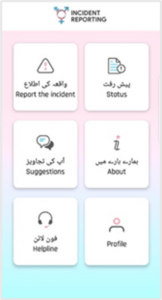
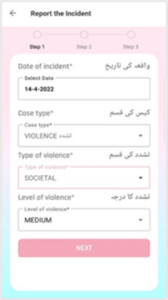
Effective institutionalization of a technology driven initiative in government departments requires an assessment of their capacity and readiness. Technical and capacity support may be provided to ensure smooth transfer and successful adoption of technology. In the present project, an App developed to report human rights incidents and violations was handed off without prior assessment to a public office unprepared for ensuring its maintenance and use.

Project Partner
Formation Awareness & Community Empowerment Society
Project Description
The project objective is to work for the protection and promotion of human rights and fundamental freedoms of LGBTI persons, particularly transgender and intersex, in Lahore and Faisalabad districts. Expected outcomes include support for 5000 LGTQI/transgender persons; enhanced capacity of 50 civil society and human rights organizations; increased public awareness of LGBTI rights; registration of transgender and intersex persons for computerized national identity cards; improved policy framework and legal provision on the rights of transgender and intersex person.
Evaluation Date
March 2024
Theme
Country
LESSON

Lesson Learned: Safeguarding the Rights of Transgender & Intersex Communities in Pakistan

Connected, aware and empowered CSOs and Human Rights Defenders can become a strong catalyst for change at the grassroots level in order to promote local action aimed at promoting transgender persons’ rights. In this case, the engagement provided them a chance to liaise and establish a link with government officials and departments which continued beyond the project.

Project Partner
Formation Awareness & Community Empowerment Society
Project Description
The project objective is to work for the protection and promotion of human rights and fundamental freedoms of LGBTI persons, particularly transgender and intersex, in Lahore and Faisalabad districts. Expected outcomes include support for 5000 LGTQI/transgender persons; enhanced capacity of 50 civil society and human rights organizations; increased public awareness of LGBTI rights; registration of transgender and intersex persons for computerized national identity cards; improved policy framework and legal provision on the rights of transgender and intersex person.
Evaluation Date
March 2024
Theme
Country
LESSON

Lesson Learned: Safeguarding the Rights of Transgender & Intersex Communities in Pakistan

The project experience clearly indicates that project interventions when anchored in or leveraging existing government initiatives have greater stakeholder endorsement and higher chance to sustain. In this case, the grantee successfully tapped in and leveraged existing government initiatives that support, for example, the issuance of identity documentation as well as literacy and nonformal education.

Project Partner
Formation Awareness & Community Empowerment Society
Project Description
The project objective is to work for the protection and promotion of human rights and fundamental freedoms of LGBTI persons, particularly transgender and intersex, in Lahore and Faisalabad districts. Expected outcomes include support for 5000 LGTQI/transgender persons; enhanced capacity of 50 civil society and human rights organizations; increased public awareness of LGBTI rights; registration of transgender and intersex persons for computerized national identity cards; improved policy framework and legal provision on the rights of transgender and intersex person.
Evaluation Date
March 2024
Theme
Country
LESSON

Lesson Learned: Safeguarding the Rights of Transgender & Intersex Communities in Pakistan

Meaningful and transformative change to safeguard rights of transgender community is possible through legislative action. Creating adequate legal frameworks and making justice work for transgender community requires rigorous policy advocacy and extensive engagement with policy and law makers. In this case, while the grantee took a number of initiatives including legal and policy review as well as development of a draft law on Transgender Rights, it met with limited success to generate ownership to steer the legal reform process due to limited engagement with parliamentarians and policy makers.

Project Partner
Formation Awareness & Community Empowerment Society
Project Description
The project objective is to work for the protection and promotion of human rights and fundamental freedoms of LGBTI persons, particularly transgender and intersex, in Lahore and Faisalabad districts. Expected outcomes include support for 5000 LGTQI/transgender persons; enhanced capacity of 50 civil society and human rights organizations; increased public awareness of LGBTI rights; registration of transgender and intersex persons for computerized national identity cards; improved policy framework and legal provision on the rights of transgender and intersex person.
Evaluation Date
March 2024
Theme
Country
LESSON

Lesson Learned: Empowering Rural Communities in Bhutan through Mass Media

Mentoring as a model for capacity building has worked. It was found during the interviews that most of the trainees had learned techniques and applied new skills in reporting and engaging with audiences. After the trainings, the Mentors therefore continued to guide and teach the participants on subjects not covered during the trainings like techniques of editing and content packaging, self-censorship and other technical and editorial skills.
Project Partner
Journalists' Association of Bhutan
Project Description
The project aims to address low levels of media knowledge and social media awareness in Bhutan’s rural population, urban centric news media, and the lack of viable, private and free media coverage on rural issues. By training journalists to report on local issues in both mainstream and social media the project will encourage local communities to engage in active reporting on rural issues. Small grants will be awarded by a jury to recognize excellence in local journalism and to encourage continued meaningful contributions to free media in Bhutan by individual rural journalists.
Evaluation Date
December 2022
Country
LESSON

Lesson Learned: Empowering Rural Communities in Bhutan through Mass Media

Both mentors and participants demonstrated that knowledge sharing works vertically and horizontally in- and outside the media organisations, mainly in four ways.
• One, most of the participants shared their knowledge and experience by training the co-workers;
• Two, they shared their knowledge with other media professionals through a variety of interactive as well as informal forums;
• Three, participants took opportunities to share their knowledge with students in media training institutes;
• Four, participants also shared their knowledge and experiences through a variety of media, most commonly by writing blogs, articles for professional journals.
Project Partner
Journalists' Association of Bhutan
Project Description
The project aims to address low levels of media knowledge and social media awareness in Bhutan’s rural population, urban centric news media, and the lack of viable, private and free media coverage on rural issues. By training journalists to report on local issues in both mainstream and social media the project will encourage local communities to engage in active reporting on rural issues. Small grants will be awarded by a jury to recognize excellence in local journalism and to encourage continued meaningful contributions to free media in Bhutan by individual rural journalists.
Evaluation Date
December 2022
Country
LESSON

Lesson Learned: Improving Maya Women's Access to Justice in Rural Guatemala

There is a strong demand for legal support services, which only increases by offering this service. Projects must anticipate this growing demand and establish the mechanism to respond while also strengthening interinstitutional efforts to continuously provide these services.
Project Partner
Women's Justice Initiative
Project Description
This project seeks to improve access to justice for some 2,900 indigenous women living in rural areas of Tecpan, Guatemala through free legal support, accompaniment of survivors, and strengthening local governance and municipal response to violence against women and girls. In addition, the project aims to increase the capacities of 175 key public actors including community leaders, service providers, and police at the local, municipal, and departmental level to provide quality services to indigenous survivors and promote human rights.
Evaluation Date
March 2022
Country
LESSON

Lesson Learned: Enabling Women to Participate in Sustainable Water Management in Armenia

In transitioning societies with the control and accountability mechanisms under development having tangible assets delivered, strategic position-holders interested, and locally recognized agents of change with multiplication potential involved are important to ensure the target population’s immediate interest, as well as the longer-term sense of ownership to be developed and the sustainability of the project to be achieved. Whenever possible, adding the beneficiary financial contribution element, such as community funds, can help in enhancing the sense of ownership and accountability for public expenditures and improving processes for public consultation in development planning.
Project Partner
Armenian Women for Health and Healthy Environment NGO
Project Description
The project aims to contribute to strategies regarding the sustainable management of natural water resources in the Ararat Valley through enhancement of women’s groups that supply oversight and equity in community water and sanitation resources. Three groups will be interlinked in their actions to facilitate discussion on tariff compensation; monitor the participation of oversight activities on irrigation; and implement four pilot projects at the community level. Pilot projects will identify community-based participatory approaches to decision-making involving women to improve access and management of water resources.
Evaluation Date
November 2021
Country
LESSON

Lesson Learned: Empowering Communities Threatened with Displacement in Thailand

Community leaders, organizations and networks are in need of additional resources between project cycles to sustain program outputs and outcomes. UNDEF grantees need to plan ahead, identifying and considering in their strategic planning ways to support the key nodes in regional networks through resources, capacity building, and network expansion.
Project Partner
Chumchonthai Foundation
Project Description
Economic growth has benefited many citizens but has in some cases resulted in being a threat to cultural existence, livelihoods, and land/citizenship rights of communities. This project aims to promote the social, political and economic inclusion of marginalized communities in the Andaman region of Thailand, through capacity development, advocacy and community campaigning to eliminate discriminatory laws, policies, and practices. It seeks to help members of marginalized communities to gain legal identities and acquire the political and legal know-how, and organizational skills needed to assert their rights and in participating in decision-making processes. Moreover, it will support media and public-advocacy campaigns designed to increase local authorities’ knowledge of and compliance with laws and policies, recognizing the rights of marginalized people and communities.
Evaluation Date
December 2020
Country