Lessons

LESSON

Lesson Learned: Enabling National Initiatives to Take Democracy Beyond Elections

Documenting how Citizen Assembly initiatives were successfully delivered and the impacts they had in different contexts is a critical tool for increasing public awareness about the ideas behind the approach and can also strengthen expert networks existing knowledge bases. With the publication of a handbook, UNDEF’s Implementing Partner has provided a valuable resource that can guide the practical application of deliberative democracy ideals into practice through Citizen Assemblies.

Project Partner
The newDemocracy Foundation
Project Description

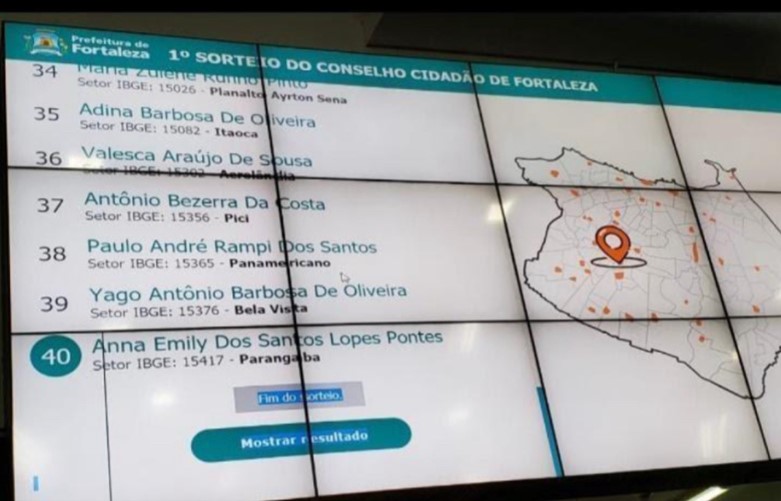
Making democracies more inclusive requires bold and innovative reforms to bring the young, the poor, and minorities into the political system. Some countries have piloted initiatives for assemblies on specific issues where members are not nominated by political parties but chosen at random for a limited term to represent all sectors of society, to prevent the formation of self-serving and self-perpetuating political classes disconnected from their electorates. The project aims to enable more countries to develop initiatives of this kind. It will develop and distribute a handbook on ‘Democracy Beyond Elections’ designed to show how nations at various levels of development can apply the principles of representation and deliberation in ways that are appropriate to their economic and educational circumstances. The project will fund three pilot projects to further the demonstration effect and produce a documentary based on one of these to demonstrate how deliberative democracy can work in practice. Among citizens, the project will work to build the sense that ordinary people are involved in making decisions that affect them, and thus to promote trust in Government. Among elected representatives, the project will work to stimulate a greater openness to complementary democratic models in which citizens explore and recommend policy solutions on key issues.

Evaluation Date
March 2025
LESSON

Lesson Learned: Strengthening Independent Media in the Arab Region

Flexibility in project design is key to successfully implemented projects in rapidly changing contexts, especially in cases of deteriorating security, war, and (previous) pandemic-related lockdowns. In this project, the Implementing Partner has been able to effectively and efficiently shift activity implementation by relying on synergies from previous UNDEF-supported activities, networks of journalists and civic actors, as well as in-kind contribution to ensure successful project continuity. 

Project Partner
Journalist for Human Rights
Project Description

The project aims to strengthen independent media in the Arab region so as to build greater accountability and better governance, by improving the working environment for journalists; advancing media freedom and accessible information and data; enhancing the capacity of freelance and full-time journalists to cover sensitive human rights stories; and improving journalists’ legal knowledge through strong working partnerships with civic actors. Project activities also incorporate responses to the Covid-19 crisis for journalists on the front line.

Evaluation Date
February 2025
Theme
LESSON

Lesson Learned: Strengthening Independent Media in the Arab Region

Another multi-faceted benefit of regional partnerships are the synergies that are created on the national level stemming from local partners that bring different experiences and lessons learned to the fore. In this case, the Moroccan partner focuses on producing stories in multiple vernacular languages for community-level resonance and highlights the role of communitarian media as garnering legitimacy among listeners and readers at the local level. In Tunisia, the local office brings a large network of journalists, media professionals, and engaged civic organizations to the project that helps informing on navigating complex legal frameworks governing information access.

Project Partner
Journalist for Human Rights
Project Description

The project aims to strengthen independent media in the Arab region so as to build greater accountability and better governance, by improving the working environment for journalists; advancing media freedom and accessible information and data; enhancing the capacity of freelance and full-time journalists to cover sensitive human rights stories; and improving journalists’ legal knowledge through strong working partnerships with civic actors. Project activities also incorporate responses to the Covid-19 crisis for journalists on the front line.

Evaluation Date
February 2025
Theme
LESSON

Lesson Learned: Strengthening Independent Media in the Arab Region

Material outputs are most useful when they hold long-term temporal value and become staple references, such as the Human Rights Code of Ethics for North Africa and the Middle East (JHR code of ethics for human rights journalists on a regional level). In this case, the Implementing Partner relies on synergies with its other projects and thus far has increased signatories committed to the code by 100% beyond target.

Project Partner
Journalist for Human Rights
Project Description

The project aims to strengthen independent media in the Arab region so as to build greater accountability and better governance, by improving the working environment for journalists; advancing media freedom and accessible information and data; enhancing the capacity of freelance and full-time journalists to cover sensitive human rights stories; and improving journalists’ legal knowledge through strong working partnerships with civic actors. Project activities also incorporate responses to the Covid-19 crisis for journalists on the front line.

Evaluation Date
February 2025
Theme
LESSON

Lesson Learned: Strengthening Independent Media in the Arab Region

Inclusive partnership strategies and local participation during project design and at the project start-up stage are critical for more precise and consistent alignment with contemporary priorities. Consistent involvement in project implementation by local offices and coordinators is necessary to mitigate contextual challenges and effectuate activity redesign, including bottom-up involvement in the development of training materials and knowledge-sharing. In this case, the presence of country offices has been critical in mitigating project delays, changes in collaborative work with local authorities, and relying on broader networks of civic and media actors to ensure timeliness and impact. 

Project Partner
Journalist for Human Rights
Project Description

The project aims to strengthen independent media in the Arab region so as to build greater accountability and better governance, by improving the working environment for journalists; advancing media freedom and accessible information and data; enhancing the capacity of freelance and full-time journalists to cover sensitive human rights stories; and improving journalists’ legal knowledge through strong working partnerships with civic actors. Project activities also incorporate responses to the Covid-19 crisis for journalists on the front line.

Evaluation Date
February 2025
Theme
LESSON

Lesson Learned: Strengthening Independent Media in the Arab Region

Inclusive project designs that rely on human rights actors from diverse professions and backgrounds have a high potential for engaging stakeholders and local authorities. In this case, inclusive project designs in Tunisia and Lebanon allowed to effectively work with local authorities towards understanding and addressing issues related to access to information and data-driven journalism.

Project Partner
Journalist for Human Rights
Project Description

The project aims to strengthen independent media in the Arab region so as to build greater accountability and better governance, by improving the working environment for journalists; advancing media freedom and accessible information and data; enhancing the capacity of freelance and full-time journalists to cover sensitive human rights stories; and improving journalists’ legal knowledge through strong working partnerships with civic actors. Project activities also incorporate responses to the Covid-19 crisis for journalists on the front line.

Evaluation Date
February 2025
Theme
LESSON

Lesson Learned: Strengthening Independent Media in the Arab Region

An alternative strategy to foster more impactful and sustainable practices among media and civic actors in multi-country projects is to focus on specific themes of common interest, such as climate justice and gender or minority rights (which figured prominently in this project) across countries. Not only would this allow for the design of catered trainings, skill-and-capacity-building activities that focus on specific human rights areas but would sustain the network of journalists and civic actors focused on common interests regionally and internationally. In this case, project participants from different countries have been able to share experience, lessons, barriers, and solutions resulting in productive media outputs.

Project Partner
Journalist for Human Rights
Project Description

The project aims to strengthen independent media in the Arab region so as to build greater accountability and better governance, by improving the working environment for journalists; advancing media freedom and accessible information and data; enhancing the capacity of freelance and full-time journalists to cover sensitive human rights stories; and improving journalists’ legal knowledge through strong working partnerships with civic actors. Project activities also incorporate responses to the Covid-19 crisis for journalists on the front line.

Evaluation Date
February 2025
Theme
LESSON

Lesson Learned: Strengthening Independent Media in the Arab Region

For journalism projects, access to information trainings and data-driven journalism capacity-building/sensitization workshops are essential. In all four project countries, project participants emphasized the increased difficulties in accessing information to engage in data-driven reporting to counter rampant disinformation and the positive impact of specifically catered initiatives to help access information and data.

Project Partner
Journalist for Human Rights
Project Description

The project aims to strengthen independent media in the Arab region so as to build greater accountability and better governance, by improving the working environment for journalists; advancing media freedom and accessible information and data; enhancing the capacity of freelance and full-time journalists to cover sensitive human rights stories; and improving journalists’ legal knowledge through strong working partnerships with civic actors. Project activities also incorporate responses to the Covid-19 crisis for journalists on the front line.

Evaluation Date
February 2025
Theme
LESSON

Lesson Learned: Strengthening Gender-Responsive Local Government in Nepal

As the project experience indicates, engaging a community representative organization like the National Musahar Association is an effective strategy to build trust and gain access to the community focused on by the project.

Project Partner
South Asia Partnership Nepal
Project Description

The project aims to empower Musahar women and strengthen their representation in local decision-making procedures for promoting gender-responsive local governance in two rural municipalities and two town municipalities. It will work through three main approaches:empowerment of Musahar women to claim their rights, accountability of local government authorities, and strengthening multi-stakeholder partnerships for gender-responsive local governance.

Evaluation Date
December 2024
Country
LESSON

Lesson Learned: Strengthening Gender-Responsive Local Government in Nepal

The project experience clearly indicates that in order to be impactful, the project design should involve multidimensional approaches that address both the practical and structural challenges, ranging from individual capacity gaps to overall gender discrimination and institutionalized exclusion, which constrain women’s voice, decision-making and leadership. In the present case, the Implementing Partner was successful in maintaining a dual focus on promoting women’s political participation through building women’s capacity and awareness of their rights and connecting them to key decision-making processes on the one hand and engaging with the Musahar community, particularly men, to address gender discrimination through sensitization sessions.

Project Partner
South Asia Partnership Nepal
Project Description

The project aims to empower Musahar women and strengthen their representation in local decision-making procedures for promoting gender-responsive local governance in two rural municipalities and two town municipalities. It will work through three main approaches:empowerment of Musahar women to claim their rights, accountability of local government authorities, and strengthening multi-stakeholder partnerships for gender-responsive local governance.

Evaluation Date
December 2024
Country