
Media

LESSON

Lesson Learned: Strengthening Independent Media in the Arab Region

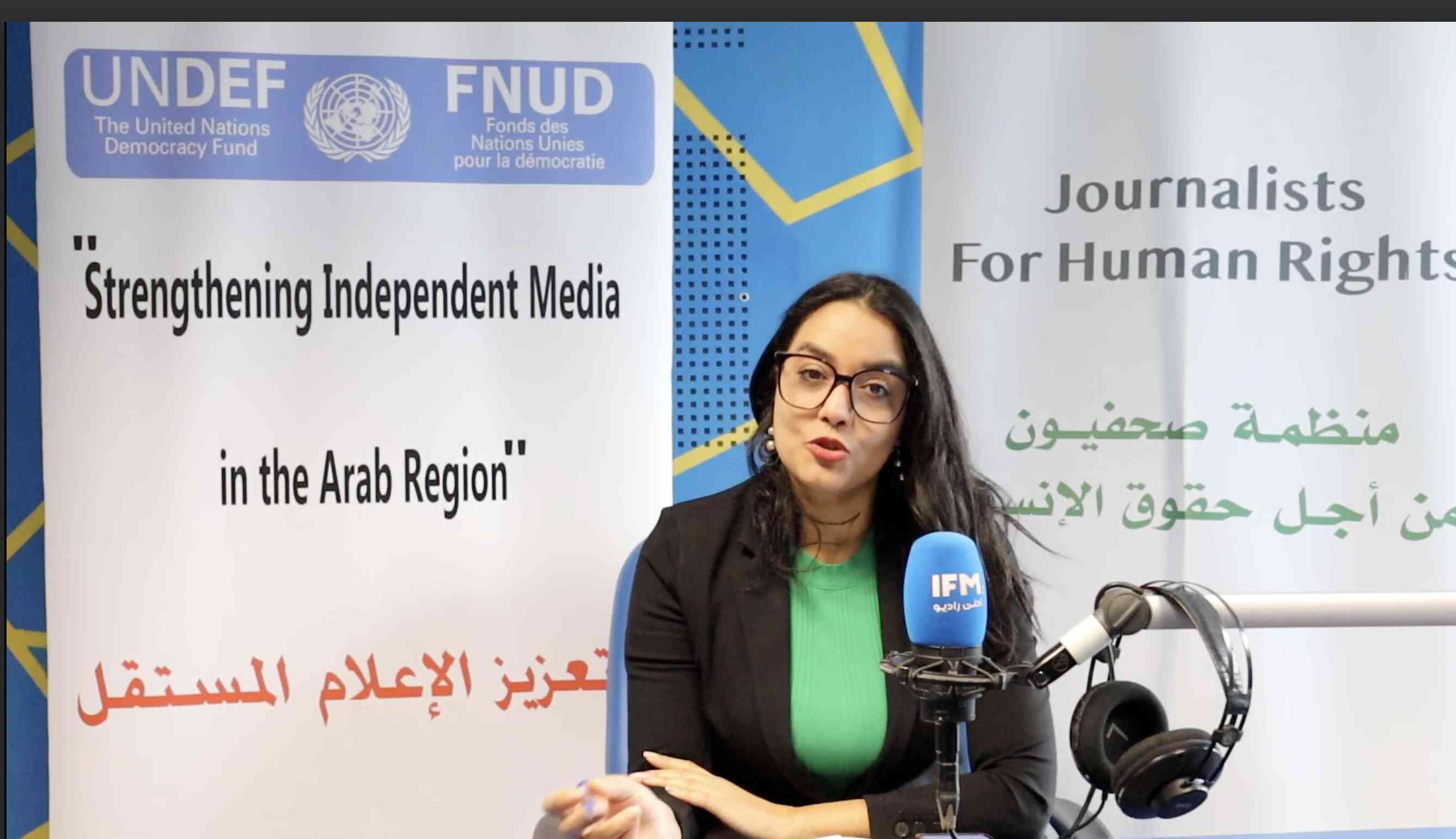
Another multi-faceted benefit of regional partnerships are the synergies that are created on the national level stemming from local partners that bring different experiences and lessons learned to the fore. In this case, the Moroccan partner focuses on producing stories in multiple vernacular languages for community-level resonance and highlights the role of communitarian media as garnering legitimacy among listeners and readers at the local level. In Tunisia, the local office brings a large network of journalists, media professionals, and engaged civic organizations to the project that helps informing on navigating complex legal frameworks governing information access.

Project Partner
Journalist for Human Rights
Project Description

The project aims to strengthen independent media in the Arab region so as to build greater accountability and better governance, by improving the working environment for journalists; advancing media freedom and accessible information and data; enhancing the capacity of freelance and full-time journalists to cover sensitive human rights stories; and improving journalists’ legal knowledge through strong working partnerships with civic actors. Project activities also incorporate responses to the Covid-19 crisis for journalists on the front line.
Evaluation Date
February 2025
Theme
LESSON

Lesson Learned: Strengthening Independent Media in the Arab Region

Material outputs are most useful when they hold long-term temporal value and become staple references, such as the Human Rights Code of Ethics for North Africa and the Middle East (JHR code of ethics for human rights journalists on a regional level). In this case, the Implementing Partner relies on synergies with its other projects and thus far has increased signatories committed to the code by 100% beyond target.

Project Partner
Journalist for Human Rights
Project Description

The project aims to strengthen independent media in the Arab region so as to build greater accountability and better governance, by improving the working environment for journalists; advancing media freedom and accessible information and data; enhancing the capacity of freelance and full-time journalists to cover sensitive human rights stories; and improving journalists’ legal knowledge through strong working partnerships with civic actors. Project activities also incorporate responses to the Covid-19 crisis for journalists on the front line.

Evaluation Date
February 2025
Theme
LESSON

Lesson Learned: Strengthening Media to Promote Inclusive Democracy in Mali

The project applied a “three-pronged approach” (involving the participation of government institutions (state services), media, and CSOs) which proved to be highly effective in breaking down barriers, forming new networks, and improving access to human rights and essential services in a highly unstable environment.
Project Partner
Journalists for Human Rights
Project Description
This two-year project aims at strengthening media to play a role in fostering an effective, inclusive and transparent democracy in Mali. Based on field assessments of media outlets and CSOs, the project will build the capacity of media to report on good governance and human rights issues, break the financial dependency on political sponsorship through training on business skills and greater sector accountability, and help journalists and civil society actors to work together on data projects.
Evaluation Date
January 2023
Country
LESSON

Lesson Learned: Strengthening Media to Promote Inclusive Democracy in Mali

Project activity costs can be reduced through close coordination, mutual trust and regular consultation with key implementing partners that can lead to financial burden sharing and increased buy-in. This project, for example, reduced costs by persuading implementing partners to share some of the financial burden for certain events, when co-hosting.
Project Partner
Journalists for Human Rights
Project Description
This two-year project aims at strengthening media to play a role in fostering an effective, inclusive and transparent democracy in Mali. Based on field assessments of media outlets and CSOs, the project will build the capacity of media to report on good governance and human rights issues, break the financial dependency on political sponsorship through training on business skills and greater sector accountability, and help journalists and civil society actors to work together on data projects.
Evaluation Date
January 2023
Theme
Country
LESSON

Lesson Learned: Strengthening Media to Promote Inclusive Democracy in Mali

Without losing sight of the importance of Civil and Political Rights, a focus on Economic, Social and Cultural Rights can be more impactful in certain restricting contexts, and pave the way (e.g., with “transitional” authorities) for the advocacy of a wider spectrum of human rights when circumstances allow.
Project Partner
Journalists for Human Rights
Project Description
This two-year project aims at strengthening media to play a role in fostering an effective, inclusive and transparent democracy in Mali. Based on field assessments of media outlets and CSOs, the project will build the capacity of media to report on good governance and human rights issues, break the financial dependency on political sponsorship through training on business skills and greater sector accountability, and help journalists and civil society actors to work together on data projects.
Evaluation Date
January 2023
Theme
Country
LESSON

Lesson Learned: Strengthening Media to Promote Inclusive Democracy in Mali

It is widely accepted that local community radios continue to be the medium most established and most used and trusted (for news and information) by people in Mali and other countries in the Central Sahel region – especially in remote areas where access to print media and television is more limited. However, the use and influence of social media is already significant and is expected to grow – and should be part of any context-setting, if not the subject of direct activity, in future projects supporting the media sector.
Project Partner
Journalists for Human Rights
Project Description
This two-year project aims at strengthening media to play a role in fostering an effective, inclusive and transparent democracy in Mali. Based on field assessments of media outlets and CSOs, the project will build the capacity of media to report on good governance and human rights issues, break the financial dependency on political sponsorship through training on business skills and greater sector accountability, and help journalists and civil society actors to work together on data projects.
Evaluation Date
January 2023
Theme
Country
LESSON

Lesson Learned: Strengthening Media to Promote Inclusive Democracy in Mali

Sensitivity to local languages should be an essential part of project design and delivery in countries where such diversity exists (as was the case with this project in the use of Bambara for local radio broadcasting to maximise impact for non-French speaking listeners), though this may bring additional challenges in terms of measuring and evaluating the success of an intervention.
Project Partner
Journalists for Human Rights
Project Description
This two-year project aims at strengthening media to play a role in fostering an effective, inclusive and transparent democracy in Mali. Based on field assessments of media outlets and CSOs, the project will build the capacity of media to report on good governance and human rights issues, break the financial dependency on political sponsorship through training on business skills and greater sector accountability, and help journalists and civil society actors to work together on data projects.
Evaluation Date
January 2023
Theme
Country
LESSON

Lesson Learned: Empowering Rural Communities in Bhutan through Mass Media

As digital technologies take hold, two ways media-community audience engagement will only become richer and more complex. New technology can upset the methodology and content of any capacity-building programme approved and designed by the grantee. Therefore, there is a need to remain alert about new technology and devise innovative forms of audience research online and offline.
Project Partner
Journalists' Association of Bhutan
Project Description
The project aims to address low levels of media knowledge and social media awareness in Bhutan’s rural population, urban centric news media, and the lack of viable, private and free media coverage on rural issues. By training journalists to report on local issues in both mainstream and social media the project will encourage local communities to engage in active reporting on rural issues. Small grants will be awarded by a jury to recognize excellence in local journalism and to encourage continued meaningful contributions to free media in Bhutan by individual rural journalists.
Evaluation Date
December 2022
Country
LESSON

Lesson Learned: Empowering Rural Communities in Bhutan through Mass Media

In a country like Bhutan, where culture is overwhelmingly dominant in every aspect of life and policies and seen separately from democracy, implementing a project that promotes democracy through strengthening media is not without challenges. Bhutan is ambitious to make the cultural perspective visible in all development co-operation and projects, which suggests a "mainstreaming" approach. Since culture is a complex concept and naturally varies considerably from country to country, mainstreaming is difficult. But, at the project level, it would be more appropriate to address culture using a rights perspective that focuses on freedom of expression and information. Nevertheless, it would be highly relevant to systematically include the roles of culture in media development and the promotion of democracy and democratic institutions.
Project Partner
Journalists' Association of Bhutan
Project Description
The project aims to address low levels of media knowledge and social media awareness in Bhutan’s rural population, urban centric news media, and the lack of viable, private and free media coverage on rural issues. By training journalists to report on local issues in both mainstream and social media the project will encourage local communities to engage in active reporting on rural issues. Small grants will be awarded by a jury to recognize excellence in local journalism and to encourage continued meaningful contributions to free media in Bhutan by individual rural journalists.
Evaluation Date
December 2022
Country
LESSON

Lesson Learned: Empowering Rural Communities in Bhutan through Mass Media

Both mentors and participants demonstrated that knowledge sharing works vertically and horizontally in- and outside the media organisations, mainly in four ways.
• One, most of the participants shared their knowledge and experience by training the co-workers;
• Two, they shared their knowledge with other media professionals through a variety of interactive as well as informal forums;
• Three, participants took opportunities to share their knowledge with students in media training institutes;
• Four, participants also shared their knowledge and experiences through a variety of media, most commonly by writing blogs, articles for professional journals.
Project Partner
Journalists' Association of Bhutan
Project Description
The project aims to address low levels of media knowledge and social media awareness in Bhutan’s rural population, urban centric news media, and the lack of viable, private and free media coverage on rural issues. By training journalists to report on local issues in both mainstream and social media the project will encourage local communities to engage in active reporting on rural issues. Small grants will be awarded by a jury to recognize excellence in local journalism and to encourage continued meaningful contributions to free media in Bhutan by individual rural journalists.
Evaluation Date
December 2022
Country