Lesson Learned: Safeguarding the Rights of Transgender & Intersex Communities in Pakistan


Inclusive project designs that rely on human rights actors from diverse professions and backgrounds have a high potential for reaching project objectives and mitigation strategies. In this case, the inclusion of established and new generation human rights activists from different regions, research-based professions (such as academics and journalists), legislators and policy professionals assured project impact and smooth overcoming of delays due to contextual challenges.

The project’s objective is to support in an inclusive way the monitoring of governmental efforts to implement UN treaty body recommendations, by bringing together civil society organizations and parliamentary actors to develop a monitoring mechanism; conducting a capacity development programme on international human rights law, monitoring, and advocacy in four regions; and mobilizing legislators to effectively exercise their roles and responsibilities in holding the government accountable for its commitments to implement UN treaty body recommendations.
When projects fall on electoral calendars or are directly linked to elected officials which can shift, clear mitigation strategies must be developed to avoid significant project interruptions. In this case, the Implementing Partner was able to effectively use its advocacy skills to garner the attention of newly elected legislators and legislative staff, ensuring project continuity while shifting a potential barrier to a critical opportunity by working with a different set of decision-makers.
The project’s objective is to support in an inclusive way the monitoring of governmental efforts to implement UN treaty body recommendations, by bringing together civil society organizations and parliamentary actors to develop a monitoring mechanism; conducting a capacity development programme on international human rights law, monitoring, and advocacy in four regions; and mobilizing legislators to effectively exercise their roles and responsibilities in holding the government accountable for its commitments to implement UN treaty body recommendations.
For sensitive topics such as monitoring government’s performance on human rights, organizations that have strong expertise, hold inter-generational membership, and work effectively on both the grassroots and national level, are best placed to carry-out multi-scalar projects and gain support and trust by high-level decision-makers.

The project’s objective is to support in an inclusive way the monitoring of governmental efforts to implement UN treaty body recommendations, by bringing together civil society organizations and parliamentary actors to develop a monitoring mechanism; conducting a capacity development programme on international human rights law, monitoring, and advocacy in four regions; and mobilizing legislators to effectively exercise their roles and responsibilities in holding the government accountable for its commitments to implement UN treaty body recommendations.
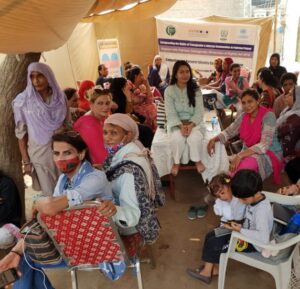
Activities that are based on discussions around complex themes and issues, and are organized in remote or marginal areas, are most impactful when held in person, rather than virtually. In this project, moving to virtual spaces proved difficult, both substantially and technologically, as in these areas regular online attendance was difficult to organize remotely, and was further compounded by technological impediments, potentially weakening effectiveness.

The project’s objective is to support in an inclusive way the monitoring of governmental efforts to implement UN treaty body recommendations, by bringing together civil society organizations and parliamentary actors to develop a monitoring mechanism; conducting a capacity development programme on international human rights law, monitoring, and advocacy in four regions; and mobilizing legislators to effectively exercise their roles and responsibilities in holding the government accountable for its commitments to implement UN treaty body recommendations.