
effectiveness

LESSON

Lesson Learned: For Participation of Persons with Disabilities in Disaster and Climate Risk Governance in the Philippines

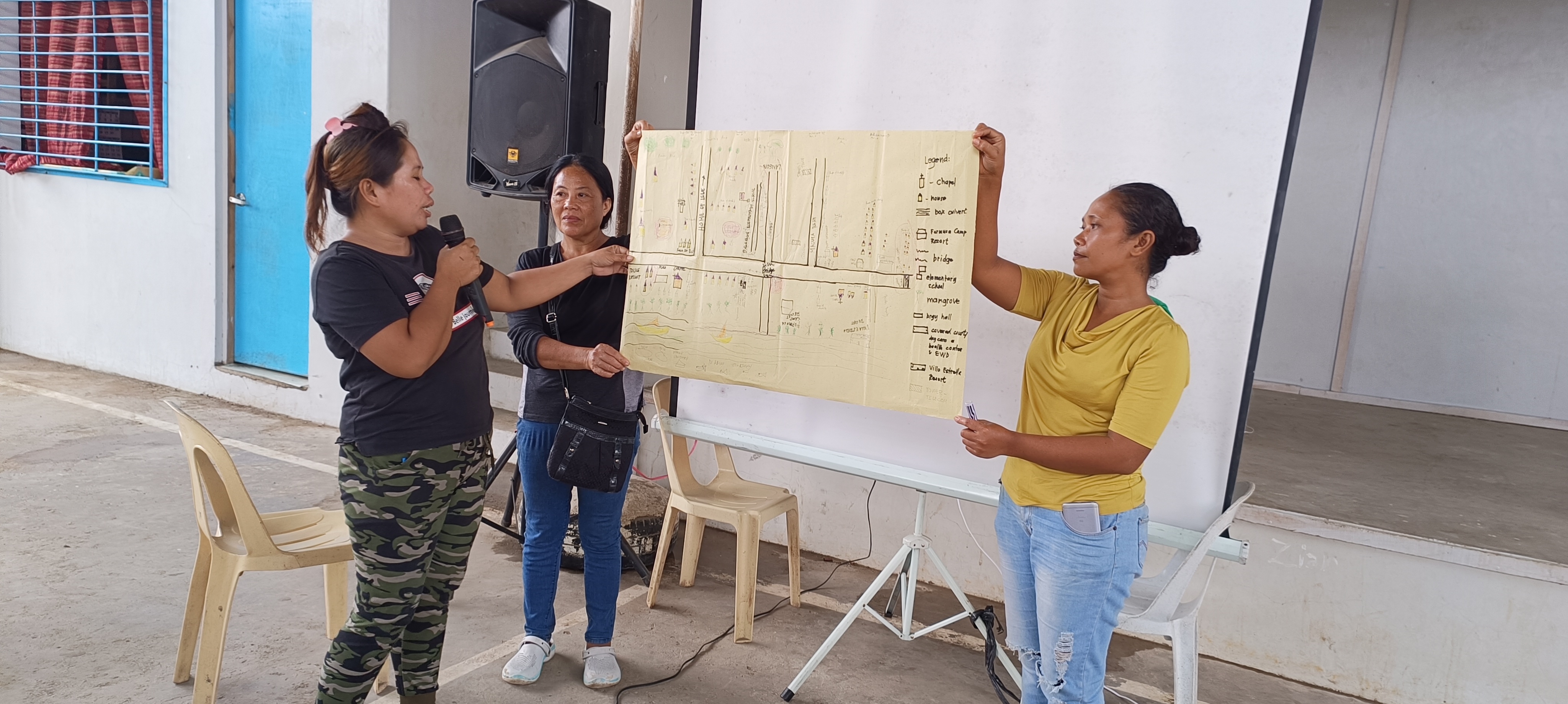
The capacity development of Organizations of Persons with Disabilities to manage a viable livelihood enterprise requires a longer period than the usual project life span. Project efficiency could have been improved by prioritizing capacity building early on in the project, so that additional technical support and organizational mentoring could have been provided within the project timeframe, with adequate budget allocation. Compared to the present project's approach, future project designs should highlight the importance of early provisions for adequate organizational capability building, with sufficient time and budget allocation.

Project Partner
A2D Project-Research Group for Alternatives to Development Inc.
Project Description

This project works to empower people with disabilities to participate in disaster risk reduction approaches in 20 local government units in Cebu Province. It will build capacity for 20 organizations of persons with disabilities to have a real voice in formal community planning processes, with the goal of influencing local government to break barriers, open spaces for inclusion, and encourage at-risk populations to take an active role in disaster preparedness, risk reduction and other community development agenda issues.
Evaluation Date
December 2025
Country
LESSON

Lesson Learned: For Participation of Persons with Disabilities in Disaster and Climate Risk Governance in the Philippines

Projects on democratic governance involving Local Government Unit partnerships should fully anticipate the expected effects brought about by major political events, such as national and local elections, as these can disrupt planned project activities. As was the case in some municipalities included in the project, the change of leadership after the elections resulted in the duplication of project activities, for example, the orientation provided to the Local Chief Executive, which negatively affected the project milestones and budget.

Project Partner
A2D Project-Research Group for Alternatives to Development Inc.
Project Description

This project works to empower people with disabilities to participate in disaster risk reduction approaches in 20 local government units in Cebu Province. It will build capacity for 20 organizations of persons with disabilities to have a real voice in formal community planning processes, with the goal of influencing local government to break barriers, open spaces for inclusion, and encourage at-risk populations to take an active role in disaster preparedness, risk reduction and other community development agenda issues.
Evaluation Date
December 2025
Country
LESSON

Lesson Learned: Enabling National Initiatives to Take Democracy Beyond Elections

Documenting how Citizen Assembly initiatives were successfully delivered and the impacts they had in different contexts is a critical tool for increasing public awareness about the ideas behind the approach and can also strengthen expert networks existing knowledge bases. With the publication of a handbook, UNDEF’s Implementing Partner has provided a valuable resource that can guide the practical application of deliberative democracy ideals into practice through Citizen Assemblies.

Project Partner
The newDemocracy Foundation
Project Description

Making democracies more inclusive requires bold and innovative reforms to bring the young, the poor, and minorities into the political system. Some countries have piloted initiatives for assemblies on specific issues where members are not nominated by political parties but chosen at random for a limited term to represent all sectors of society, to prevent the formation of self-serving and self-perpetuating political classes disconnected from their electorates. The project aims to enable more countries to develop initiatives of this kind. It will develop and distribute a handbook on ‘Democracy Beyond Elections’ designed to show how nations at various levels of development can apply the principles of representation and deliberation in ways that are appropriate to their economic and educational circumstances. The project will fund three pilot projects to further the demonstration effect and produce a documentary based on one of these to demonstrate how deliberative democracy can work in practice. Among citizens, the project will work to build the sense that ordinary people are involved in making decisions that affect them, and thus to promote trust in Government. Among elected representatives, the project will work to stimulate a greater openness to complementary democratic models in which citizens explore and recommend policy solutions on key issues.

Evaluation Date
March 2025
LESSON

Lesson Learned: Strengthening Gender-Responsive Local Government in Nepal

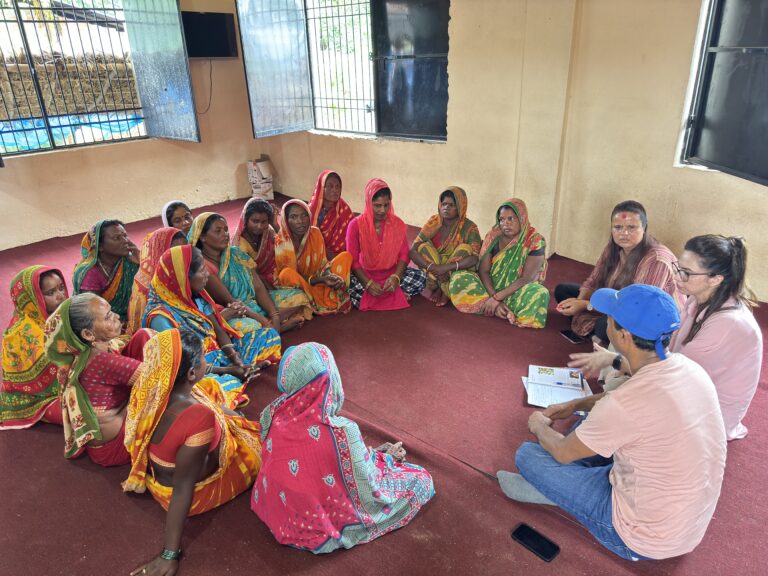
Strategic engagement with the media can yield good results in amplifying voices of the marginalized, providing them with a platform to address wider audience to promote gender responsive and inclusive local governance and development. In the present case, the project engaged the media successfully to widely disseminate the project initiatives as well as leverage it as an accountability mechanism for following up with government officials on their promised actions in promoting inclusive local governance.

Project Partner
South Asia Partnership Nepal
Project Description

The project aims to empower Musahar women and strengthen their representation in local decision-making procedures for promoting gender-responsive local governance in two rural municipalities and two town municipalities. It will work through three main approaches:empowerment of Musahar women to claim their rights, accountability of local government authorities, and strengthening multi-stakeholder partnerships for gender-responsive local governance.

Evaluation Date
December 2024
Country
LESSON

Lesson Learned: Strengthening Gender-Responsive Local Government in Nepal

The project experience clearly indicates that in order to be impactful, the project design should involve multidimensional approaches that address both the practical and structural challenges, ranging from individual capacity gaps to overall gender discrimination and institutionalized exclusion, which constrain women’s voice, decision-making and leadership. In the present case, the Implementing Partner was successful in maintaining a dual focus on promoting women’s political participation through building women’s capacity and awareness of their rights and connecting them to key decision-making processes on the one hand and engaging with the Musahar community, particularly men, to address gender discrimination through sensitization sessions.

Project Partner
South Asia Partnership Nepal
Project Description

The project aims to empower Musahar women and strengthen their representation in local decision-making procedures for promoting gender-responsive local governance in two rural municipalities and two town municipalities. It will work through three main approaches:empowerment of Musahar women to claim their rights, accountability of local government authorities, and strengthening multi-stakeholder partnerships for gender-responsive local governance.

Evaluation Date
December 2024
Country
LESSON

Lesson Learned: Strengthening Gender-Responsive Local Government in Nepal

Supporting government institutions in becoming gender responsive and inclusive requires substantial efforts in institutional capacity building through sensitization, training and equipping government officials with tools and skills to carry out gender responsive planning and governance. In the present project, while the project was successful in sensitizing local government officials, focused institutional capacity building could have contributed to a more impactful and sustainable change.

Project Partner
South Asia Partnership Nepal
Project Description

The project aims to empower Musahar women and strengthen their representation in local decision-making procedures for promoting gender-responsive local governance in two rural municipalities and two town municipalities. It will work through three main approaches:empowerment of Musahar women to claim their rights, accountability of local government authorities, and strengthening multi-stakeholder partnerships for gender-responsive local governance.

Evaluation Date
December 2024
Country
LESSON

Lesson Learned: Strengthening Gender-Responsive Local Government in Nepal

Women’s participation in political change processes not only enhances gender equality, but it also makes a positive contribution to local development outcomes. The present project experience clearly demonstrates the transformative impact of women’s inclusion in local development in the shape of a number of local needs-based infrastructure schemes undertaken by the Women Musahar Empowerment Forums in their Municipalities.

Project Partner
South Asia Partnership Nepal
Project Description

The project aims to empower Musahar women and strengthen their representation in local decision-making procedures for promoting gender-responsive local governance in two rural municipalities and two town municipalities. It will work through three main approaches:empowerment of Musahar women to claim their rights, accountability of local government authorities, and strengthening multi-stakeholder partnerships for gender-responsive local governance.

Evaluation Date
December 2024
Country
LESSON

Lesson Learned: Enhancing Women's Political Participation in Eswatini

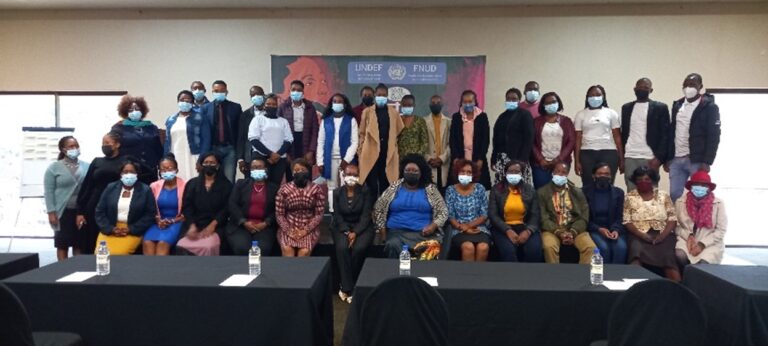
The project experience underscored the importance of establishing clear and consistent beneficiary selection criteria in project activities from the outset. In this case, project stakeholders were responsible for selecting beneficiaries at the community level without clear guidance on the selection criteria from the grantee. As a result, some beneficiaries were included without the necessary qualifications, leading to difficulties in actively participating in trainings and effectively fulfilling their roles in the project.


Project Partner
Women and Law in Southern Africa - Eswatini
Project Description

The project seeks to enhance the gender responsiveness of policies and practices in the electoral process in Eswatini by assisting stakeholders to develop gender responsive guidelines and educating citizens on the importance of women’s political participation, while empowering the female electorate with leadership skills, campaign and mobilization strategies. The project seeks to impart a long-term effect by enabling community-based paralegals to conduct gender equality sensitization talks at community level. Project activities will incorporate actions in response to the Covid-19 crisis, as it impacts women, including gender-based violence as well as social and economic pressures.

Evaluation Date
August 2024
Country
LESSON

Lesson Learned: Enhancing Women’s Political Participation in Eswatini

To ensure project sustainability and stakeholder ownership, it is vital to foster a comprehensive understanding of project outcomes among all stakeholders and to align project strategies with their mandates and constraints. In this project, the lack of ownership by the Electoral Boundaries Commission resulted in the Gender Responsive Electoral Guidelines not being adopted.

Project Partner
Women and Law in Southern Africa - Eswatini
Project Description

The project seeks to enhance the gender responsiveness of policies and practices in the electoral process in Eswatini by assisting stakeholders to develop gender responsive guidelines and educating citizens on the importance of women’s political participation, while empowering the female electorate with leadership skills, campaign and mobilization strategies. The project seeks to impart a long-term effect by enabling community-based paralegals to conduct gender equality sensitization talks at community level. Project activities will incorporate actions in response to the Covid-19 crisis, as it impacts women, including gender-based violence as well as social and economic pressures.

Evaluation Date
August 2024
Country
LESSON

Lesson Learned: Strengthening Grassroots Women’s Groups to Promote and Protect Civic Space in Uganda

Communication strategies should reflect the local context and most importantly be tailored towards the target audience. It is therefore important to identify the communication tools with the greatest local resonance and translate all material into local languages.
Project Partner
All in One Womens Association
Project Description
The project goal is to empower 6,000 women by raising awareness of their gender specific rights, promoting women’s political participation, and addressing all forms of injustices that affect women’s wellbeing; strengthen the capacity of 100 unregistered women’s groups to become registered under the NGOs Act 2016; and support 100 registered women’s groups in advocating, promoting and protecting civic space in Uganda. Project activities will incorporate actions in response to the Covid-19 crisis, as it impacts women, including gender-based violence as well as social and economic pressures.
Evaluation Date
July 2023
Country